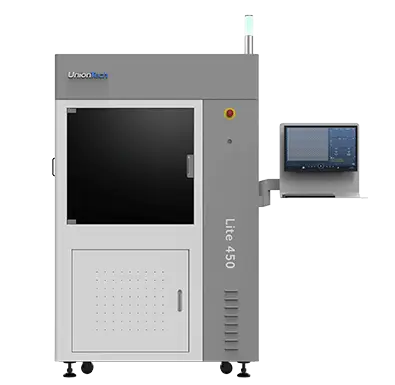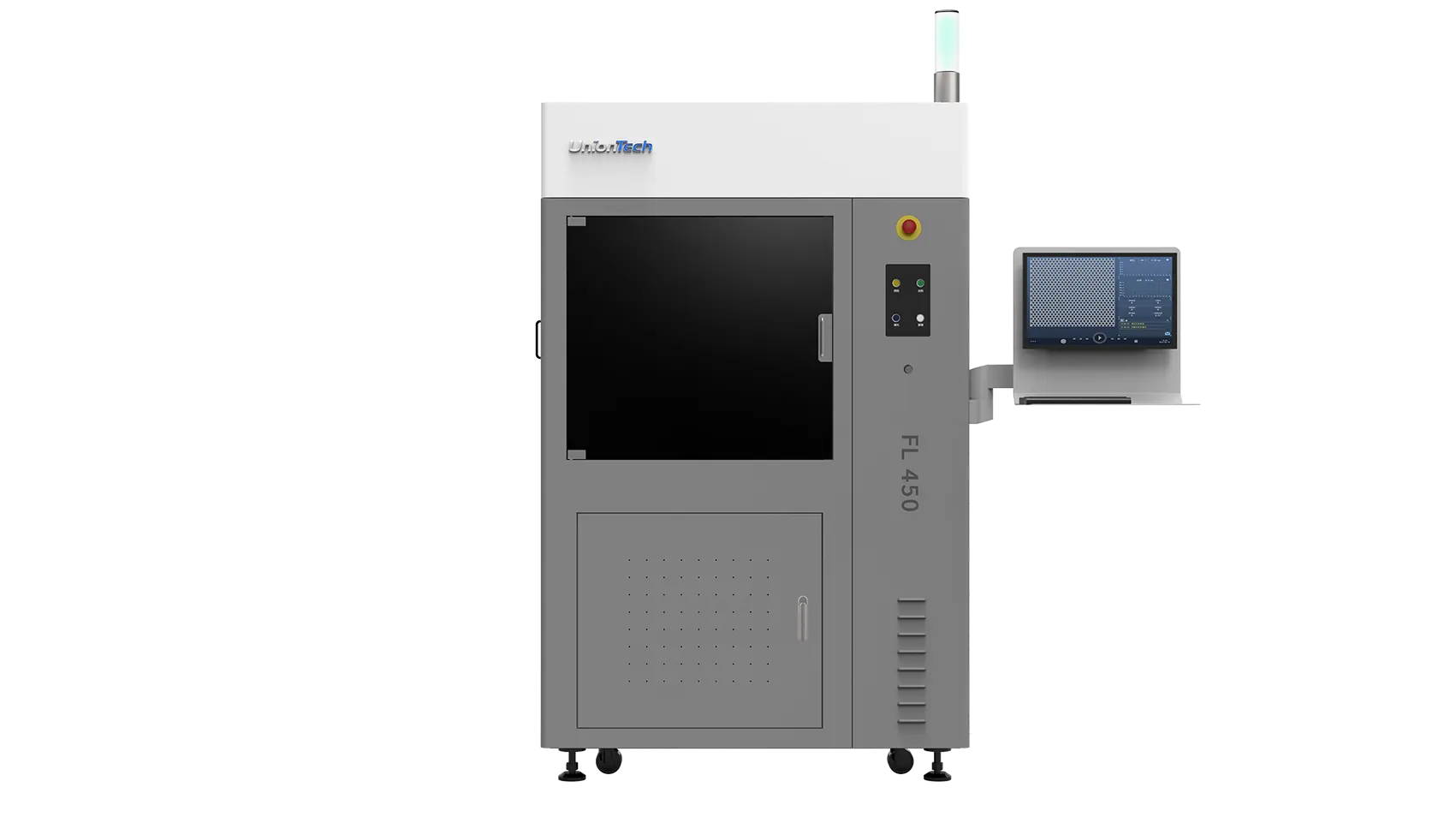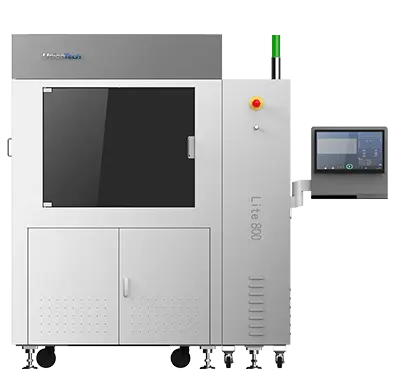
In industrial additive manufacturing, a printer’s true value lies in its ability to handle a broad and diverse range of materials, enabling users to shift from simple prototyping to demanding, application-specific end-use part production. An industrial resin 3D printer, particularly those utilizing Stereolithography (SLA) technology from an established industrial 3d printer manufacturer like UnionTech, supports this material diversity not just through compatibility but through sophisticated hardware and software controls that precisely manage the curing process for each unique resin formulation.
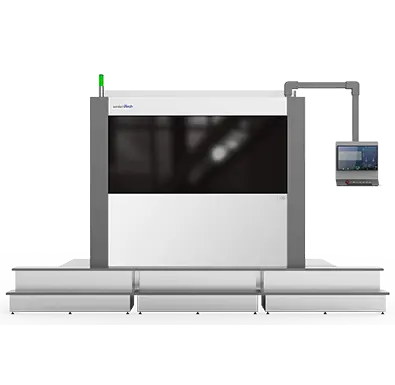
For companies investing in a large industrial 3D printer, like the UnionTech RSPro 2100, the open material architecture and refined process control are the keys to unlocking the full potential of photopolymer resins, which are chemically tuned to mimic the mechanical, thermal, and aesthetic properties of traditional thermoplastics.
The Open-Material System: The Foundation of Diversity
Unlike consumer or prosumer machines often locked to proprietary cartridges, high-end industrial printers are designed with an open-material philosophy. This is the primary driver of material diversity:
An industrial resin 3D printer often operates as an open-material system, meaning it is not restricted to a single vendor’s resins. This gives the user the freedom to use any 355 nm curable resin developed by material science companies globally, such as those formulated for high-temperature resistance, flexibility, toughness, or biocompatibility. This access allows manufacturers to select the material whose exact chemical and mechanical properties perfectly match the final application requirements, whether it’s an investment casting pattern or a strong, functional automotive part.
Material diversity is pointless without the ability to control how that material is printed. Every resin formulation has a unique energy requirement (a specific UV dose) to properly cure and solidify. UnionTech‘s control software, like RSCON, provides open-parameter control, allowing operators to adjust critical print settings:
Laser Power and Energy Density: Adjusting the laser power and scanning speed ensures the correct amount of energy is delivered to each layer, which is vital when switching between a fast-curing standard resin and a slow-curing high-clarity or high-temperature material.
Layer thickness: Depending on the resin, changing the layer thickness (e.g., from 0.10 mm to 0.25 mm) will affect printing speed and detail resolution.
Scanning Strategy: Complex software algorithms adjust the laser’s path to compensate for the thermal and polymerization differences between materials, ensuring part accuracy is maintained across the large industrial 3D printer’s expansive build platform.
Hardware Mechanisms for Material Consistency
To consistently process diverse resins, an industrial 3D printer manufacturer must equip its machines with advanced hardware that stabilizes the printing environment and refines the curing process.
The viscosity and curing speed of photopolymer resins are highly sensitive to temperature. High-performance resins often require an elevated, precisely controlled temperature to ensure optimal printing consistency and part properties.
The UnionTech RSPro 2100, a large industrial 3D printer, features integrated heat control. The system keeps the resin at an ideal operating temperature (e.g., 22°C to 26°C), minimizing temperature variations and ensuring that each layer cures with the correct performance, regardless of the chemical composition of the material. This prevents defects like warpage and cracking, especially crucial for printing large, stress-prone components.
The laser itself is engineered for versatility. Modern SLA systems, including those from UnionTech, utilize a dynamic and variable laser spot feature. This allows the laser beam size to be tailored based on the part geometry and the material’s specific curing requirements.
Fine details: For resins requiring high resolution or small, complex features, smaller beam sizes can be used (as small as 0.10 mm on the RSPro 2100).
Speed and Volume: A larger beam size is used for resins designed for fast printing or for filling the bulk volume of large parts, optimizing efficiency without sacrificing the part’s integrity.
For a machine of the size of the RSPro 2100, its enormous build space of 2100 × 700 × 800 mm requires innovative technologies to maintain speed and precision. The RSPro 2100 employs a triple laser scanning system. This allows three lasers to work simultaneously, drastically increasing the throughput for large prints while still maintaining the micron-level precision required for any industrial resin. The sophisticated software manages the overlap and timing of these three lasers to ensure print consistency across the entire build, regardless of which industrial resin 3D printer material is in use.
Conclusion
The versatility of an industrial resin 3D printer stems from a holistic engineering approach that combines open-source compatibility with precise process control. As an experienced industrial 3d printer manufacturer, UnionTech delivers this versatility through platforms like the RSPro 2100, which features active resin heating, dynamic laser beam control, and an open-parameter system. This combination allows manufacturing clients to reliably process a diverse array of advanced photopolymer materials, ensuring their large industrial 3D printer can meet the stringent mechanical, thermal, and aesthetic requirements of any specialized industrial application.