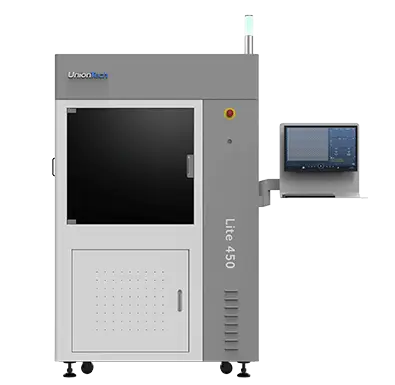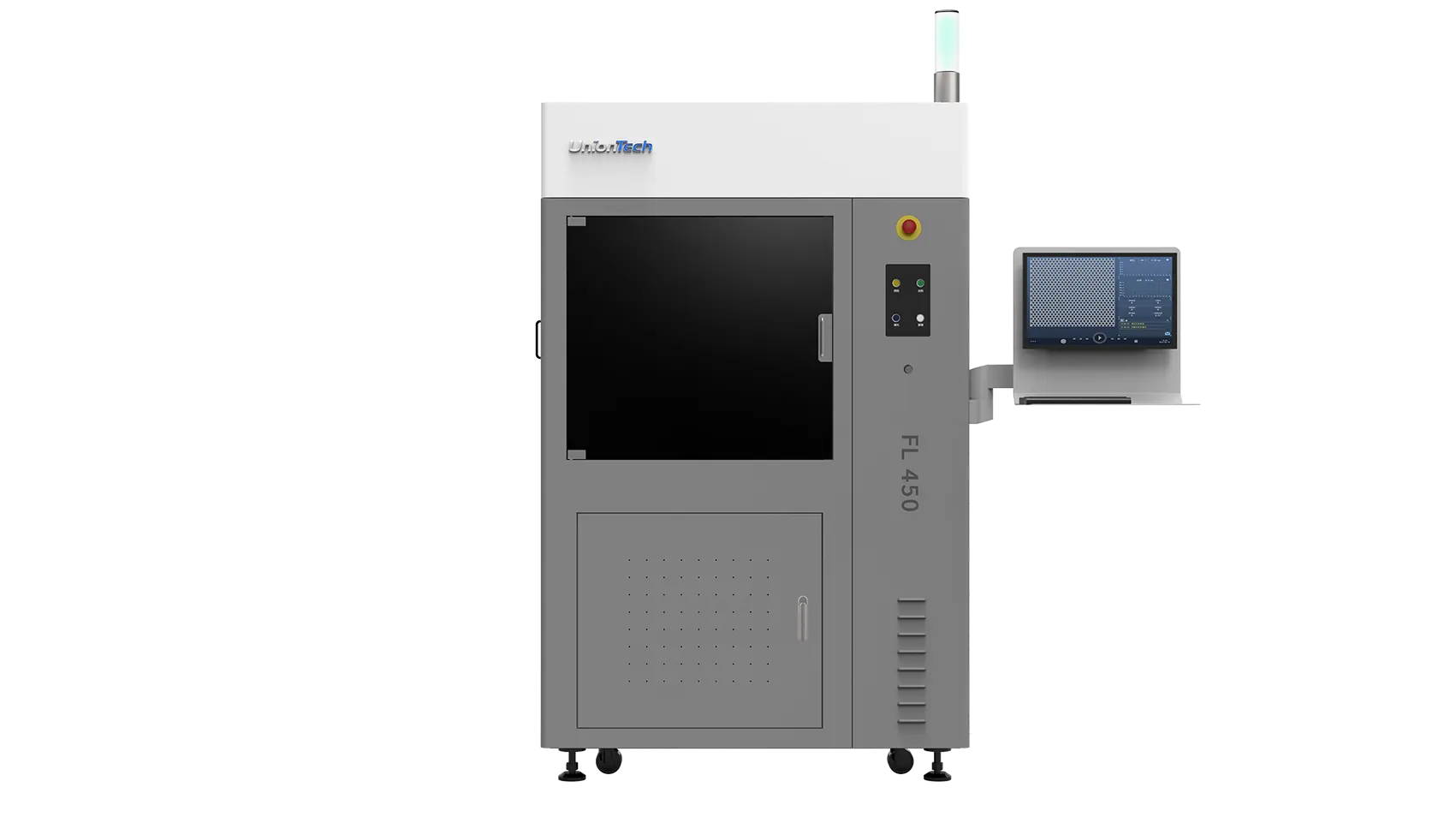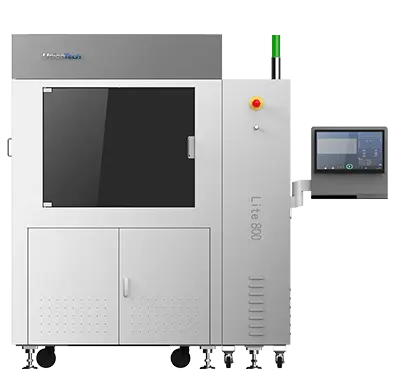
In modern product development, the ability to rapidly prototype components that accurately mimic the look, feel, and function of a final product is crucial. This requirement becomes especially demanding when dealing with parts that must be optically clear, such as lenses, light guides, or fluid flow visualization models. While other additive manufacturing technologies can produce translucent parts, Stereolithography (SLA) technology and its specialized SLA printing materials are uniquely suited to achieving near-glass transparency, making it the best sla 3D printer choice for these demanding applications.
Pioneers like UnionTech, an established industrial 3d printer manufacturer, have specialized in developing and refining large-format SLA systems to leverage this optical advantage for industrial clients requiring exceptional clarity and precision.
The Fundamental Advantages of SLA for Transparency
The suitability of SLA for transparent parts stems from the very physics of its printing process, offering a fundamental advantage over extrusion (FDM) and powder-based methods.
SLA operates by curing liquid photopolymer resin layer-by-layer using a precise laser. This process results in parts with an inherently smooth surface finish, often comparable to injection molding. This is crucial because clarity is destroyed by surface roughness.
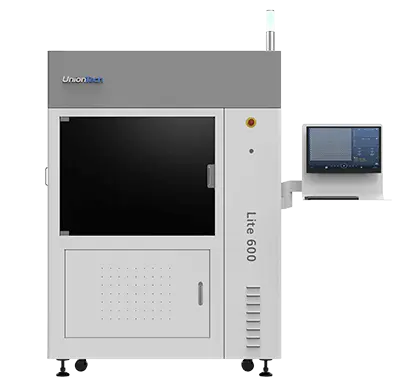
Other printing methods, like Fused Deposition Modeling (FDM), create obvious layer lines that cause light to scatter, making the parts appear frosted or hazy. SLA’s fine layer resolution, which can go down to 0.05 mm on machines like the UnionTech Lite 600, minimizes the “staircase effect.” This means that even before post-processing, the part is highly translucent, requiring less aggressive (and thus less distorting) sanding and polishing to achieve true optical clarity.
Because the SLA process involves a photochemical reaction that cures a continuous liquid medium, the resulting parts are fully dense and watertight. This avoids the internal voids or porosity inherent in powder-based methods (SLS) or the slight air gaps often found between layers in FDM. These internal inconsistencies scatter light and prevent clear transmission. The continuous, highly uniform cross-section created by the laser ensures that light passing through the sla printing materials is minimally scattered, maintaining optical integrity. This watertight property is also vital for applications such as fluidics and containers.
The chemical flexibility of photopolymer SLA printing materials allows manufacturers to develop specific clear resins that possess excellent optical properties. UnionTech, for example, offers specialized clear resins (such as the Crysta-8Q) designed to maximize light transmission. These materials are formulated to be clear and color-neutral, maintaining stability and reducing the natural yellowing that some plastics exhibit over time or upon exposure to UV light. They are rigid materials ideal for parts that require high geometric accuracy and a smooth, glass-like finish.
The Role of Post-Processing in Achieving Optical Clarity
While the SLA process lays the foundation for clarity, achieving optically transparent parts—where light passes through with minimal distortion—requires rigorous post-processing. This is where the output of a high-quality machine from an industrial 3D printer manufacturer truly shines.
The post-processing steps include:
Cleaning and Support Removal: Thorough removal of uncured resin and support structures.
Sanding: Gradual sanding, often starting with a coarse grit and moving to a very fine grit, is essential to eliminate any residual layer lines and support scars.
Polishing and Coating: The final stage involves polishing the surface and applying a clear, UV-stable coat (like a clear acrylic spray or resin coating). This process fills any microscopic surface imperfections and creates a smooth, glossy surface that mimics glass, maximizing light transmission and dramatically improving transparency.
Specifications of the UnionTech Lite 600
The Lite 600 demonstrates the capacity of the best SLA 3D printer for producing high-clarity parts:
| Specification | Value | Relevance to Clear Parts |
| Build Volume | 600×600×400 mm | Enables large-format clear parts (e.g., medical device housings, large lenses). |
| Layer Thickness | 0.05 mm (minimum) | Crucial for minimizing layer lines and maximizing surface smoothness before polishing. |
| Dimensional Accuracy | ±0.1 mm or ±0.1% × L | Ensures high precision for complex optical geometries. |
| Laser Wavelength | 355 nm (Nd:YVO₄) | Optimized to cure specialized clear resins effectively and reliably. |
The large build platform and precise mechanical systems of this machine, backed by UnionTech’s long-standing expertise, provide the consistency needed to print complex clear components with confidence.
Conclusion
The inherent advantages of Stereolithography technology—high resolution, superior surface finish, and part density—make it the preeminent choice for developing optically transparent components. When utilizing the specialized clear SLA printing materials within a precision platform provided by a seasoned industrial 3d printer manufacturer like UnionTech, engineers and designers can reliably create prototypes and even end-use parts with exceptional clarity. The combination of the best SLA 3D printer hardware and meticulous post-processing ensures that the finished product achieves a glass-like transparency essential for applications ranging from lighting and fluid dynamics to medical models and consumer electronics.