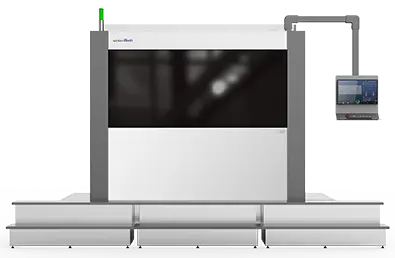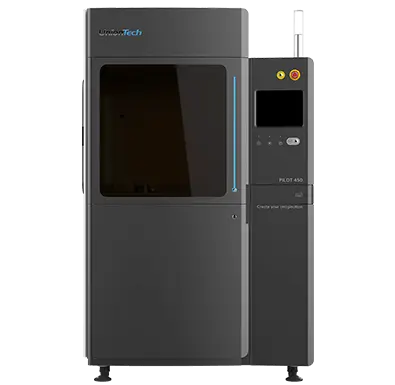
In the ever-evolving landscape of healthcare, mid size 3d printers are emerging as transformative tools, paving the way for precision and innovation in medical prototyping. From anatomical models to custom implants, these printers are becoming instrumental in advancing patient care, surgical planning, and medical education.
One of the significant contributions of mid size 3d printers to healthcare lies in their ability to produce patient-specific anatomical models with exceptional precision. Surgeons can now use 3D-printed models that replicate the exact anatomy of a patient’s organ or body part. This advancement is particularly valuable in complex surgeries, where a detailed understanding of a patient’s unique anatomy can lead to more precise and successful interventions.
Mid size 3d printers have redefined the landscape of personalized medicine by enabling the creation of tailored implants and prosthetics. Whether it’s a customized hip implant or a patient-specific dental prosthesis, these printers can produce intricately designed, patient-specific medical devices. This level of customization not only improves the fit and functionality of implants but also contributes to faster recovery times and improved patient outcomes.
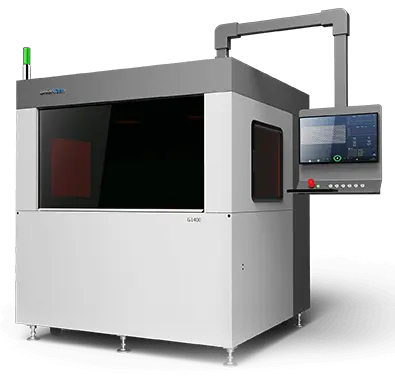
RSPro1400
In the realm of surgical planning, mid size 3d printers play a crucial role in enhancing the preparation and execution of complex procedures. Surgeons can use 3D-printed models to simulate surgeries, allowing them to visualize and practice intricate steps before entering the operating room. This immersive experience enhances surgical precision, reduces the risk of errors, and ultimately improves the safety and efficacy of medical procedures.
Mid size 3d printers are not only transforming patient care but also revolutionizing medical education. These printers enable the creation of detailed anatomical models that provide medical students and healthcare professionals with hands-on learning experiences. The tangible nature of 3D-printed models enhances understanding, allowing students to explore anatomy in ways that traditional textbooks or digital simulations cannot replicate.
While mid size 3d printers hold immense promise in advancing healthcare, challenges such as regulatory compliance, material biocompatibility, and the need for standardized protocols must be addressed. The medical community is actively working to establish guidelines and standards to ensure the safe and effective integration of 3D-printed medical devices into clinical practice.
In conclusion, the integration of mid size 3d printers marks a paradigm shift in the healthcare industry. From precision patient-specific models to tailored implants, the impact on patient care is profound. As these printers continue to refine surgical planning and contribute to medical education, the potential for advancing healthcare through 3D printing is limitless. While challenges exist, the ongoing collaboration between the medical and 3D printing communities is driving innovation, pushing the boundaries of what is possible in precision healthcare. As mid size 3d printers become more accessible and the technology continues to evolve, they stand poised to shape the future of medical advancements, offering new possibilities for personalized and effective patient care.