Choosing the right additive manufacturing technology is the critical first step toward digital transformation in any professional environment. The choice often boils down to the two most popular polymer 3D printing methods: resin (Stereolithography/SLA) and filament (Fused Deposition Modeling/FDM).
While FDM is widely recognized for its accessibility and lower cost, resin 3D printing technology—specifically industrial-grade SLA—is the preferred choice for professionals who require high precision, aesthetic finish, and specialized material properties, particularly within the demanding requirements of the 3D printing in automotive industry.
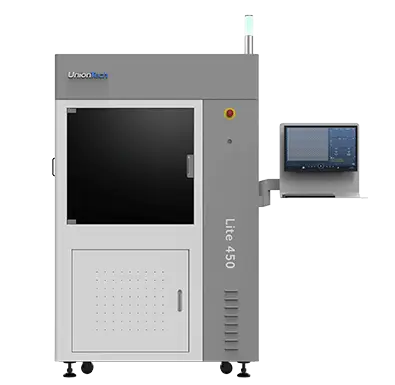
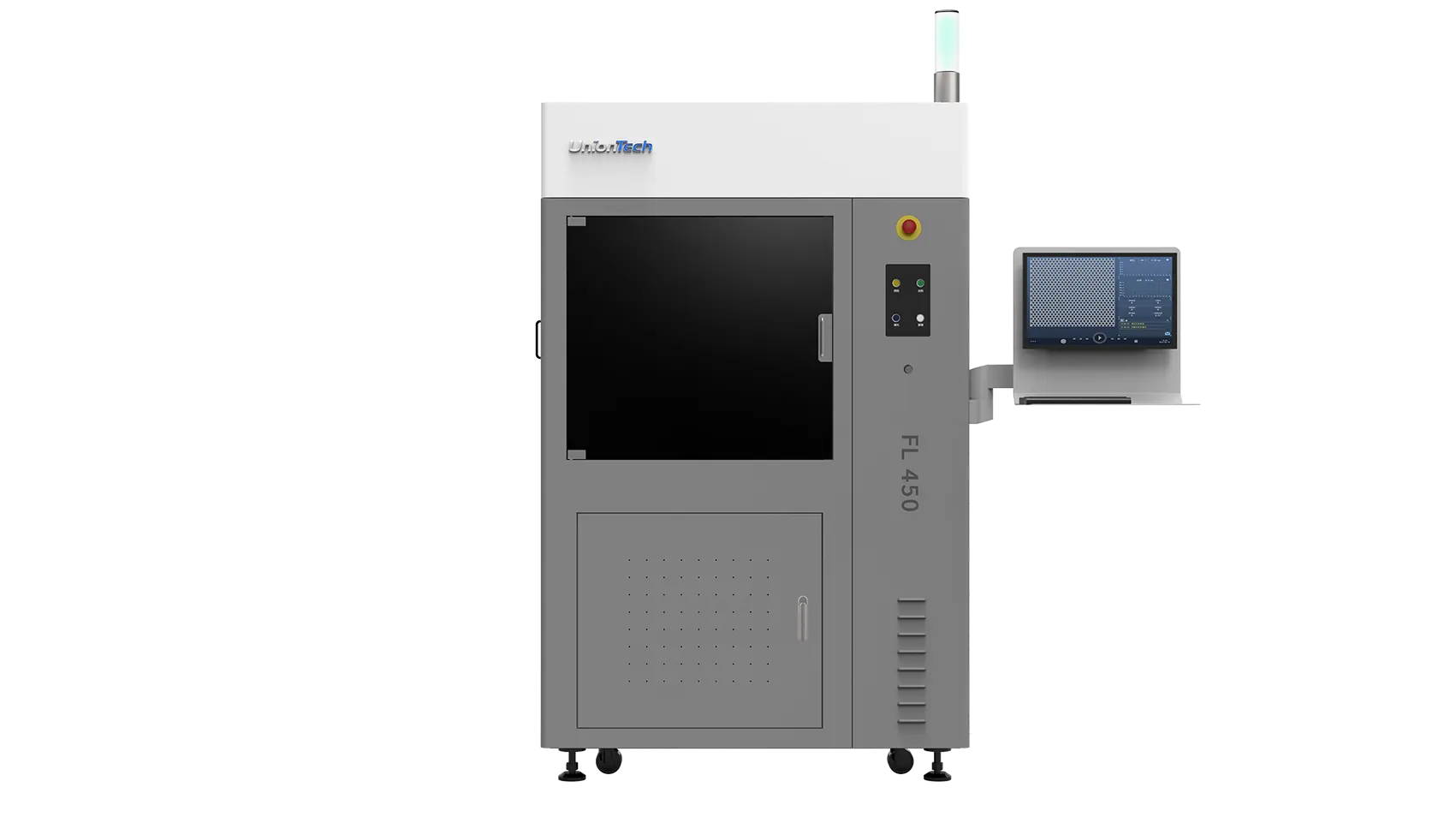
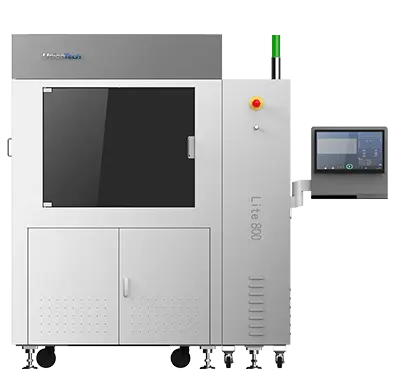
As a leading industrial 3D printer manufacturer, UnionTech specializes in the high-performance SLA and DLP technologies, demonstrating a clear focus on applications where quality cannot be compromised. This comprehensive guide breaks down the core differences to help manufacturers make an informed choice.
The Fundamental Technologies: SLA vs. FDM
The term “resin” printer typically refers to SLA (Stereolithography) or DLP (Digital Light Processing) technology, which cures liquid photopolymer resin using light. “Filament” printing is synonymous with FDM (Fused Deposition Modeling), which extrudes melted thermoplastic.
| Feature | Resin (SLA) Technology | Filament (FDM) Technology |
| Material | Liquid Photopolymer Resins | Solid Thermoplastic Filaments (PLA, ABS, Nylon) |
| Principle | UV laser/projector cures liquid layers | Heated nozzle extrudes melted plastic layers |
| Key Advantage | High precision, ultra-smooth surface finish | High mechanical strength, lower cost, material variety |
| Automotive Use | Optical parts, interior aesthetics, master patterns | Jigs, fixtures, functional prototypes requiring durability |
Why Industrial Applications Lean on SLA 3D Printing Technology
For professional environments like those in the 3D printing in automotive industry, the decision is often weighted by application requirements rather than pure cost. Here is where SLA 3D printing technology offers undeniable advantages:
SLA printers, such as the UnionTech RSPro and Pilot series, use precise lasers to cure ultra-thin layers (often as low as 0.05 mm), resulting in surfaces that are significantly smoother and finer than FDM.
Aesthetic Prototypes: For consumer-facing products like car interior components, bezels, and lighting covers, SLA parts emerge with an injection-molded quality finish, drastically reducing the labor-intensive post-processing (sanding, polishing) required by FDM parts to eliminate visible layer lines.
Intricate Geometries: The laser spot can be incredibly fine (e.g., 0.06-0.08 mm for the UnionTech Pilot250), making it ideal for creating intricate cooling channels, small connector features, or delicate master patterns for tooling.
Thermal expansion and contraction in FDM can lead to warping and inconsistent mechanical properties (anisotropy). SLA, being a light-curing process, minimizes thermal stress.
High precision: UnionTech’s industrial-grade SLA printers achieve dimensional accuracy of ±0.1 mm or higher. This precision is crucial for parts that must fit perfectly, such as snap-fit components or housing parts in the automotive industry.
Isotropy: SLA parts have uniform mechanical strength across all axes, which is important for functional components undergoing stress testing.
While FDM offers a wide range of standard thermoplastics, SLA materials have evolved to meet specific industrial needs:
Clear Resins: Essential for manufacturing transparent prototypes like 3D-printed car lights and fluid containers
High-Temperature Resins: Required for testing components in high-heat automotive applications, such as under the hood.
Flexible and Tough Resins: Engineering-grade resins are continuously being developed to overcome the traditional brittleness of standard photopolymers, bridging the gap with FDM in terms of mechanical performance.
The Case for Filament (FDM) 3D Printers
Despite the superior surface quality and precision of SLA, FDM technology remains invaluable for certain industrial tasks:
High Mechanical Strength: FDM still holds the edge when maximum mechanical strength is required. Engineering filaments like nylon, carbon fiber-filled composites, and polycarbonate are inherently more durable and impact-resistant than many standard resins.
Cost and Build Volume: FDM printers and their filaments are generally more affordable, and the technology scales easily to very large build volumes, making it cost-effective for printing large jigs, fixtures, and non-critical prototypes.
Simpler Workflow: FDM post-processing (primarily support removal) is less labor-intensive than the washing and post-curing required for resin prints, resulting in a quicker, less messy workflow.
UnionTech: The Industrial Resin Path
UnionTech, as an industrial 3D printer manufacturer, focuses on providing reliable, large-format solutions for SLA 3D printing technology. Their flagship RSPro series, with its massive build envelopes (up to 2100 × 700 × 800 mm for the RSPro2100), demonstrates that industrial-grade resin printing is not limited to small, delicate parts but is a viable mass-production tool.
The ideal manufacturing solution is often a hybrid approach, where a company utilizes FDM for robust tooling and low-fidelity prototypes, while relying on industrial SLA systems from a trusted supplier like UnionTech for high-precision, aesthetic, and specialized functional parts necessary for success in the competitive 3D printing in automotive industry.
Conclusion
The decision between a resin (SLA/DLP) and a filament (FDM) 3D printer ultimately depends on your application priorities. If your goal is affordability, maximum strength, and large-scale, non-critical parts, a filament FDM printer is a logical choice.
However, if your business operates in a highly demanding sector like the 3D printing in automotive industry and requires superior surface finish, high dimensional accuracy, fine detail, and specialized optical materials, then investing in SLA 3D printing technology is essential. Partnering with a proven industrial 3D printer manufacturer like UnionTech ensures access to the precision, scale, and material versatility necessary to meet world-class engineering standards. For the professional, the resin path is the clear choice for quality and technological advancement.