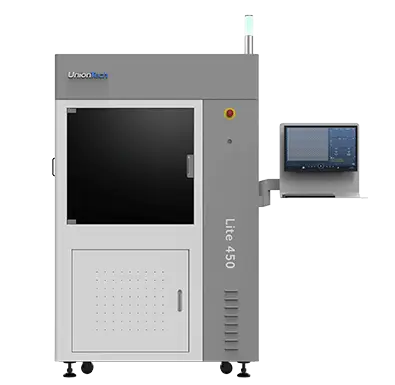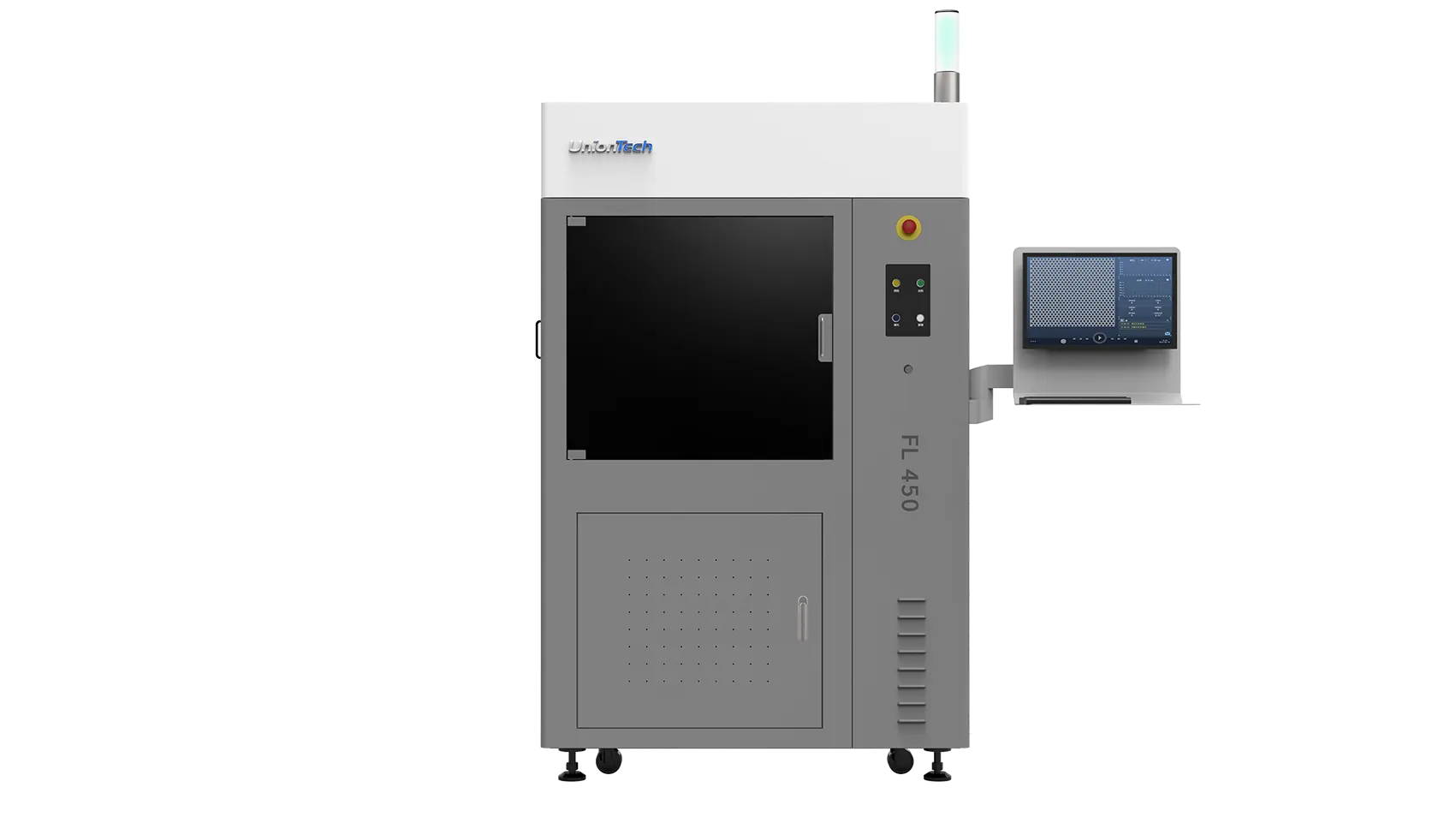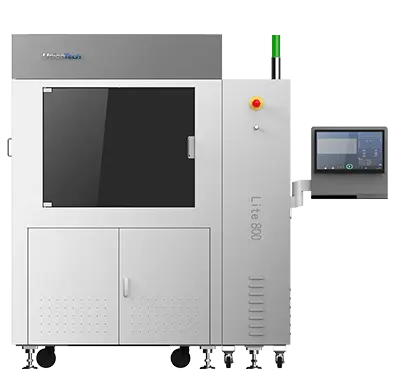
The automotive industry has always been a beacon of manufacturing innovation, driven by demands for speed, performance, and increasingly, customization. For years, the idea of using additive manufacturing—or 3D printing—to create functional components seemed limited to simple prototypes. Today, however, the answer to the question, “is it possible to 3D print car parts?” is a resounding, definitive “Yes.”
Industrial 3D printing is no longer confined to the design studio; it is rapidly moving onto the factory floor and into vehicles, enabling everything from high-performance racing components to rare replacement parts for classic cars. This transformation is driven by advanced technology and specialized equipment from leading manufacturers like UnionTech.
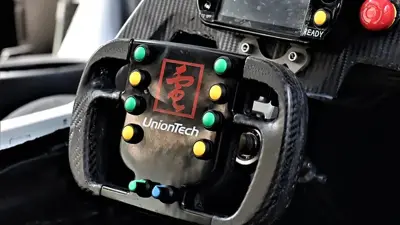
Beyond Prototyping: 3D Printing in the Automotive Industry
The application of 3D printing in automotive industry has evolved through three distinct phases:
This shift is made possible by industrial-grade machines that offer the necessary precision, speed, and material capabilities. As a globally recognized industrial 3d printer manufacturer (referring to industrial-scale additive equipment), UnionTech is at the forefront of this movement, providing the robust Stereolithography (SLA) and Selective Laser Melting (SLM) systems required for these demanding applications.
The Rise of 3D Printed Custom Car Parts
One of the most valuable aspects of 3D printing is its ability to create geometries and single-part assemblies that are impossible or cost-prohibitive with traditional methods like injection molding or machining. This freedom is what powers the demand for 3D printed custom car parts across various segments:
For boutique automakers, high-performance racing teams, and concept vehicle developers, 3D printing eliminates the massive investment required for molds and dies. They can produce small batches of highly complex, weight-optimized components on demand.
The ability to produce parts without tooling has opened up vast new possibilities for vehicle personalization and the aftermarket.
Finding replacement parts for vintage cars is often an insurmountable hurdle for restorers. With 3D printing, a rare or discontinued part can be 3D scanned to capture its exact geometry, digitally repaired, and then printed using modern, durable materials, essentially giving the part a new life.
Precision Technology from UnionTech: Meeting Automotive Standards
For 3D printed custom car parts to be viable for end-use, they must meet the rigorous quality standards of the automotive industry. This is where the reliability and precision of an industrial 3D printer manufacturer are critical.
UnionTech’s portfolio, which includes the RSPro Series (large-format SLA) and various SLM systems for metals, provides the necessary platform:
At UnionTech, we leverage advanced additive manufacturing technologies like SLA and SLM to meet specific industrial demands. Our focus is on providing high-performance prototyping and end-use part production that empowers innovation across sectors from automotive to aerospace.
For applications requiring exceptional clarity, we utilize SLA Technology with specialized resins, such as those designed for car lights. Our process produces precision optical parts that achieve PMMA-like transparency after post-processing. We provide this high level of clarity because it is crucial for modern headlight and taillight design, allowing for accurate prototyping and functional testing of lenses and light guides.
We address the need for full-scale part validation with our large-format systems like the RSPro 2100 (SLA). This printer offers a massive build volume of 2100mm x 700mm x 800mm, which enables us to produce full-scale bumper assemblies or other large internal components in a single piece. This capability ensures we can deliver an accurate fit-check and assembly validation before our clients commit to costly final tooling.
When your application demands durability and performance, we employ our SLM Technology for the production of complex, metal end-use parts. We produce critical components like engine brackets or fluid manifolds in high-performance alloys. The parts we build are capable of withstanding high stress and temperature, making them suitable for direct use in the most demanding operational environments.
For B2B customers in the automotive sector, UnionTech’s focus on closed-loop control, stable operation, and high-precision optics ensures that the parts manufactured—whether they are prototypes, jigs, or end-use components—are consistently high quality. This capability is instrumental in integrating 3D printing in automotive industry workflows, cutting the production cycle from months to days.
Conclusion
The question “is it possible to 3D print car parts?” has moved from theory to practice, driven by continuous advancements in materials and industrial additive manufacturing hardware. Today, manufacturers and customizers regularly rely on 3D printed custom car parts to drive innovation, reduce costs, and accelerate development. Pioneers like UnionTech, recognized as a leading industrial 3D printer manufacturer, provide the high-precision SLA and SLM systems that empower the entire value chain—from initial concept prototyping to the final production of high-performance components. As the technology matures, 3D printing will only continue to integrate deeper into the automotive DNA, making customized and on-demand manufacturing the new standard.