The automotive industry is in a perpetual state of innovation, constantly seeking manufacturing methods that offer greater design freedom, reduced lead times, and uncompromised quality. Nowhere is this pursuit more evident than in vehicle lighting. Car lights are not just functional—they are key aesthetic features that define a brand’s identity. Achieving high-performance optics, particularly high transparency standards, has traditionally been a challenge for new manufacturing technologies, but modern additive manufacturing has provided a definitive solution.
This shift is central to the movement of 3D printing in the automotive industry, allowing designers to rapidly iterate and produce highly complex, clear parts that were previously only possible with expensive, time-consuming injection molding processes.
The UnionTech Advantage: A Leader in Industrial 3D Printer Manufacturing
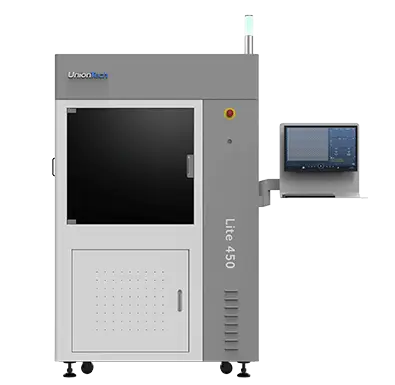
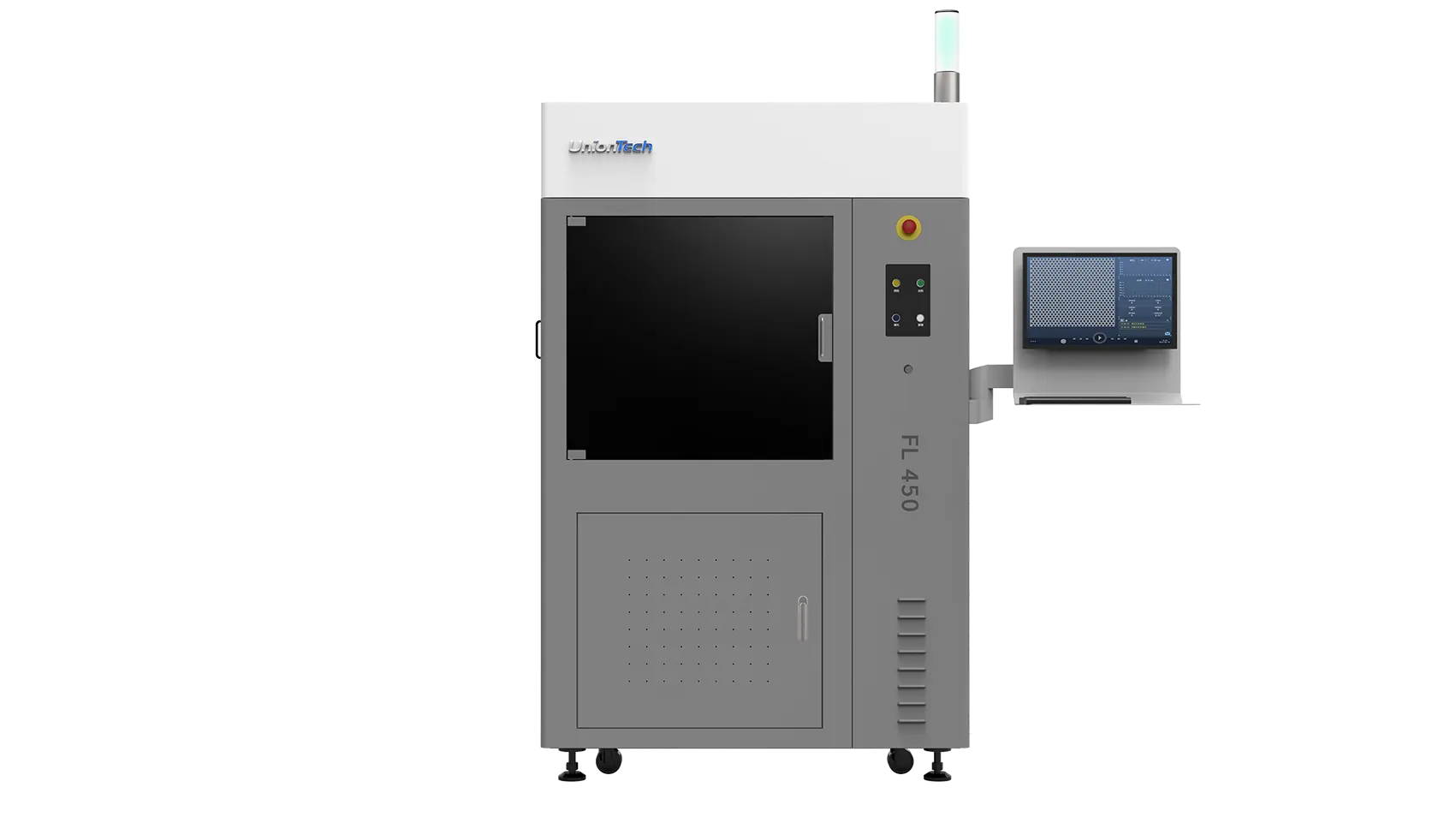
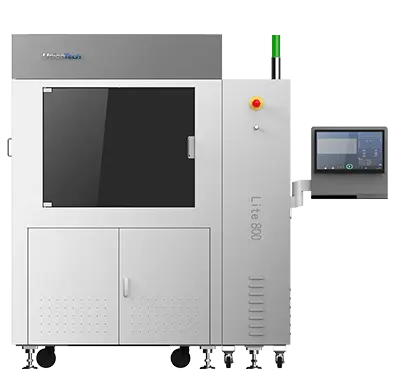
As a leading industrial 3D printer manufacturer, UnionTech has pioneered the use of Stereolithography (SLA) technology to meet the stringent demands of the automotive sector. UnionTech’s product portfolio is extensive, focusing on professional-grade SLA, DLP, and SLM equipment. Key product series like the RSPro (large format, high precision) and Pilot (versatile prototyping and small-batch production) are specifically designed for industrial applications where precision, speed, and material versatility are paramount.
For applications requiring high-fidelity optics, such as car lights, UnionTech’s SLA technology is the platform of choice. Its systems, such as the RSPro series, offer crucial technical specifications that directly address the need for transparency:
Precision: Features like the variable laser beam size and ultra-high dimensional accuracy ensure the microscopic layer stacking is smooth and repeatable.
Speed: A fast scanning speed allows for efficient production without sacrificing detail.
Open Material System: This allows manufacturers to utilize the latest advanced resins specifically engineered for optical clarity.
Understanding the Challenge of Transparency in 3D Printed Car Lights
A car light, including the headlight or taillight lens, is an optical component. Its function is to transmit light with minimal diffusion, scattering, or distortion. For a 3D printed car light prototype or final part to be considered high quality, it must effectively replicate the optical properties of traditional materials like PMMA or Polycarbonate. The challenges in 3D printing transparency typically boil down to two main factors:
Layer Lines: Additive manufacturing builds parts layer by layer. Microscopic steps between these layers can scatter light, resulting in a hazy or frosted appearance instead of a clear finish.
Material Imperfections: The resin itself, or voids/porosity within the printed part, can disrupt the light path.
Overcoming these requires a combination of high-performance hardware, specialized materials, and precise post-processing techniques.
The Technological Triad: How SLA Delivers Optical Clarity
The capability of UnionTech’s solutions to produce highly transparent 3D printed car lights rests on a three-pronged approach involving technology, material, and finishing.
SLA (Stereolithography) technology utilizes a highly focused UV laser to cure photosensitive resin, layer by layer. This process is inherently more precise than many other additive manufacturing methods.
Low Layer Thickness: UnionTech’s industrial SLA printers can achieve a minimal layer thickness. This fine resolution minimizes the ‘stair-stepping’ effect, creating an extremely smooth surface finish right off the build plate. Fewer and smaller layer lines mean less light scattering.
Closed-Loop Control: Systems that incorporate closed-loop control strategies (a feature of UnionTech’s RSPro and Lite series) ensure consistent laser power and recoating precision throughout the entire build, eliminating inconsistencies that could lead to internal defects or variances in clarity.
The final optical quality is heavily dependent on the material. UnionTech leverages its open-material system to support a variety of specialty resins optimized for clarity.
Clarity and Refractive Index: Manufacturers use specialized, water-clear resins (e.g., UnionTech’s compatible clear resins like Crysta-8Q or similar high-performance materials) that are formulated to have a refractive index close to traditional optical plastics. These resins cure to be virtually colorless, providing the base for high transparency.
Light-Curing Technology: The precision of the light-curing process ensures the resin is fully and consistently polymerized, avoiding uncured sections or internal porosities that would hinder light transmission. This high-integrity printing is vital for optical quality in 3D printing in automotive industry.
While the print quality is exceptional, achieving a surface that meets true automotive-grade transparency standards almost always requires specific post-processing steps.
Sanding and Polishing: The semi-transparent part fresh off the printer undergoes a meticulous process of wet-sanding with increasingly fine grits. This physically removes any remaining microscopic layer lines and surface imperfections.
Clear Coating: After sanding, the part is typically polished and then coated with a clear acrylic or polyurethane finish. This coating fills any remaining micro-scratches and smooths the surface further, achieving a glass-like finish that fully eliminates scattering and restores the lens to its intended optical clarity and performance.
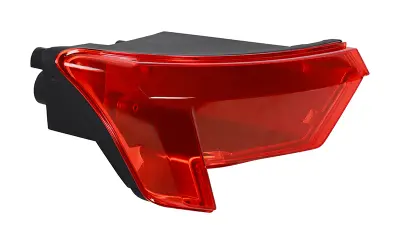
The combination of UnionTech’s industrial-grade SLA precision and specialized optical resin, followed by expert post-processing, allows manufacturers to achieve prototypes and small batches of 3D printed car lights that are visually and functionally indistinguishable from injection-molded counterparts.
Conclusion
The question of whether 3D printed car lights can meet high transparency standards has been decisively answered by pioneers like UnionTech. Through the deployment of advanced Stereolithography (SLA) printers, such as those offered by this leading industrial 3D printer manufacturer, the automotive industry has gained access to a transformative production method. The combination of ultra-fine printing resolution, compatibility with specialized clear resins, and proven post-processing techniques ensures that optical parts—a critical component of vehicle design in 3D printing in automotive industry—are produced with the speed and design flexibility of additive manufacturing, without sacrificing the required clarity and performance. This capability is not just about prototyping anymore; it’s about enabling a new era of complex, custom, and highly functional automotive lighting.