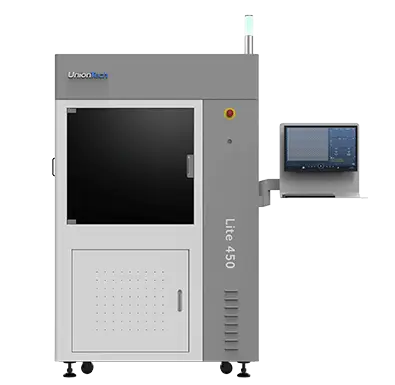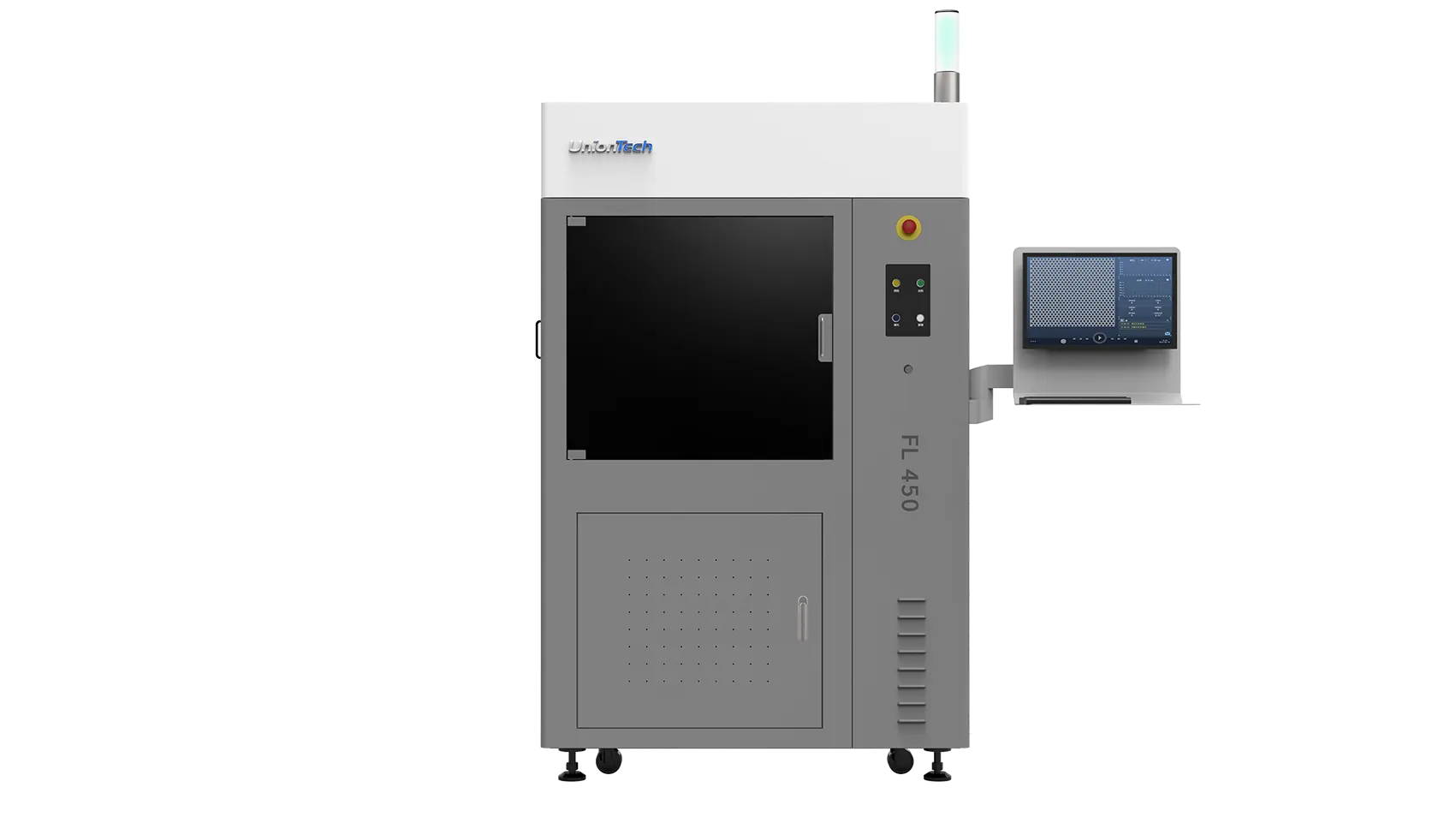
The modern automotive industry relies heavily on speed, precision, and the ability to rapidly iterate on complex designs. For manufacturers, design houses, and customizers, the professional solution for physical modeling is industrial 3D printing, specifically using Stereolithography (SLA) technology. Drawing upon the expertise of a leading industrial 3D printer manufacturer like UnionTech, this article details the focus, process, and technical requirements for using a 3D printer to create high-quality, professional car models.
The Indispensable Role of SLA in Car Model Production
In the automotive design process, physical car models are crucial. They act as a bridge between CAD files and the final product, enabling key assessments that cannot be achieved through digital simulation alone:
Aesthetic and Design Review: Whether it’s a full-size model or a large-scale model (such as a 1/5 scale model), designers can evaluate the car’s proportions, surface continuity, and lighting effects in physical form.
Functional Testing: Models of components, such as air ducts or aerodynamic parts, are used for real-world validation, like wind tunnel testing.
Historically, achieving the necessary complexity and surface finish required costly, time-consuming subtractive (CNC) or manual methods. Industrial SLA 3D printing fundamentally changed this by offering:
Exceptional Detail and Surface Quality: SLA, the core strength of companies like UnionTech, uses a laser to cure liquid resin, creating extremely smooth, high-resolution surfaces. This is non-negotiable for automotive models where finish and aerodynamics are critical.
Geometric Freedom: Complex, intricate geometries—like detailed grilles, thin-walled vents, or internal channels—can be fabricated directly, eliminating the constraints of traditional tooling.
Rapid Iteration: Designs can be converted from a digital file to a physical model within hours or days, drastically shortening the product development lifecycle.
The Process: Using an Industrial 3DPrinter to Fabricate Models
Creating a professional-grade 3D printed car model is a multi-step process that leverages the power of industrial SLA machinery.
The initial CAD model is prepared for the printing environment. This often involves:
Hollowing: To save on expensive material and reduce print time, large components (like body shells) are often hollowed out with internal support structures to maintain integrity.
Component Segmentation: The model is intelligently broken down based on material and size. Components requiring different finishes, such as high-transparency parts for headlights or opaque parts for the body, are separated and oriented to minimize layer visibility on critical aesthetic surfaces.
The choice of material is key to mimicking the intended properties of the final vehicle part.
| Component | Professional Requirement | SLA Material Focus (UnionTech) |
| Exterior Body Panels | High detail, smooth finish, stability for painting. | Standard high-resolution, easy-to-finish resin. |
| Headlight Assemblies | High transparency, minimal yellowing, polishability. | Specialized transparent or light-curing resins capable of optical clarity after post-processing. |
| Functional Prototypes | Durability, mechanical strength, and/or temperature resistance. | Engineering-grade or tough resins, tailored for testing. |
Industrial machines like UnionTech’s large-format SLA printers offer substantial build volumes, enabling the single-shot printing of large components, such as a full dashboard, further accelerating the iteration process. The multi-laser architecture found in some advanced systems can increase printing efficiency by up to 60% while maintaining high precision.
After printing, the raw part must undergo intensive post-processing to achieve the professional finish required for aesthetic or display models:
Cleaning and Curing: Uncured resin is washed off, and the part is post-cured under UV light to fully solidify the material and maximize its mechanical properties.
Support Removal and Sanding: Supports are carefully removed, followed by rigorous sanding—often through several levels of fine grit—to eliminate all visible layer lines and achieve a perfectly smooth surface.
Finishing (Painting/Plating): The sanded body panels are primed, painted, and clear-coated using professional automotive finishes. Transparent parts are meticulously polished to achieve a glass-like optical clarity, allowing them to compete with PMMA materials.
Beyond Models: Customization and Functional Parts
While creating visually striking display models (such as the 1/5 scale supercar models UnionTech has helped produce for showrooms) is a key application, the real industrial power lies in customization and functional validation.
Rapid Functional Prototypes: Engineers utilize the technology to create functional components like air ducts, manifolds, or complex parts for electric racing teams. This allows teams to test dozens of design iterations quickly, significantly shortening development time.
Aftermarket Customization: For aftermarket modification firms, SLA eliminates the need for expensive, time-consuming injection molding tooling for small batches. Customized car parts (e.g., bespoke side skirts or unique grilles) can be manufactured efficiently in small quantities, cutting the production cycle from potentially months to a matter of days. The high precision ensures that modified parts have an exact fit with the original car structure, including precise alignment and screw holes.
Conclusion
The transformation of the automotive design and manufacturing workflow is fundamentally driven by the precision, speed, and material versatility of industrial SLA technology. By providing robust, large-format Stereolithography systems, industrial 3D printer manufacturer like UnionTech have established themselves as essential partners, enabling crucial applications ranging from the creation of highly detailed 3D printed car models for display to the development of functional prototypes for rigorous performance testing. The seamless integration of digital design with rapid, high-fidelity physical fabrication is what distinguishes this industrial approach. Ultimately, this technology allows manufacturers to dramatically reduce lead times, cut costs associated with traditional tooling, and accelerate the delivery of the next generation of innovative vehicles to the market.