The question of how fast industrial 3D printers operate often comes up when manufacturers evaluate additive manufacturing for real production tasks rather than simple prototyping. Print speed is not a single number but a result of multiple factors, including build size, layer thickness, material behavior, and system stability. As an industrial 3D printer manufacturer, UnionTech approaches speed from a process perspective. We focus on how fast a part can move from design to usable output while maintaining dimensional reliability, rather than emphasizing isolated machine parameters. For B2B users, consistent throughput and predictable cycle times matter more than headline speeds.

When discussing industrial 3D printer performance, speed must be understood alongside accuracy and repeatability. Layer thickness is a primary variable: thinner layers improve surface quality but increase total print time, while thicker layers accelerate builds for functional validation or larger components. Build volume also plays a role, as printing multiple parts in one job can significantly improve overall productivity. In an industrial environment, the industrial 3D printer is usually integrated into a workflow that includes data preparation, post-processing, and quality inspection. Our systems are designed to balance these stages so that faster printing does not create bottlenecks later in the process.
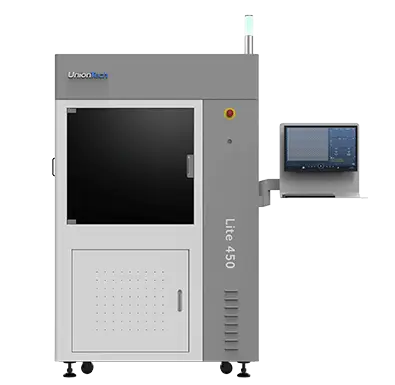
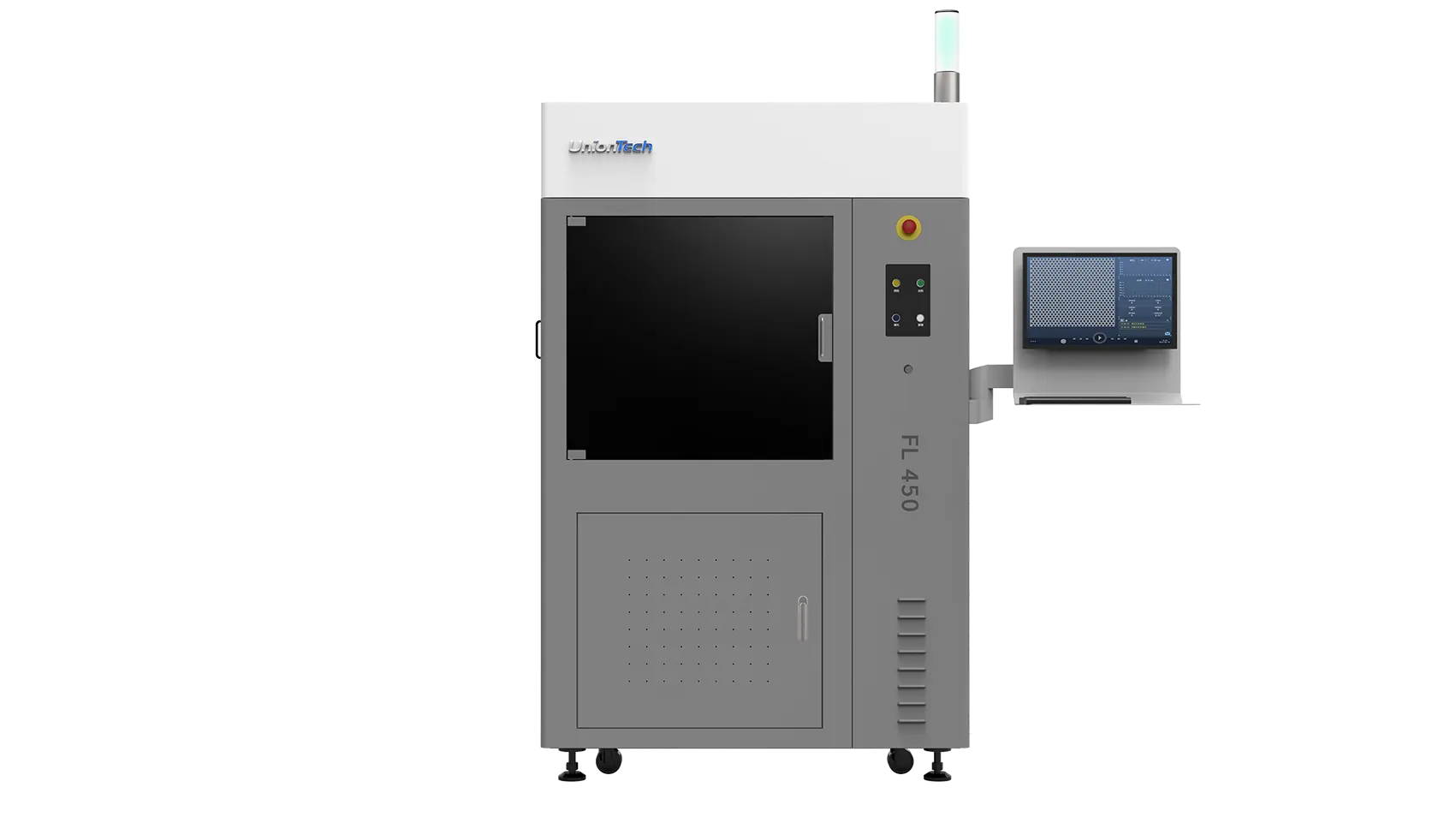
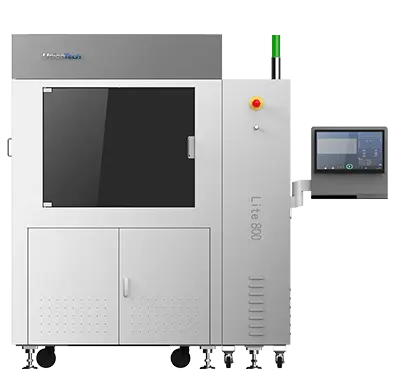
From our experience supporting customers across automotive, aerospace, and electronics manufacturing, print speed becomes meaningful only when supported by stable hardware, material compatibility, and software coordination. At UnionTech, we provide SLA systems with build sizes ranging from 100 mm to 2100 mm, allowing users to select equipment that matches part scale and production cadence. As an industrial 3D printer manufacturer, we work closely with customers to align resin selection, layer settings, and job layout with their application goals. Our in-house resins and open material partnerships help ensure curing behavior remains predictable, which reduces rework and downtime.
So, how fast are industrial 3D printers in practice? The answer depends on how well speed is integrated into the entire manufacturing process. A reliable industrial 3D printer should support steady output, repeatable quality, and efficient use of operator time. As an industrial 3D printer manufacturer, we design systems that help customers shorten development cycles without sacrificing accuracy or process control. By viewing speed as part of a complete production system, industrial users can achieve measurable efficiency gains while maintaining confidence in every printed component.