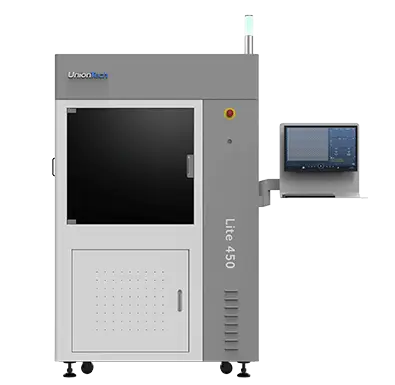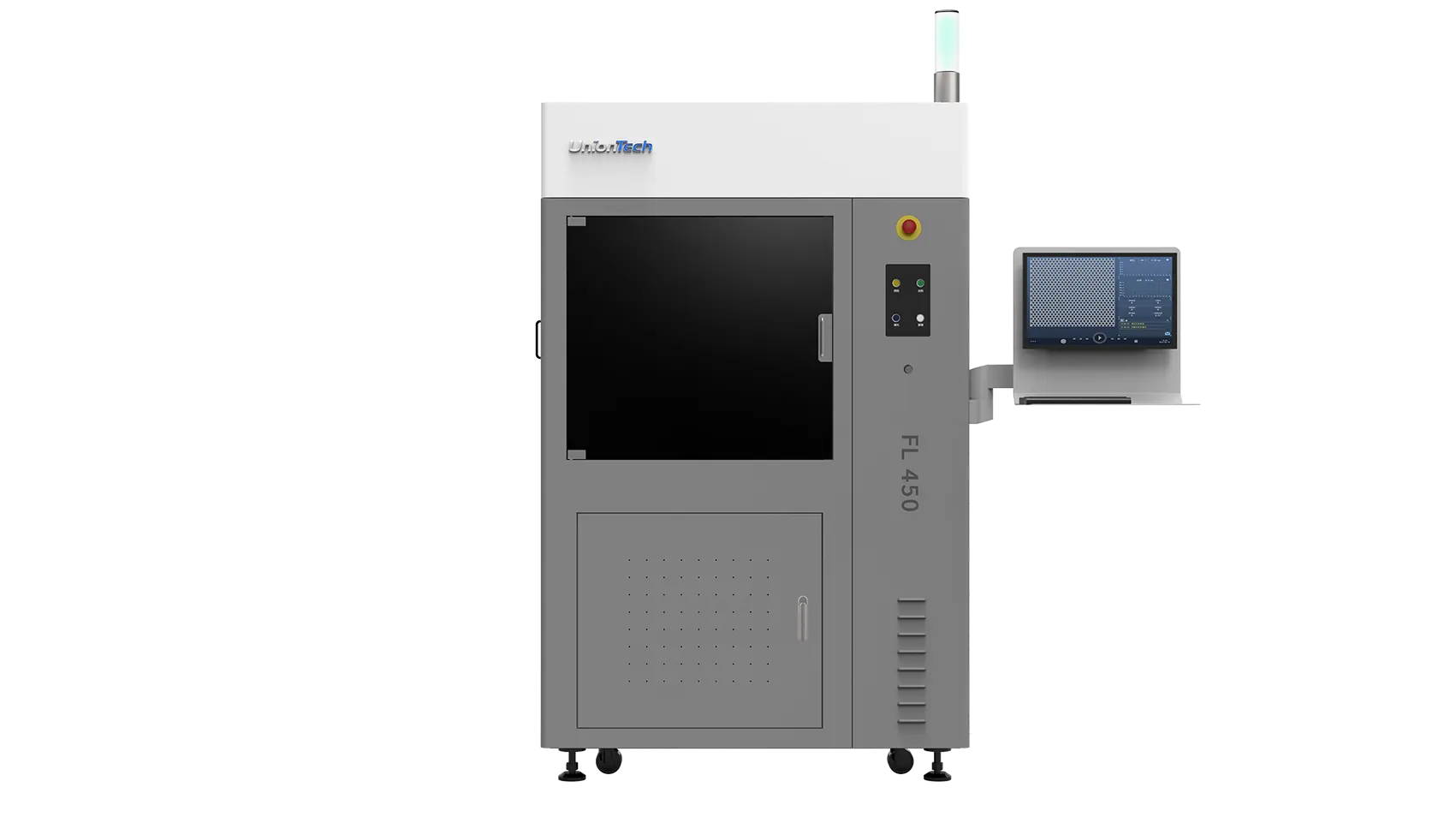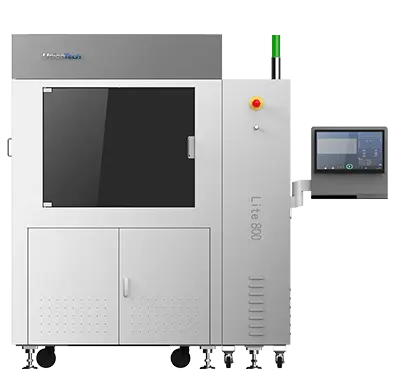
The global tire manufacturing industry is a cornerstone of the automotive and logistics sectors, yet it faces constant pressure to reduce lead times, cut down on tooling costs, and maintain the highest standards of quality. Traditionally, the creation of a tire mold—a complex, multi-component structure—has been a lengthy and resource-intensive process. However, the integration of Additive Manufacturing (AM) technology is now revolutionizing this workflow. For companies seeking to achieve unprecedented cost savings and flexibility, adopting an industrial-sized 3D printer has become a strategic necessity.
The key to this transformation lies in digitally creating the master model for the tire mold. By moving away from conventional CNC machining processes, manufacturers can drastically shorten the time from design to final production, leading directly to a lower overall cost per mold. This shift is perfectly facilitated by specialized equipment from leading manufacturers like UnionTech, which has developed solutions specifically for this demanding application.
The High Cost of Conventional Tire Mold Production
To appreciate the efficiency gains offered by 3D printing, it’s essential to understand the inherent challenges of the traditional method.
Conventional tire mold manufacturing typically involves:
CNC Machining: This method, though precise, is time-consuming, especially when dealing with the intricate and constantly changing tread patterns required for different tire models. A typical large mold can take weeks or even months to machine.
Segmented Assembly: Tire molds are usually composed of numerous segments (often 12 or more) that must be machined separately and then assembled. This introduces potential assembly errors, tolerances that stack up, and a high reliance on specialized labor.
Material Waste: The subtractive nature of CNC machining generates significant material waste (chips and shavings), which contributes to higher material costs and a larger environmental footprint.
Slow Prototyping: Designing new tread patterns and getting a physical prototype takes a long time, slowing down the entire product development lifecycle and delaying market entry for new, innovative tire designs.
Accelerating the Workflow with an Industrial-Sized 3D Printer
The transition to additive manufacturing addresses these inefficiencies head-on, delivering cost reductions across multiple fronts. By utilizing a high-performance industrial-sized 3D printer, manufacturers can compress the entire tooling timeline.
Traditional mold manufacturing requires highly skilled operators for CNC programming and machining, as well as significant manual post-processing to polish and finish the metal segments. The 3D printing process, particularly Stereolithography (SLA), is largely automated. An industrial 3D printer manufacturer like UnionTech provides a robust, digital workflow where the printer executes the complex geometry, minimizing the need for extensive manual labor and reducing overall machining time.
SLA technology builds the mold master layer by layer, utilizing only the necessary resin material, which drastically reduces the material waste compared to subtractive methods. Furthermore, the print chamber environments are optimized for energy efficiency, offering a greener, more cost-effective production process.
One of the most significant cost reducers is the speed of iteration. In the digital workflow, design changes can be implemented instantly in the CAD file and printed overnight. This speed is crucial for producing 3D printed tire prototypes and master models for new product lines, allowing tire companies to validate designs faster and bring products to market ahead of competitors. The design freedom also allows for the creation of tread patterns that are impossible or cost-prohibitive to create using conventional methods, opening up new avenues for performance and efficiency in the final tire product.
UnionTech: Precision for Tire Mold Manufacturing
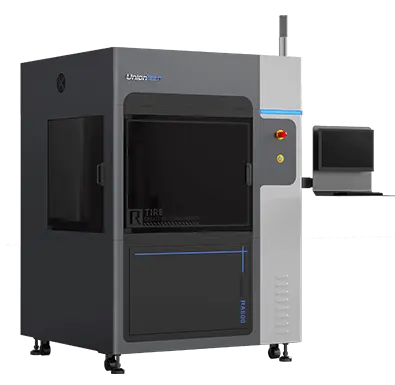
UnionTech is a specialized industrial 3D printer manufacturer that understands the unique requirements of the tire industry. Their dedicated industrial solutions, such as the RA600 Tire Mold SLA 3D Printer, are engineered to deliver the precision and scale necessary for producing high-quality master models for 3D printed tyres and molds.
Product Spotlight: UnionTech RA600 Key Specifications
The RA600 is an example of an industrial-sized 3D printer optimized for tire mold production, offering the following specifications that directly contribute to cost reduction through efficiency and accuracy:
| Specification | Value | Implication for Cost Reduction |
| Build Volume (X×Y×Z) | 600 × 600 × 400 mm | Accommodates large tire mold segments or full-size prototype masters, reducing the need for post-print assembly of smaller parts. |
| Accuracy | ± 0.1 mm (for dimensions less than 100 mm) | Ultra-high precision ensures the tread pattern is perfect on the first print, minimizing costly rework and material waste. |
| Layer Thickness | 0.05 to 0.25 mm | The ability to print fine layers guarantees the extremely smooth surface finish required for vulcanization, reducing manual post-processing time. |
| Laser Scanning Speed | 8 to 15 m/s | High printing speed significantly cuts down on overall manufacturing time, increasing daily throughput. |
By utilizing the RA600’s capabilities, manufacturers can produce master models with exceptionally complex, high-resolution tread patterns and fine groove details, guaranteeing accuracy and streamlining the subsequent casting process. This dedicated tooling solution from UnionTech demonstrates how purpose-built 3D printing equipment is essential for truly impactful cost savings in industrial manufacturing.
Conclusion
The future of high-volume manufacturing, particularly in the demanding tire industry, is undeniably digital. The adoption of an industrial sized 3D printer transforms the traditional mold production process from a slow, expensive, subtractive challenge into a rapid, cost-efficient, additive workflow. By enabling faster iterations, reducing labor needs, and drastically minimizing material waste, 3D printed master tire models created on platforms like those from UnionTech offer a clear competitive advantage. Companies that strategically integrate this technology will continue to reduce production costs while simultaneously boosting their capacity for innovation and speeding up their time-to-market. The choice of an experienced industrial 3D printer manufacturer is paramount to realizing these transformative benefits.