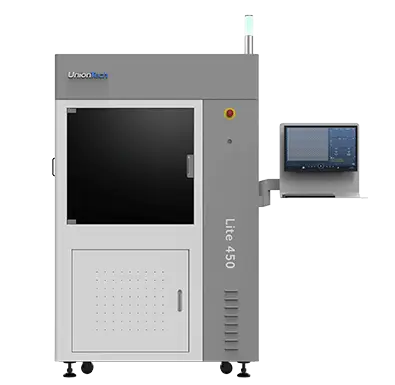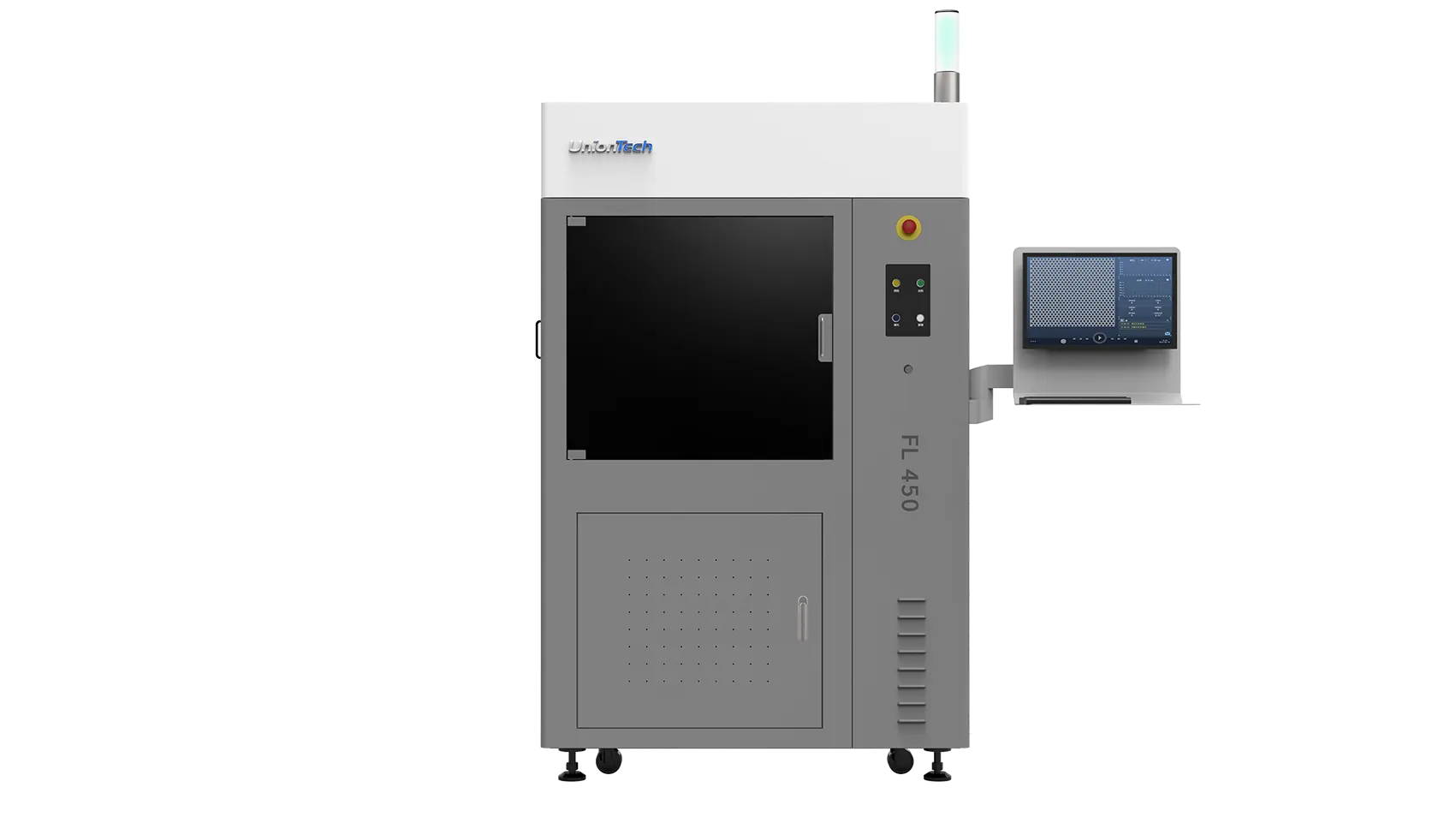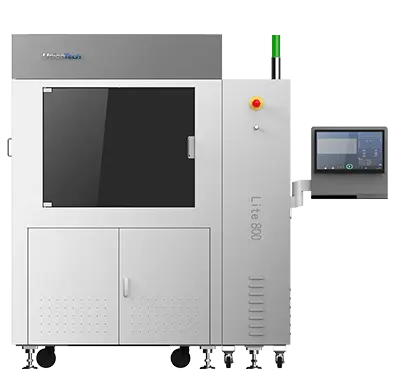
The global supply chain has historically been a complex network fraught with long lead times, high inventory costs, and the persistent threat of disruption. In today’s highly dynamic and demand-driven market, manufacturers require a solution that is flexible, rapid, and resilient. Enter additive manufacturing (AM), commonly known as 3D printing.
For leading industrial 3D printer manufacturer companies like UnionTech, 3D printing is not just a prototyping tool; it is a foundational technology that is fundamentally changing how goods are designed, produced, and delivered. By shifting manufacturing from a centralized, subtractive model to a decentralized, additive one, 3D printing provides unparalleled efficiencies across the entire supply chain, from initial design to end-use parts.
Redefining Inventory Management with a Virtual Warehouse
One of the most significant costs in traditional supply chain management is the capital tied up in inventory and the warehousing space required to store it. Manufacturing companies must constantly forecast demand, which often leads to either costly overstocking (and eventual obsolescence) or devastating stockouts.
3D printing offers a radical solution: the virtual inventory. Instead of stocking thousands of physical spare or slow-moving parts, a company can simply maintain a digital library of CAD files. Parts are then produced on demand, only when and where they are needed.
Eliminating Obsolescence: Digital files never expire or become obsolete, unlike physical parts.
Reducing Warehousing Costs: Capital is freed up by minimizing the need for large storage facilities, a factor that can account for substantial savings in overall operating expenses.
Guaranteed Availability: The ability to print a part on demand means the risk of product stockout is essentially negated, ensuring continuous service and maximum uptime for equipment.
This shift dramatically simplifies logistics and allows companies to respond to fluctuating market conditions with unprecedented agility.
Cutting Lead Times and Localizing Production
The typical supply chain involves international sourcing, long maritime or air freight times, customs delays, and then final delivery. This linear process can extend lead times from weeks or months to over a year for complex components.
The adoption of an industrial 3D printer radically shortens this cycle. Since the technology allows for the production of end-use parts or tools closer to the point of need (near-site or on-site), manufacturers bypass nearly all long-haul transportation.
Leveraging Additive Manufacturing for Speed and Flexibility
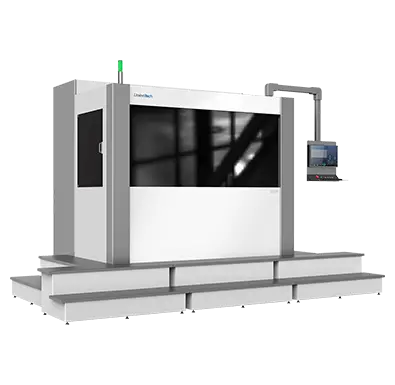
For a company like UnionTech, which specializes in advanced Stereolithography (SLA) and Digital Light Processing (DLP) systems, the benefits are clear. Consider their large-format systems, such as the RSPro2100, which offers a massive 2,100 × 700 × 800 mm build volume and utilizes a triple-laser 355 nm system with a scanning speed of 8–15 m/s. This allows for:
| Feature | Efficiency Gain |
| On-Demand Tooling | Jigs, fixtures, and molds can be designed and printed in hours, not weeks, speeding up assembly lines. |
| Rapid Prototyping | Multiple design iterations can be tested immediately, accelerating the product development lifecycle. |
| Part Consolidation | Complex assemblies can be redesigned into single printed parts, reducing the bill of materials and assembly time. |
| Minimized Transportation | Producing parts locally slashes shipping costs, transit time, and the associated carbon footprint. |
The move toward localized manufacturing also enhances supply chain resilience. When unforeseen global events or geopolitical issues disrupt traditional shipping lanes, companies with in-house industrial 3D printer capabilities can maintain operational continuity.
Optimizing Materials and Enhancing Product Design
A core inefficiency of traditional manufacturing (subtractive methods like CNC machining) is the significant material waste generated from cutting away excess material. 3D printing, as an additive process, uses only the required 3D printer supplies and material, layer by layer, leading to substantial savings and a smaller environmental footprint.
Furthermore, the design freedom enabled by additive manufacturing allows engineers to create parts with complex, lightweight geometries—such as internal lattices—that are impossible to produce with conventional techniques. These parts:
Reduce Material Consumption: Less mass means lower material costs per part.
Improve Performance: Lighter parts are critical in aerospace and automotive industries, leading to greater fuel efficiency.
Enhance Customization: The technology supports mass customization, allowing end products to be tailored to specific customer or application needs without expensive retooling.
The flexibility of the material platform offered by industrial 3D printer manufacturer systems (like the openmaterial systems from UnionTech) also allows businesses to utilize a wide range of engineering-grade resins, from standard and transparent to high-performance, high-temperature, and mold-grade materials, ensuring the optimal part properties for any application.
Conclusion
The efficiencies delivered by industrial 3D printer technology across the supply chain are transformative, moving manufacturing away from a rigid, inventory-heavy model to a flexible, on-demand digital framework. By enabling virtual inventory, localizing production, drastically cutting lead times, and optimizing material usage, 3D printing enhances resilience and reduces costs. Companies like UnionTech are at the forefront of this industrial evolution, providing the advanced systems and comprehensive 3D printer supplies necessary for businesses to realize these benefits. Embracing this additive approach is essential for any enterprise looking to gain a competitive edge in the complex, fast-paced world of modern manufacturing.