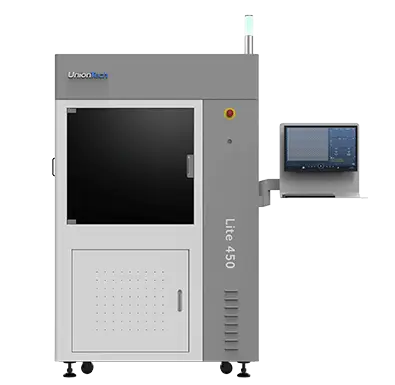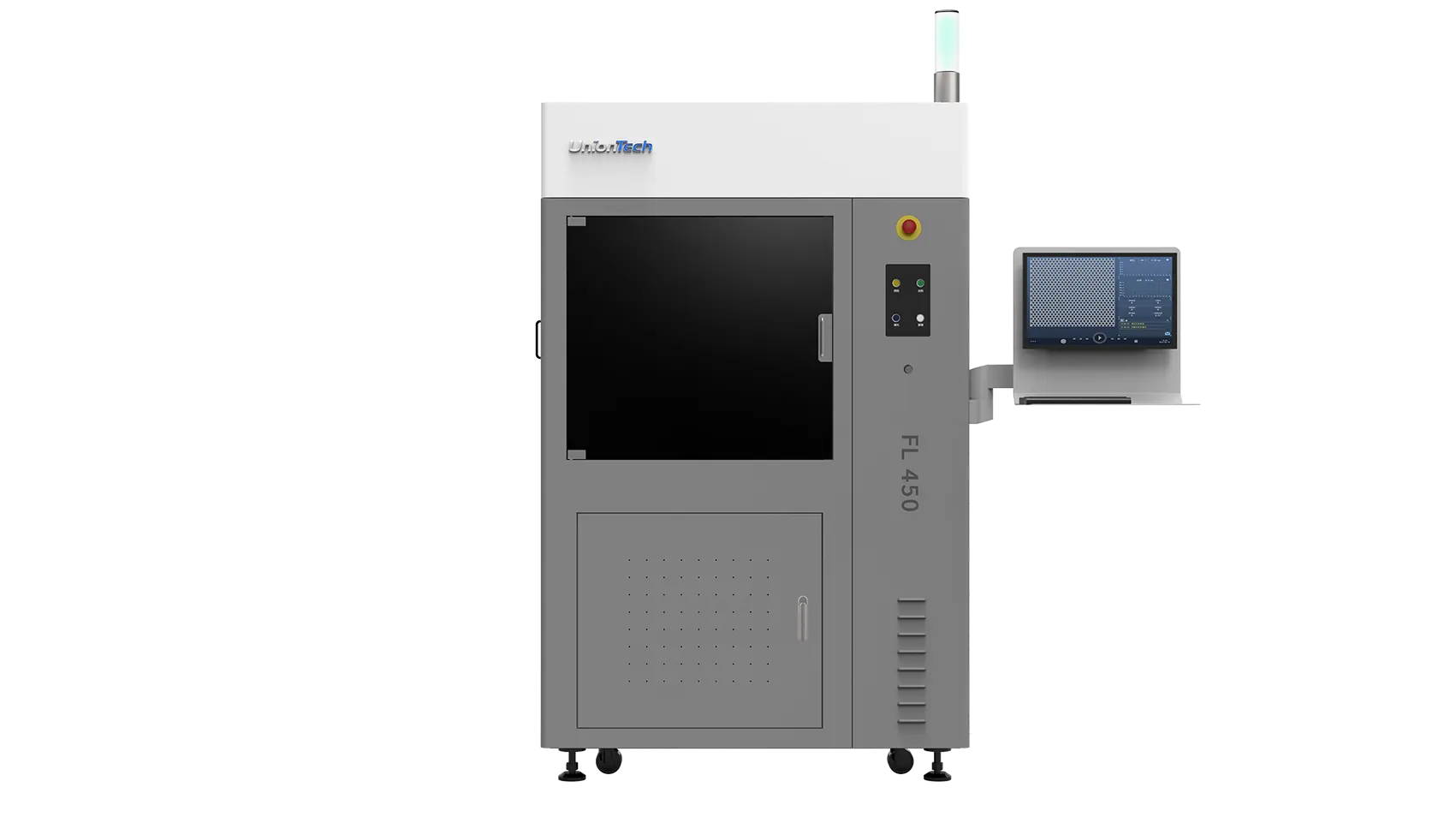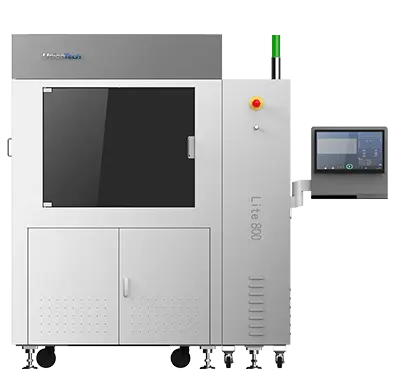
Vehicle components often include lattice structures, internal channels, variable wall thicknesses, and organic curves that are difficult to process using conventional manufacturing. In our daily work as UnionTech, we frequently see engineers asking how additive manufacturing can reliably reproduce these complex design patterns while keeping dimensional accuracy under control. From our perspective as an industrial 3D printer manufacturer, the answer lies in how digital design data is translated into stable layer-by-layer fabrication. When vehicle parts are printed rather than machined, the geometry is no longer limited by cutting tools, allowing designers to focus on function-driven structures. At the same time, an industrial sized 3D printer provides the build volume needed to handle large automotive components without splitting them into multiple assemblies, which helps preserve structural integrity and design intent.
Handling complex patterns is not only a hardware issue but also a data-processing challenge. In vehicle part development, designers often use topology optimization or generative design to reduce weight while maintaining strength. Our role as an industrial 3D printer manufacturer requires us to ensure that these digital files can be processed accurately before printing begins. We rely on our internal software workflow to analyze geometry, manage support strategies, and control exposure parameters so that fine features are formed consistently. When engineers use an industrial sized 3D printer for these applications, the stability of the optical system and motion control becomes essential, especially for thin ribs and enclosed cavities that appear frequently in automotive molds and functional prototypes.
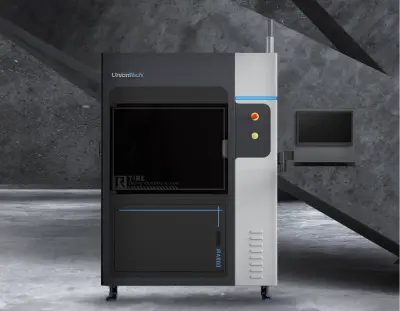
As vehicle parts increase in size and complexity, scalability becomes a key concern. In our automotive and tooling projects, we often see demand for full-scale molds and structural components rather than reduced prototypes. This is where equipment such as our RA600 tyre mold SLA printer is introduced naturally into the workflow. Designed for large-format resin printing, this system supports complex tread patterns and internal geometries commonly found in tire molds. Our experience as an industrial 3D printer manufacturer shows that consistent accuracy across a large build area is critical for repeatable results. An industrial sized 3D printer allows engineers to validate complex designs at production scale, reducing the need for redesign caused by assembly mismatches or geometric distortion.
Complex design patterns in vehicle parts are no longer experimental concepts; they are practical solutions enabled by additive manufacturing. From data preparation to large-format printing, each step plays a role in ensuring that intricate geometries remain faithful to the original design. As UnionTech, we focus on providing systems and workflows that help engineers move from digital complexity to physical accuracy. By combining our experience as an industrial 3D printer manufacturer with stable large-format solutions, an industrial sized 3D printer becomes a practical tool for automotive development rather than a conceptual one.