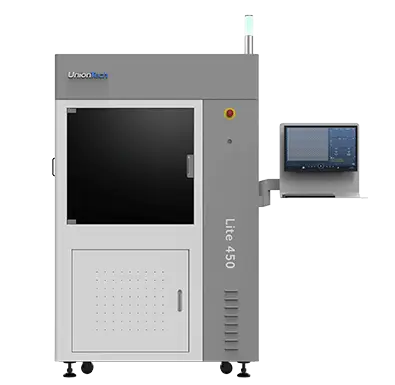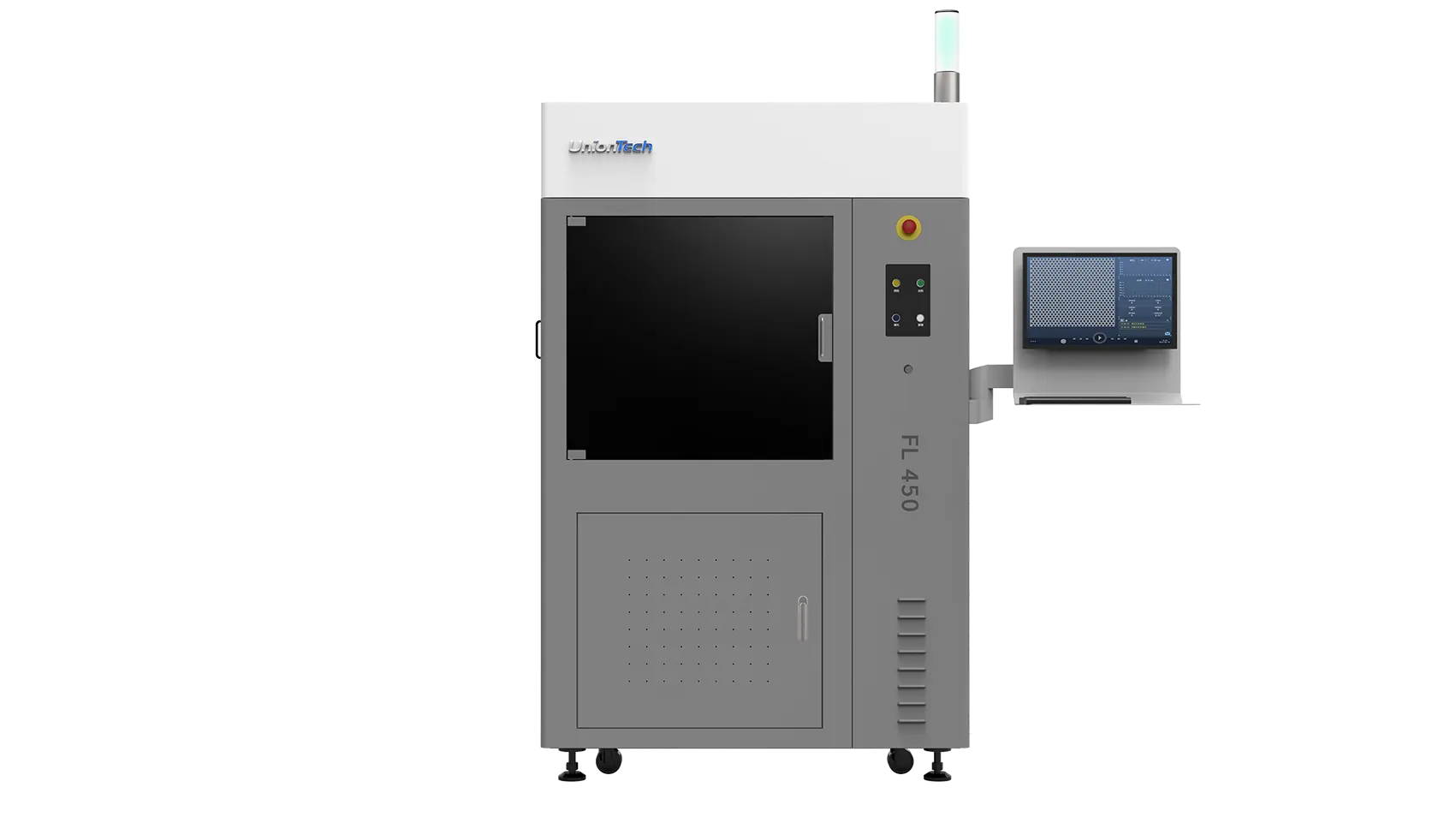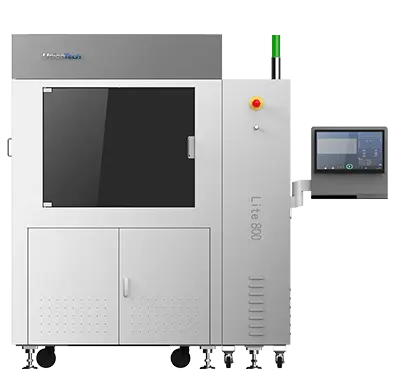
In tire mold manufacturing, dimensional tolerance directly affects tread consistency, air flow performance, and downstream assembly. When we discuss achieving ±0.05 mm tolerance with SLA, the focus is not only on equipment resolution but on how data preparation, process stability, and material behavior work together. As an industrial 3D printer manufacturer, UnionTech has worked with tire mold producers who require repeatable accuracy across large formats. At the early design stage, choosing an industrial sized 3D printer with sufficient build volume and controlled exposure parameters helps reduce scaling errors and supports stable geometry from the first layer to the final cure.
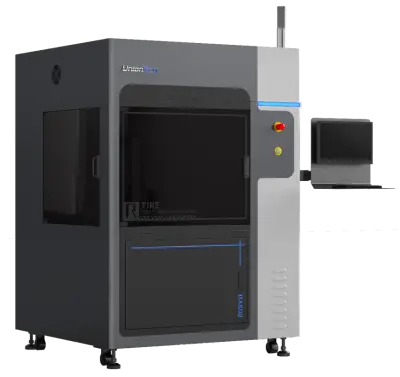
Achieving tight tolerance in large tire mold components depends on consistent photopolymerization across the full build area. We see that uniform laser energy distribution, stable mechanical structures, and calibrated motion systems are essential for maintaining ±0.05 mm tolerance over extended print times. In our experience as an industrial 3D printer manufacturer, industrial sized 3D printer systems must address thermal drift and resin flow behavior to prevent cumulative deviation. Through controlled layer thickness and optimized scanning strategies, SLA technology can deliver fine surface detail while maintaining dimensional control, even for molds with complex tread patterns and deep cavities.
Precision is also influenced by resin formulation and post-processing consistency. Tire mold printing often requires materials that balance rigidity, heat resistance, and low shrinkage. We provide access to multiple SLA resin options suitable for mold validation and short-run production, allowing engineers to select materials aligned with specific process conditions. Within our industrial sized 3D printer solutions, integrated software tools manage data preparation and exposure parameters, helping users compensate for geometry-specific distortion. This system-level coordination supports accurate translation from CAD data to physical molds without unnecessary iteration.
For tire mold projects that demand large build volumes and controlled tolerance, equipment selection becomes a practical engineering decision. Our RA600 Tire Mold SLA Printer is designed for large-format mold applications, supporting stable printing of tire mold segments with controlled accuracy. As an industrial 3D printer manufacturer, we recommend matching build size, resin behavior, and software control to the actual mold geometry rather than overspecifying hardware. Industrial sized 3D printer platforms that align with real production needs can reduce trial cycles and support predictable outcomes across multiple builds.
Precision in tire mold SLA printing is achieved through coordinated control of equipment, materials, and process parameters rather than a single specification. By combining large-format SLA systems, calibrated software workflows, and application-matched resins, we help manufacturers approach ±0.05 mm tolerance in practical production scenarios. As an industrial 3D printer manufacturer, UnionTech continues to focus on scalable accuracy, enabling industrial sized 3D printer solutions that support reliable tire mold development from design verification to functional use.