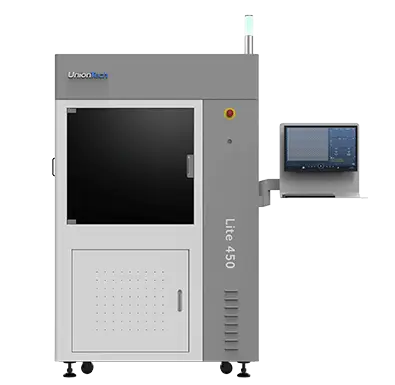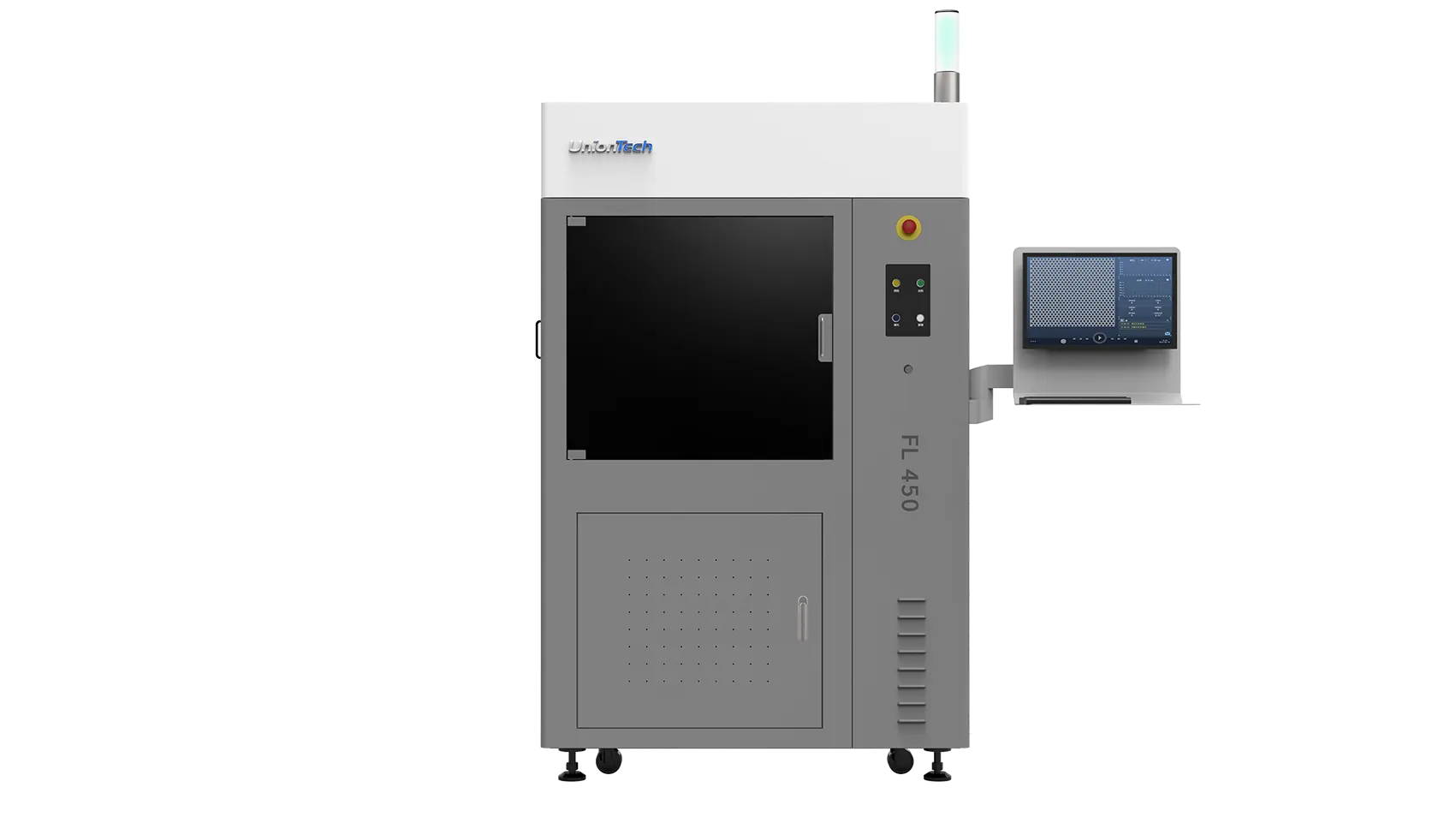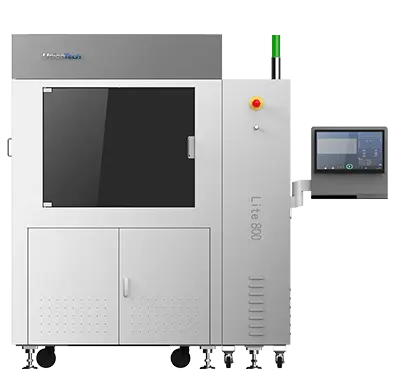
Tire mold manufacturing is evolving as tire designs become more complex and performance requirements continue to increase. Traditional machining methods often struggle to balance development speed, dimensional accuracy, and design flexibility at the same time. This is where additive manufacturing enters the discussion. As an industrial 3D printer manufacturer, UnionTech works closely with tire and tooling engineers to understand how digital workflows can support mold development. By applying 3D printing for tire mould applications, we help manufacturers shorten development cycles while maintaining stable geometric control and repeatable surface quality. These changes are not about replacing conventional processes entirely, but about introducing new options that align with modern tire design and testing needs.
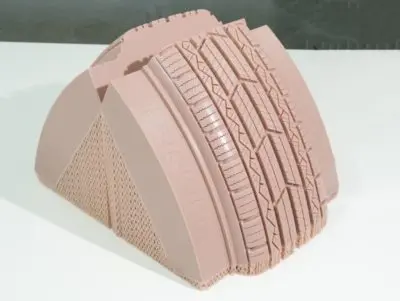
Speed and precision are critical factors when producing tire molds, especially during prototype validation and design iteration. With industrial SLA technology, complex tread patterns and fine details can be formed directly from digital models without extensive retooling. As an industrial 3D printer manufacturer, UnionTech provides SLA systems with build sizes ranging from 100 mm to 2100 mm and accuracy control between 0.05 mm and 0.25 mm, allowing engineers to match equipment to specific mold dimensions. In 3D printing for tire mould workflows, this precision supports faster verification of tread geometry, air channels, and segment alignment before moving to mass production. The ability to move quickly from design data to physical molds helps reduce iteration time while keeping dimensional intent consistent.
Tire molds often involve intricate internal structures, curved surfaces, and segmented designs that are difficult to machine efficiently. Additive manufacturing allows these complex features to be produced as a single build or modular components. As an industrial 3D printer manufacturer, UnionTech supports this complexity with more than 36 self-developed resin materials and open material collaboration. These materials are suitable for prototyping, functional testing, and forming processes used in 3D printing for tire mould scenarios. Our software ecosystem, including Polydevs data processing, BP process algorithms, and integrated print control systems, helps ensure stable builds and predictable outcomes. This combination allows engineers to focus on design optimization rather than manual process adjustments.
The transformation of tire mold manufacturing is driven by practical needs for speed, precision, and design freedom. By adopting 3D printing for tire mould applications, manufacturers can evaluate designs earlier, manage complex geometries more effectively, and reduce development risks. As an industrial 3D printer manufacturer, UnionTech supports this shift through scalable SLA equipment, application-focused materials, and integrated software systems. Rather than positioning additive manufacturing as a single solution, we see it as a complementary tool that helps tire manufacturers adapt to changing design and production requirements with greater confidence.