3D printing has become an essential technology in industrial manufacturing, but one common question we encounter is whether 3D prints need to be scaled larger or smaller for optimal results. As an experienced industrial 3D printer manufacturer, UnionTech understands that choosing the correct scale is critical not only for the dimensional accuracy of the final parts but also for their mechanical performance and surface quality. Scaling decisions often depend on multiple factors, including the intended function of the part, the type of resin used, and post-processing methods. For functional prototypes, a slightly larger scale can help compensate for material shrinkage during curing, whereas for visual or decorative models, maintaining the original dimensions may better preserve intricate details and textures. Understanding these nuances is essential for manufacturers looking to leverage 3D printing effectively.
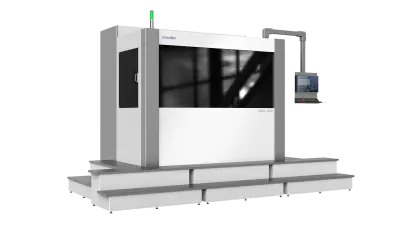
When producing parts at an industrial level, working with an industrial 3D printer manufacturer like UnionTech ensures that scaling adjustments are handled with practical expertise. UnionTech’s RSPro2100, a Large SLA 3D Printer, allows us to print large-format parts with exceptional precision, fine surface finish, and reliable dimensional accuracy. Because different resins behave differently during the curing process, we often guide our customers on whether to scale parts up or down to achieve desired mechanical or aesthetic results. In some cases, slightly increasing the size of a component improves its structural integrity, while reducing dimensions can help speed up production and minimize material usage. UnionTech’s experience in industrial additive manufacturing allows us to provide tailored advice for a wide range of industrial applications.
Scaling considerations are particularly important when using our RSPro2100, UnionTech’s largest industrial 3D printer. This system, equipped with three laser scanning heads, is specifically designed for producing high-quality finished parts as well as mass production. Minor adjustments in scale can prevent warping, ensure proper resin curing, and enhance surface quality for large components. At the same time, reducing the size of prints can make post-processing easier, allow for batch production, and help manage material costs without compromising part precision. By understanding how large-scale SLA printing interacts with part scaling, manufacturers can optimize production schedules and achieve consistent results across multiple batches.
In conclusion, whether 3D prints need to be scaled larger or smaller depends on technical considerations such as part functionality, material characteristics, and printing equipment. As a dedicated large industrial 3D printer manufacturer, UnionTech combines expertise in materials, hardware, and software to assist our customers in making informed scaling decisions. Our RSPro2100 provides industrial clients with the capability to produce large, complex parts with high precision, fine surface finish, and reliable mechanical performance. By taking proper scaling into account, manufacturers can enhance efficiency, maintain dimensional accuracy, and ensure high-quality outcomes in industrial production. Understanding scaling principles is an important step in fully utilizing the potential of large-format SLA 3D printing.