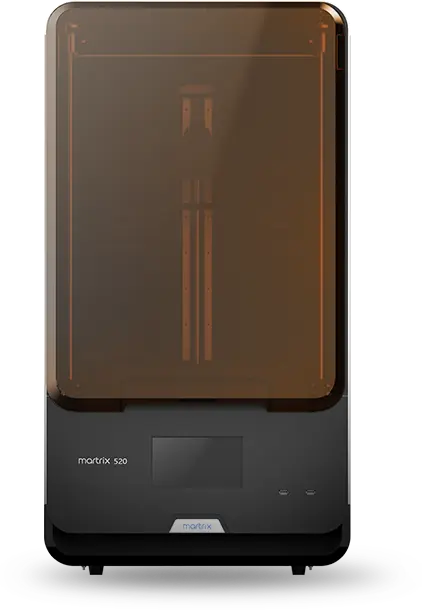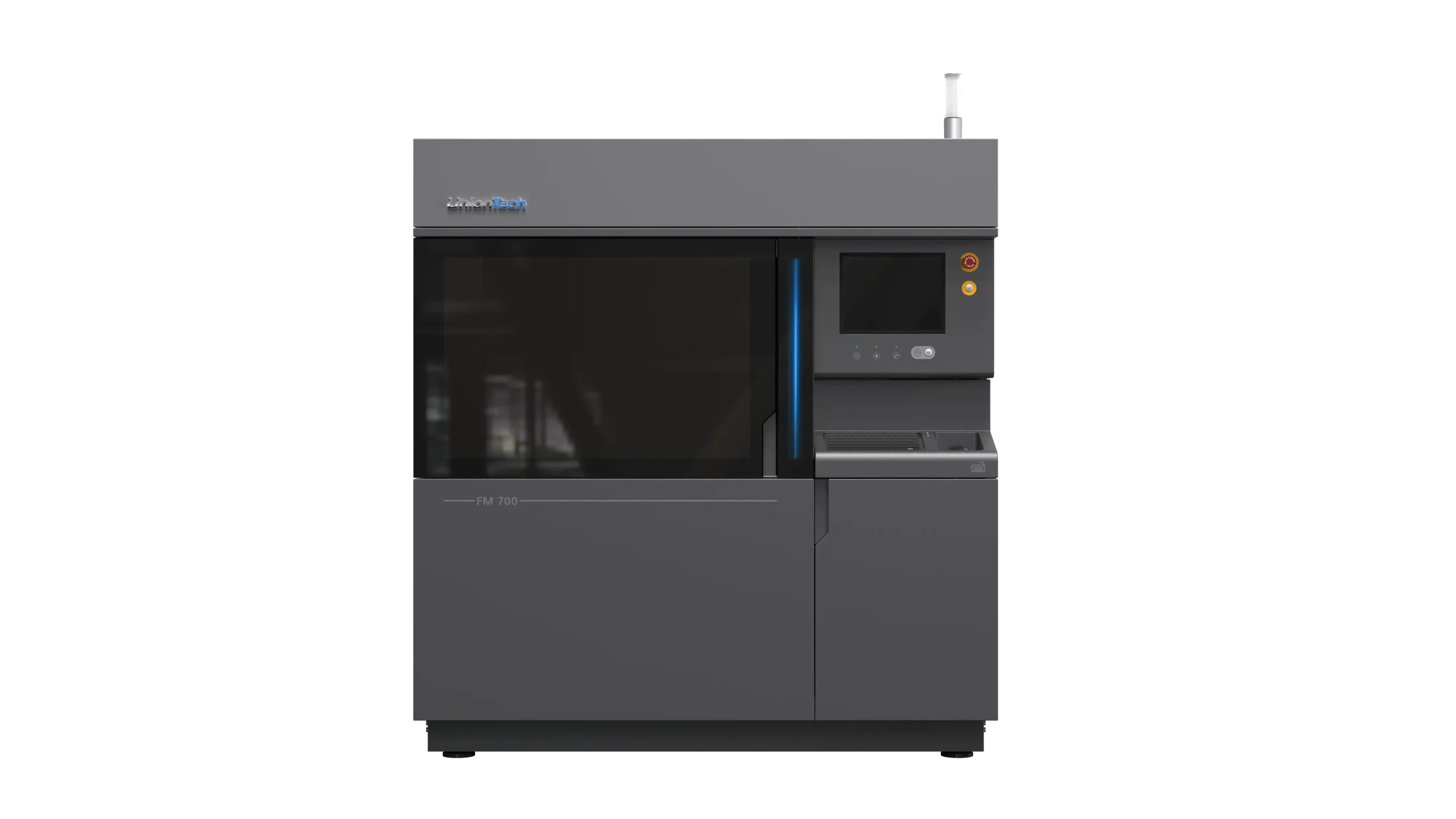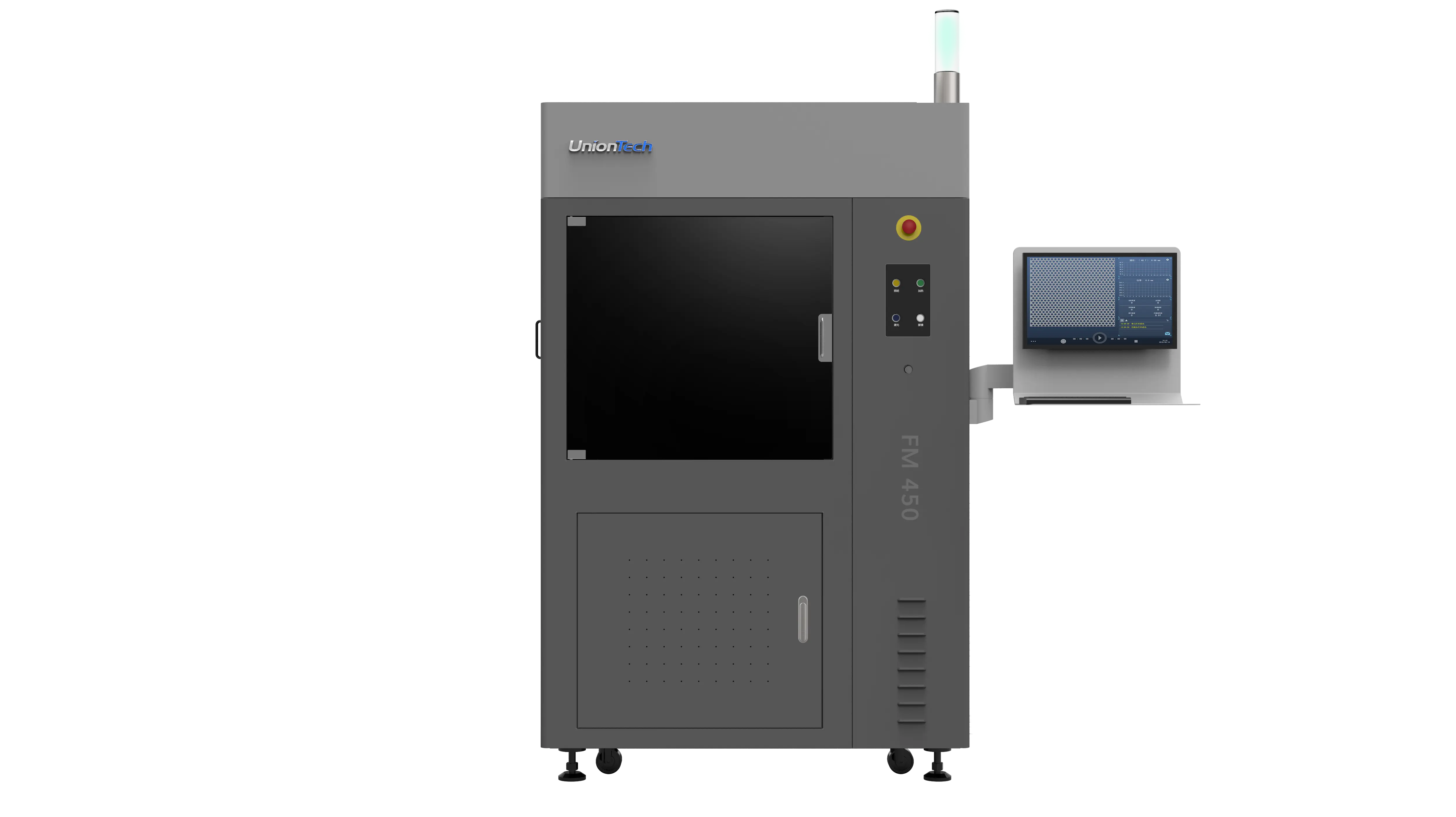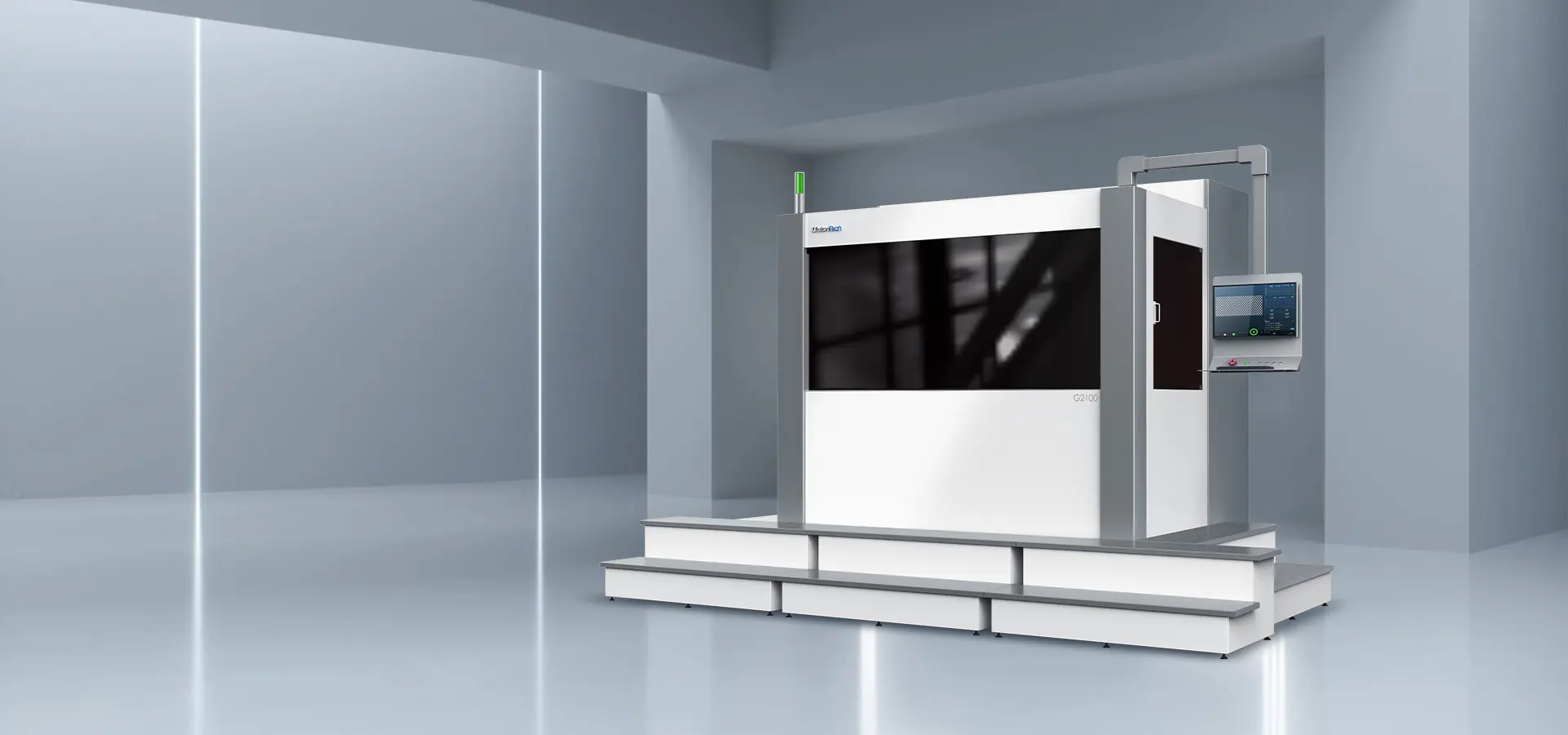
A large-format 3D printer is generally defined as an additive manufacturing machine with a build volume significantly exceeding that of desktop models.
Currently, there is no unified definition of the build volume for “large-format 3D printers” in the industry. However, when the single-axis length in the X/Y direction is ≥800mm, or the build volume is significantly larger than 600×600×400mm, manufacturers typically classify it into the “large-format” category.
For example, UnionTech RSPro1400 (1400×700×500mm), RSPro1800 (1800×900×600mm), RSPro2100 (2100×700×800mm), and RSPro800 2.0 (800×800×550mm) are all large-format SLA 3D printers.
It enables the production of sizable, monolithic parts or the mass production of smaller components in a single batch.
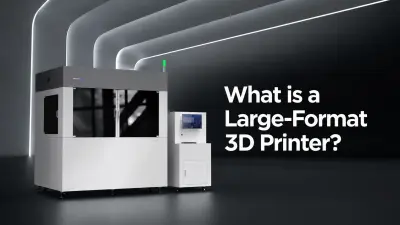
There are three types of 3D printers for large prints:
A large-format SLA printer employs photopolymerization technology, where a precisely controlled UV laser beam scans point-by-point across the surface of a liquid resin tank, following the predetermined cross-sectional path of each layer. Upon laser exposure, the resin solidifies from liquid into a hard, thin solid layer.
These large-format systems can produce components with exceptionally smooth surface finishes and intricate fine details.
A large-format FDM printer operates on the material extrusion principle, using thermoplastic filaments as feedstock. The filament is fed into a heated nozzle where it melts into a semi-fluid state; the nozzle then moves in the X-Y plane under computer control, extruding and depositing the molten material onto the build platform or solidified layer.
Large-format FDM machines are well-suited for manufacturing sizable engineering plastic parts.
A large-format SLS printer uses a focused laser to fuse nylon or polymer powders into solid structures. A high-power laser, directed by galvanometer scanners, then selectively irradiates the powder bed according to the model’s cross-sectional data, raising the temperature of the targeted particles above their melting point so they fuse and bond together.
Large-format SLS systems can produce large, structurally complex, and robust functional parts that require no support structures during printing.

A large-format 3D printer starts with a digital 3D model. The model is checked, repaired, oriented, supported if needed, and sliced into layers. The printer then builds the part layer by layer according to the selected technology.
SLA is currently the most commonly used large-format printing technology. How do large-format SLA 3D printers work? Take the UnionTech SLA 3D printers as an example:
A large-format 3D printer usually includes the following core components:
For SLA systems, key components include the laser, galvanometer scanning system, resin vat, recoater, build platform, control software, and post-processing workflow. They directly affect accuracy, surface quality, and repeatability.
Use UnionTech RSPro2100 as the key specification example. Important specifications to cover:
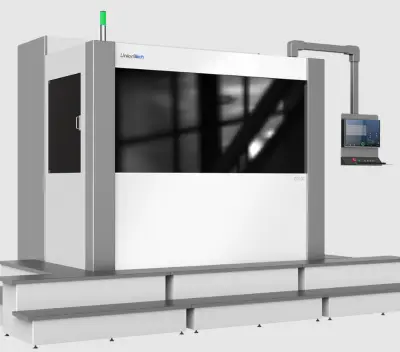
Operating large format 3D printer requires strict adherence to workflow rules to ensure part accuracy and workplace safety.
The difference between a standard and a large-format 3D printer goes beyond just the physical footprint.
| Feature | Standard 3D Printer | large-format 3D Printer |
| Build Volume | Small, generally for prototypes or small batches. | Large Volume, for full-scale parts or mass production. |
| Print Size | Typically within the range of 300mm×300mm×300mm to 600mm×600mm×400mm. | Larger printing size, with the single-axis length in the X/Y direction is ≥800mm, or the build volume is significantly larger than 600×600×400mm. Obtaining stronger parts since no bonding or segmentation is needed. |
| Efficiency | Only a small quantity or a single small-to-medium-sized prototype can be printed at a time. | Higher printing efficiency and throughput, thus reducing costs. |
| Speed | Moderate speed for small items. | Faster printing speed for large parts and batches. |
| Application | Prototyping, jewelry, and dental. | Large industrial 3D printer applications, automotive, aerospace, architecture, and so on. |