In the premium automotive modification industry, personalization is the ultimate luxury. High-end workshops and car enthusiasts constantly push the boundaries of design, demanding bespoke components that reflect individuality and optimized aerodynamics. However, bridging the gap between a creative concept and a physical, road-ready part has traditionally been an uphill battle.
For specialized companies like C-TECH, low-volume customization presented severe operational bottlenecks. Traditional manufacturing methods, such as CNC machining or injection molding, are inherently optimized for mass production. When applied to custom, low-volume runs, these methods introduce exorbitant upfront tooling costs. Creating a single dedicated metal mold for a limited production run is financially impractical and introduces massive financial risk.
Beyond cost, the time constraint is agonizing. Traditional mold manufacturing and prototyping cycles can stretch from several weeks to months, severely limiting a workshop’s agility in a fast-paced market. Furthermore, traditional machining often struggles with complex, organic geometries, leaving designers constrained by the limitations of cutting tools. The result for the automotive aftermarket was a constant compromise: high costs, prolonged waiting periods, and unrefined technical execution that stifled innovation.
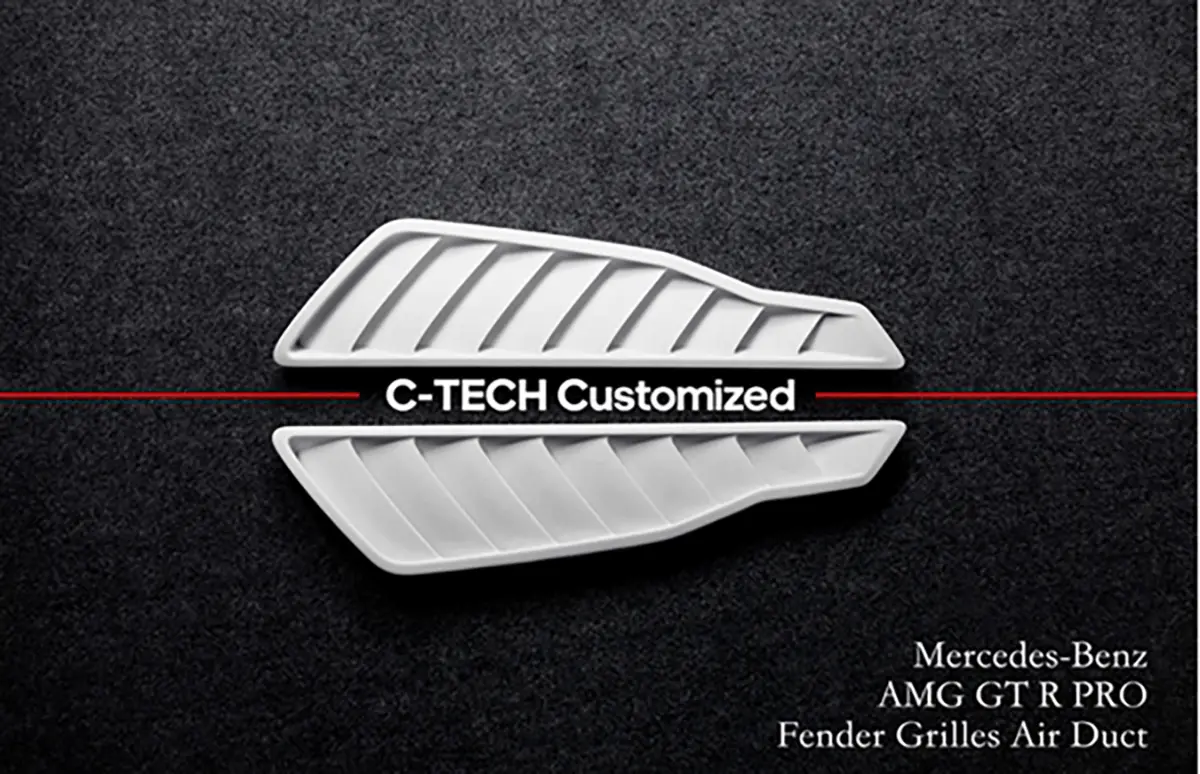
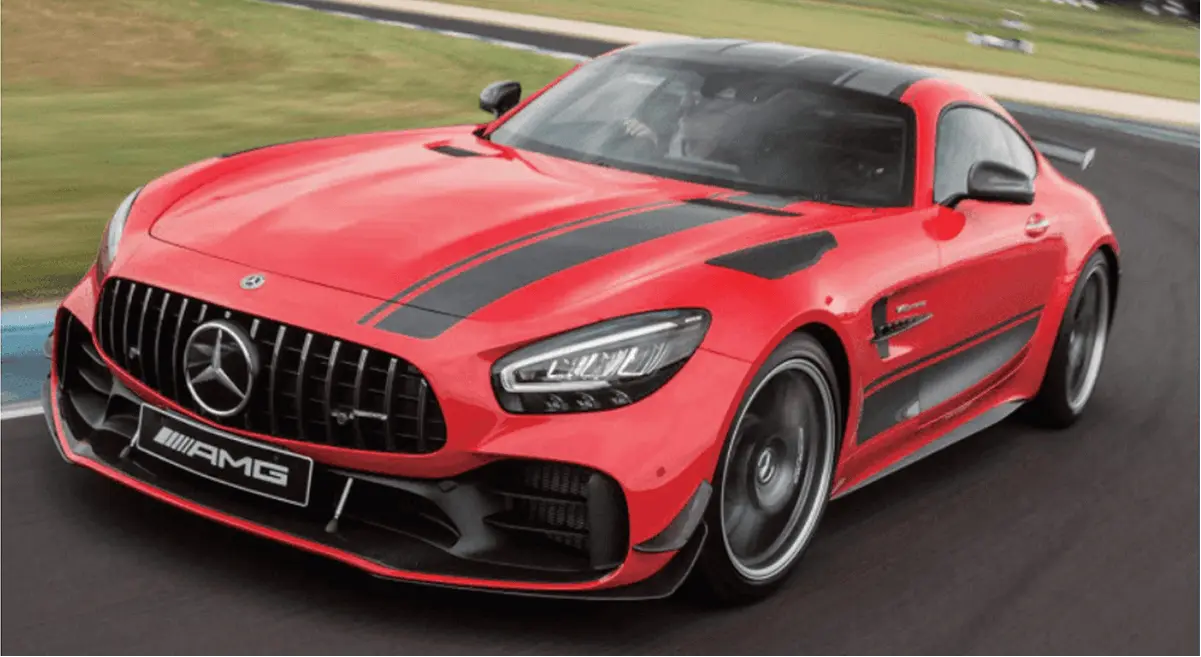
C-TECH Customized Front-Fender Air-Vent Grilles for the Mercedes-AMG GT R PRO
To break free from these manufacturing constraints, C-TECH integrated UnionTech’s industrial-grade SLA 3D printing technology directly into their product development workflow. The shift fundamentally rewired their operational efficiency.
By bypassing the need for expensive, time-consuming tooling, C-TECH transitioned to a digital-first workflow. Designs generated in CAD could be sent directly to the print bed, allowing the workshop to rapidly manufacture highly complex, low-volume custom automotive parts in a fraction of the time. Development cycles that once took weeks were compressed into mere days.
This technological integration yielded immediate financial and operational benefits. Production efficiency skyrocketed, overhead costs plummeted, and material waste was drastically reduced. More importantly, it elevated the end-consumer experience. C-TECH can now deliver highly personalized, flawless modification components on tighter schedules, giving car owners a seamless, premium customization experience that was previously unattainable.
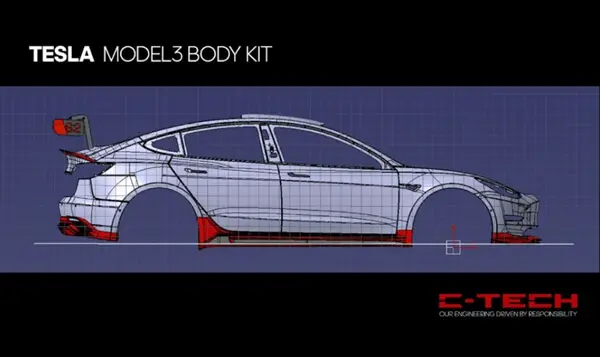
3D Design Model of a Tesla Model 3 Body Kit
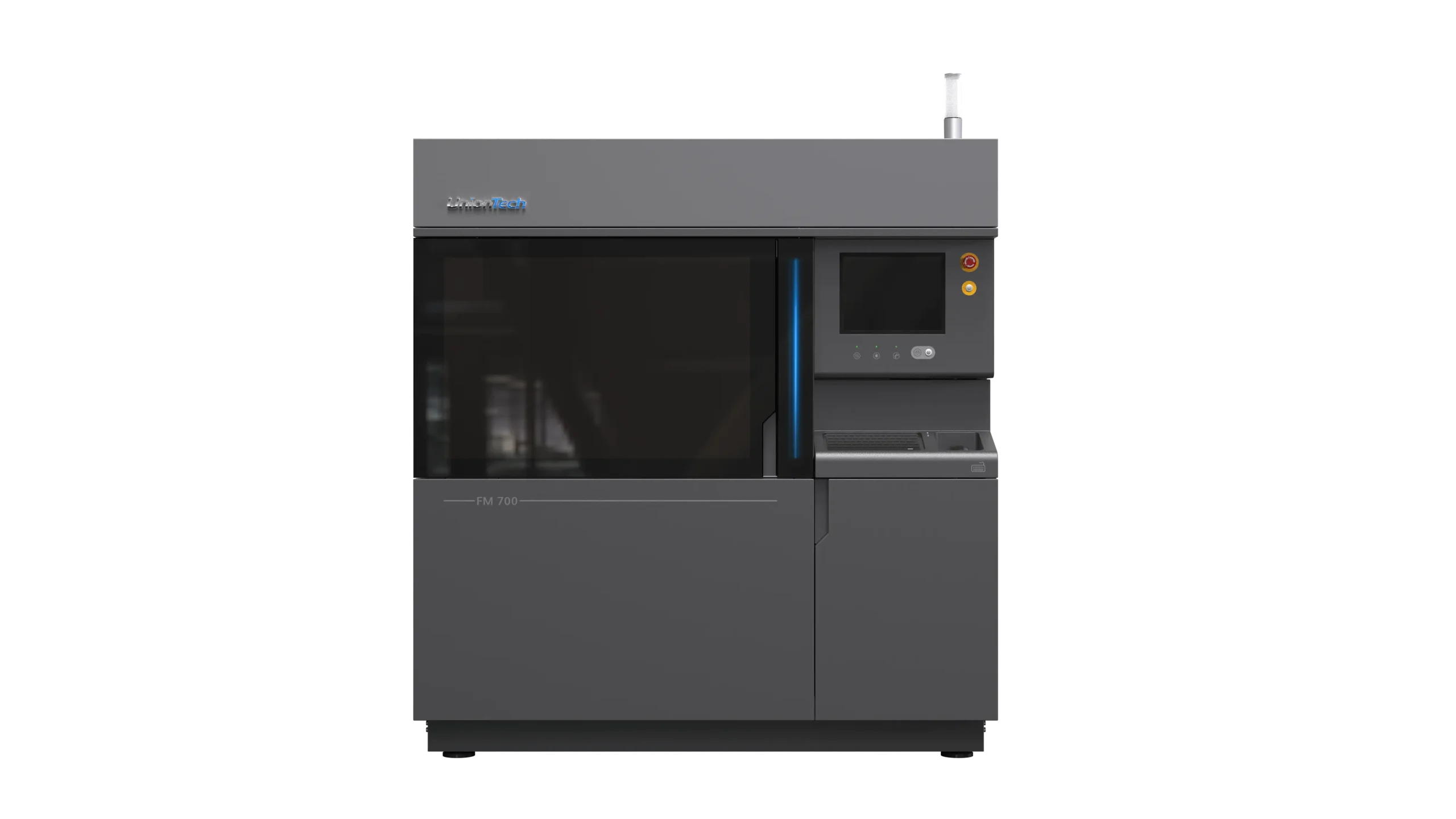
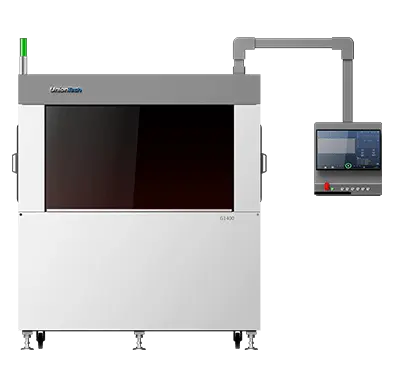
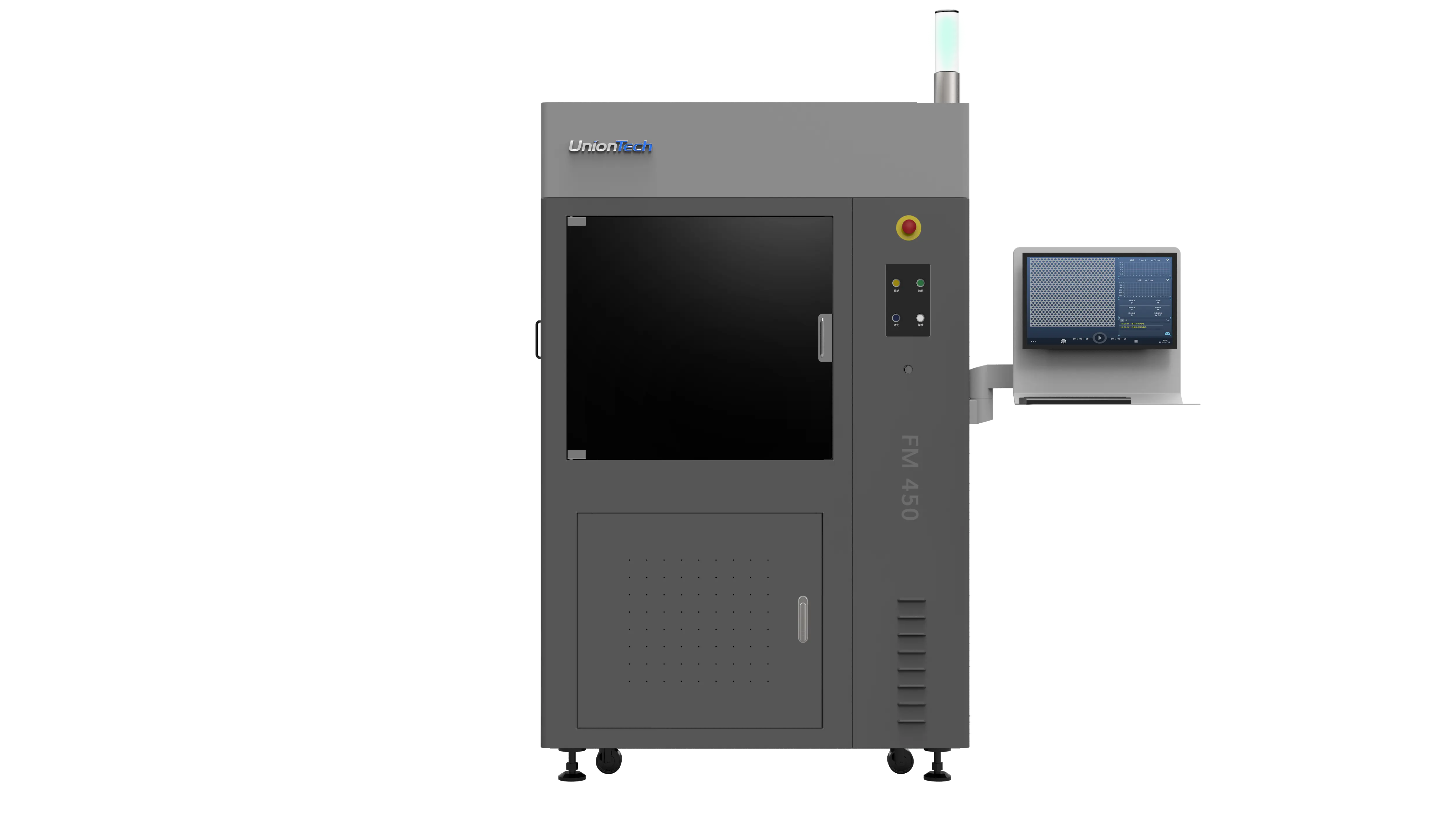
The backbone of C-TECH’s manufacturing evolution is the UnionTech RSPro2100. Engineered specifically for large-format industrial SLA applications, this system features a colossal build chamber designed to handle massive automotive components in a single print cycle, without sacrificing micron-level accuracy.
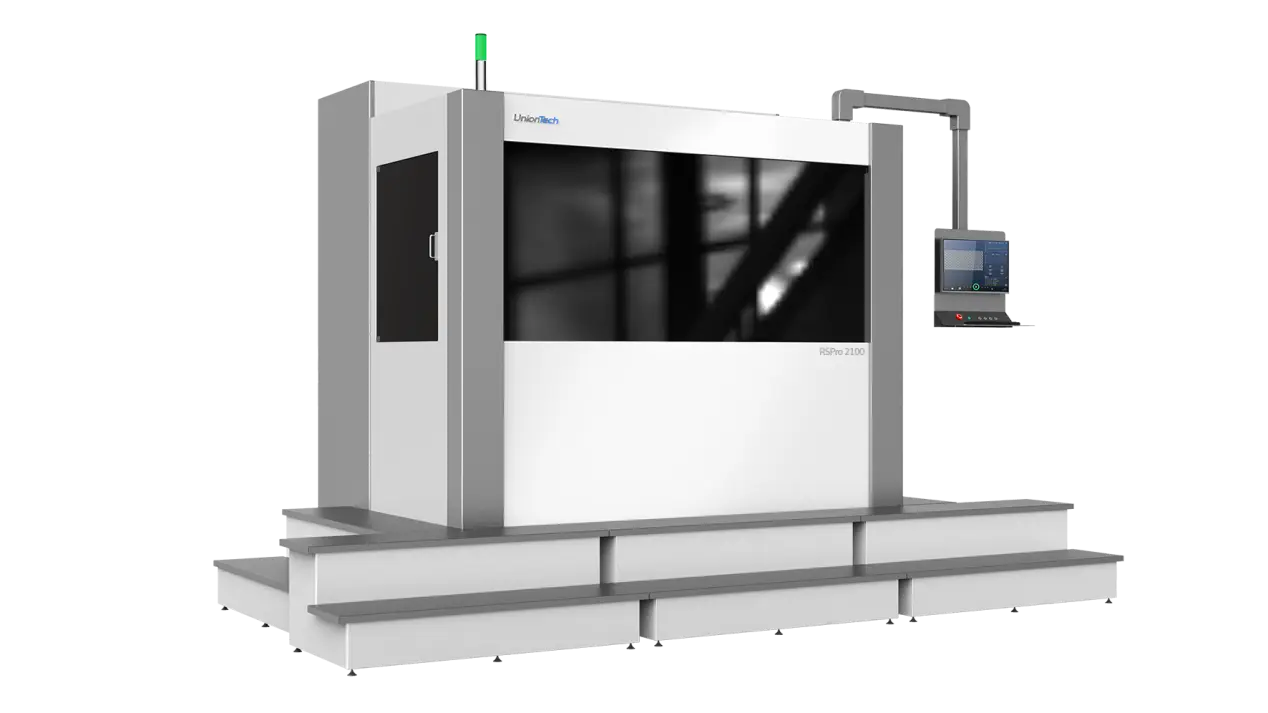
RSPRO 2100
A prime example of this system’s capability is C-TECH’s recent fabrication of a custom, aerodynamic front grille. Grilles are notoriously difficult to manufacture using traditional methods due to their intricate airflow channels, thin walls, and complex curves. Utilizing UnionTech’s advanced SLA technology, the eight individual blades of the front grille were separately designed and manufactured as distinct pieces.
This modular approach allowed the design team to fine-tune the geometry of each blade for optimal airflow and aggressive styling. The RSPro2100 delivered impeccable surface smoothness and dimensional stability across all eight blades, ensuring they fit together perfectly upon assembly. The high-resolution output minimized the need for labor-intensive post-processing, allowing the parts to move quickly to painting, finishing, and final vehicle integration.
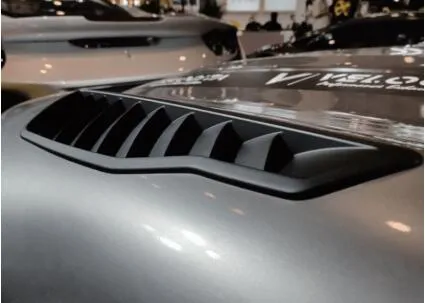
Front-Fender Air-Vent Grille
The success of C-TECH demonstrates that scaling up component size and complexity no longer requires a compromise in production timelines or capital expenditure. 3D printing has evolved past basic prototyping; it is now a fully realized production tool for high-value manufacturing.
Looking ahead, UnionTech will continue to partner with global automotive industry leaders, OEMs, and premium aftermarket workshops. Our goal is to consistently drive the integration of industrial SLA technology across every stage of the automotive lifecycle, from initial design verification and rigorous functional testing to low-volume production and hyper-personalized customization. By seamlessly uniting advanced optics, precision fluid dynamics, and robust structural engineering, we aim to bring more possibilities to both automotive manufacturing and the global aftermarket, shaping the future of transportation layer by layer.
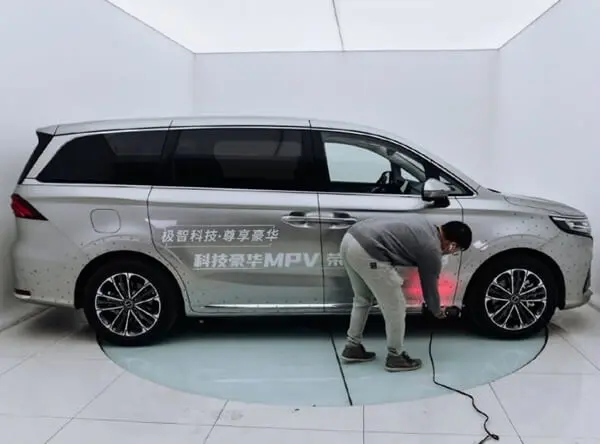
Full-Vehicle 3D Scanning and Body-Data Acquisition of an MPV