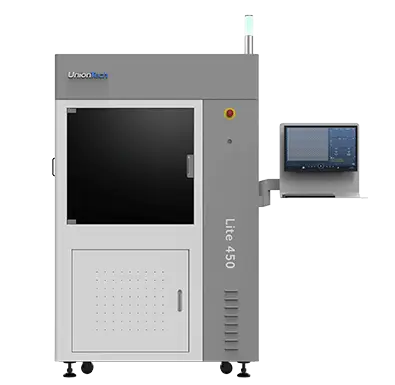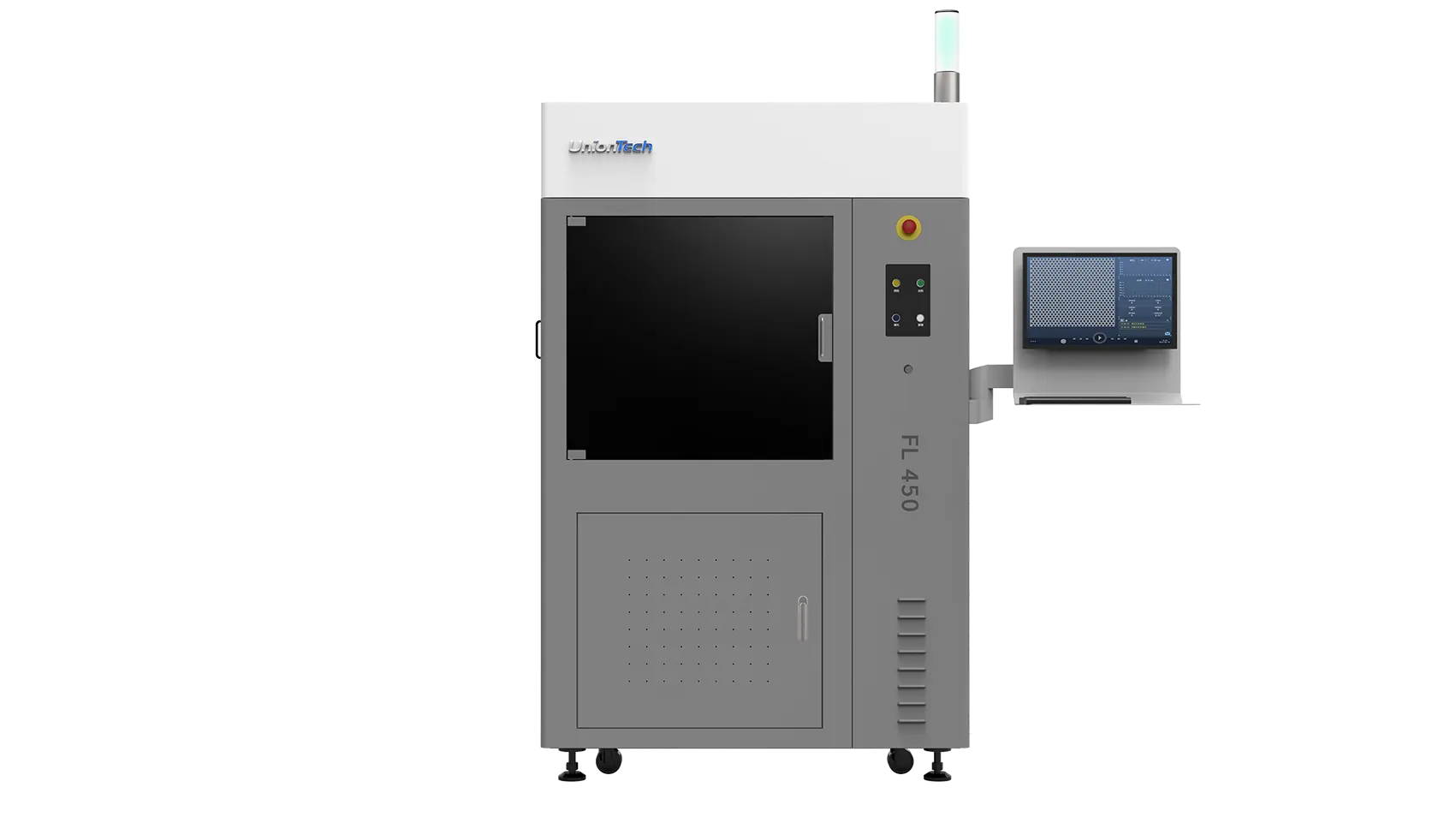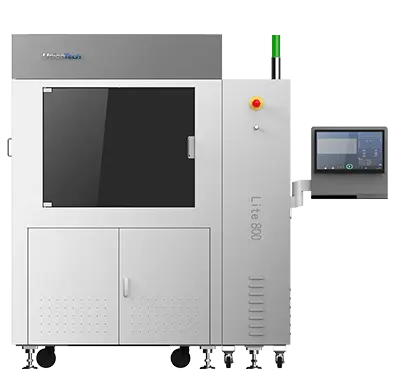
In tyre mold development programs, iteration speed is no longer defined by how fast a single prototype can be produced, but by how consistently multiple design versions can be validated under the same process conditions. At UnionTech, we work with manufacturers who rely on additive systems to shorten validation cycles for tread structure and mold geometry. In this context, a tyre mold machine is mainly used for repeated prototype verification rather than final part production, where each build must reflect controlled and comparable geometric output across iterations.
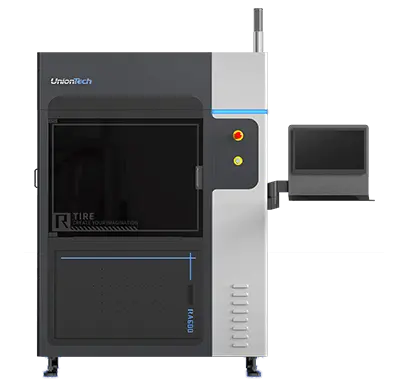
In practical engineering workflows, variation between iterations is usually caused by process instability rather than design changes themselves. When multiple tread designs are tested, even small fluctuations in exposure energy or scanning path accuracy can lead to inconsistent groove definition or surface deviation. For this reason, repeatability becomes more important than nominal printing speed.
When we design an industrial large-format system, we focus on maintaining stable layer formation, controlled resin curing behavior, and synchronized motion paths across the build platform. These factors directly influence whether two different design versions can be compared under identical manufacturing conditions. Without this stability, evaluation of tread geometry becomes unreliable because differences may come from the process instead of the design.
Tyre mold components often include deep grooves, fine textures, and segmented tread blocks that require precise control during curing. In large-format applications, uneven exposure across the platform can lead to inconsistent edge sharpness, especially in deep cavity areas where resin flow and light penetration are more sensitive. A tyre mould machine used in these scenarios must maintain uniform curing conditions across large build areas while preserving fine structural details.
At UnionTech, systems such as the RA600 are developed to support these requirements by controlling exposure distribution and ensuring dimensional consistency in large mold sections. In practical use, engineers rely on printed segments to evaluate tread continuity and structural alignment before moving to machining. This reduces the risk of downstream corrections caused by geometric mismatches between digital models and physical output.
Iteration efficiency is not only determined by equipment performance but also by how well material behavior and workflow stages are aligned. Resin properties such as curing shrinkage, viscosity, and thermal sensitivity directly affect dimensional stability during long print cycles. When these factors are not properly matched with process parameters, deviations accumulate across repeated builds.
In production environments, an industrial large-format system must therefore support adjustable process settings that align with different resin formulations and mold complexity levels. This allows engineers to move between design modification, printing, and inspection without reconfiguring the entire workflow each time. The result is a more continuous iteration loop where feedback from physical parts can be directly applied to updated designs.
The efficiency of tire mold development depends on how consistently each iteration can reproduce intended geometry under controlled conditions. A tyre mold machine is used primarily as a validation tool to support repeated design evaluation rather than single-pass production. At UnionTech, we focus on maintaining process stability, material compatibility, and system coordination so that iterative testing reflects true design differences. In this way, industrial large-format additive systems help manufacturers improve decision accuracy during tire mold development cycles while reducing uncertainty between digital design and physical verification.