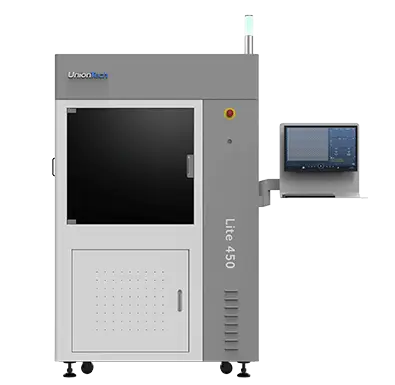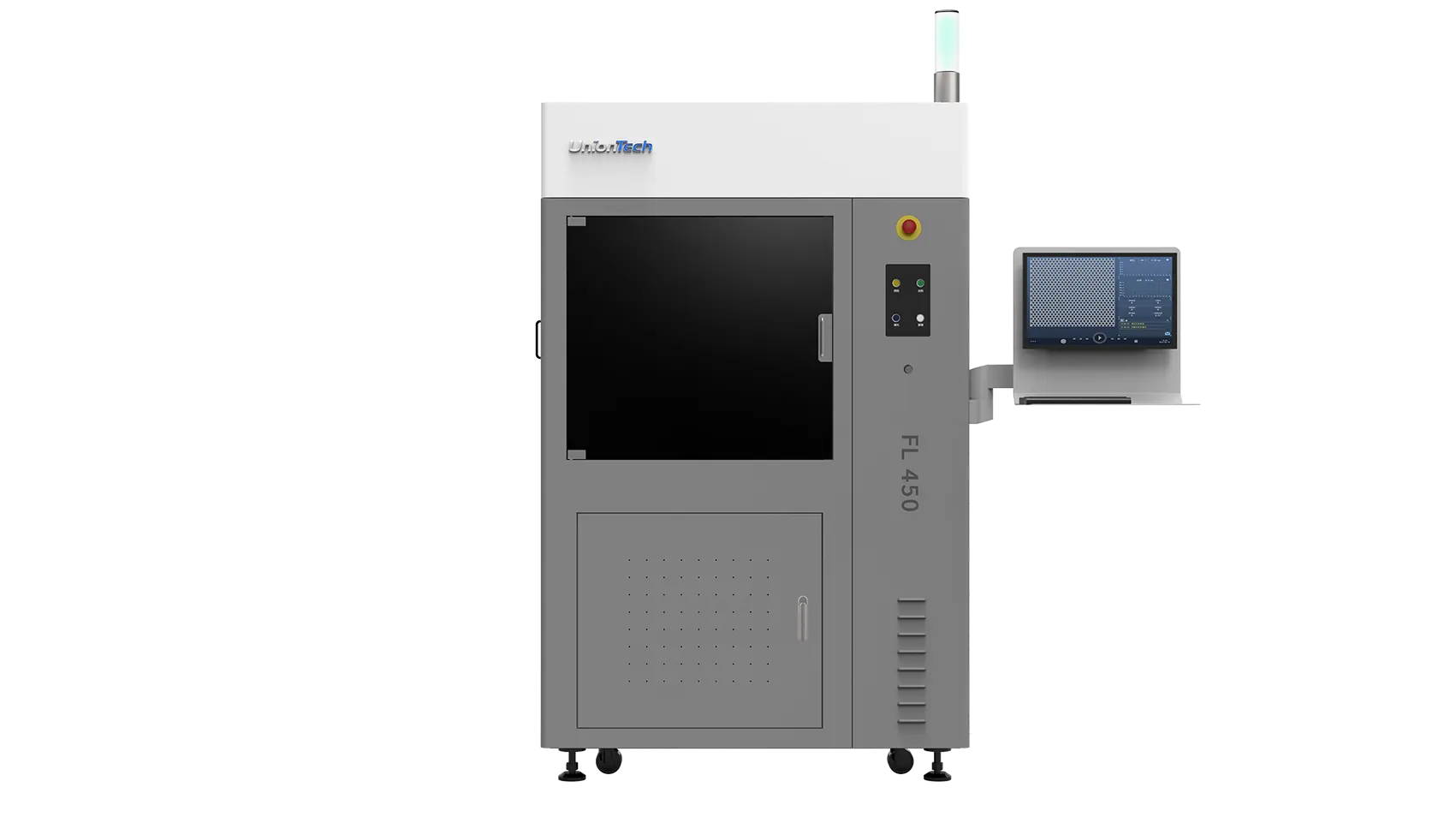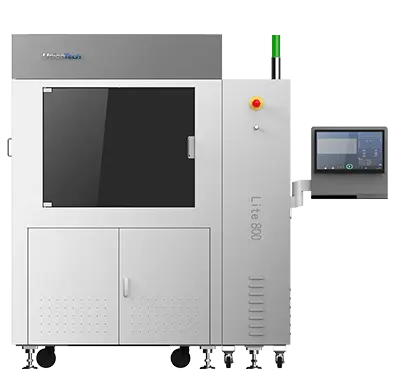
In engineering programs with tight development timelines, converting CAD data into physical prototypes is not only a matter of fabrication speed, but also of maintaining dimensional consistency across repeated builds. At UnionTech, we support customers who need predictable prototype output for design verification rather than one-off samples. Within this workflow, prototyping 3D printer are used to reproduce fine geometric features such as curved surfaces, thin walls, and assembly interfaces, where small deviations can affect downstream testing results.
When scaling to larger parts or multiple components, an industrial large-format system is often introduced to avoid segmenting models into separate prints. This reduces alignment errors during assembly and allows engineers to evaluate structural behavior under more realistic conditions. In practice, this approach shortens iteration cycles because design changes can be validated directly on full-scale or near-full-scale components.
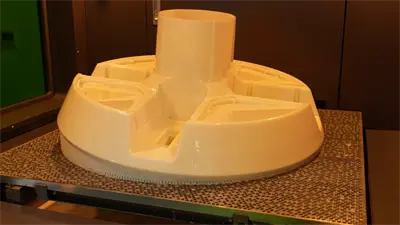
Before printing begins, CAD models must be converted into build-ready data through slicing, orientation planning, and parameter assignment. Each of these steps affects how geometry is reproduced during fabrication. Slicing resolution determines how accurately curved surfaces are represented, while orientation influences surface quality and support contact locations. Exposure settings then define how resin solidifies layer by layer, which directly impacts dimensional stability.
At UnionTech, internal processing workflows are designed to ensure consistent parameter logic before data enters the machine. This reduces variability between builds, especially when the same model is printed multiple times for comparison. In applications using SLA 3D printers, fine feature stability such as edge definition and surface continuity is critical for functional validation, not just visual inspection.
In industrial prototyping scenarios, parts are evaluated not only for shape accuracy but also for fit, assembly behavior, and basic mechanical response. Resin selection plays an important role here, as different materials provide different stiffness and surface characteristics. Engineers often switch between resins depending on whether the goal is concept verification or functional testing.
When using SLA-based systems, repeatability across different geometries becomes a key requirement. A consistent process ensures that test results reflect design differences rather than manufacturing variation. At the same time, large-format systems allow multiple design variants to be produced in a single build cycle, which helps teams compare alternatives under identical production conditions without resetting machine parameters between runs.
Prototype efficiency depends heavily on how smoothly design, printing, and inspection stages are connected. In fragmented workflows, delays often occur when data is transferred between tools or when parameters must be reconfigured for each iteration. To address this, integrated systems combine hardware control, material management, and slicing software within a unified process environment.
At UnionTech, we observe that stable process control reduces inconsistencies between iterations, particularly when design updates are frequent. While SLA 3D printers handle fine-detail reproduction at the component level, large-format industrial systems ensure that prototype scale matches real application requirements. This combination allows engineers to evaluate both micro-level geometry and macro-level structure within the same development cycle.
From CAD modeling to physical validation, prototype development depends on how consistently each stage is executed rather than on printing speed alone. At UnionTech, we focus on aligning data preparation, process stability, and system scalability to support repeatable results in engineering workflows. By combining SLA-based fine-detail fabrication with larger-format production capability, teams can evaluate design changes more efficiently while maintaining dimensional reliability. This structured approach enables faster iteration cycles without losing control over accuracy, material behavior, or assembly fit during product development.