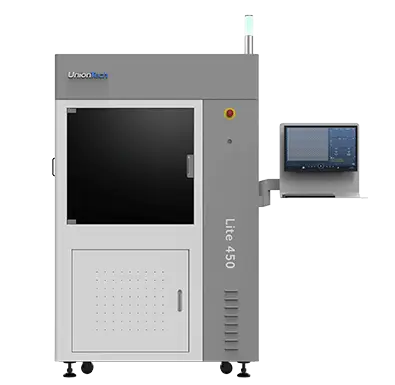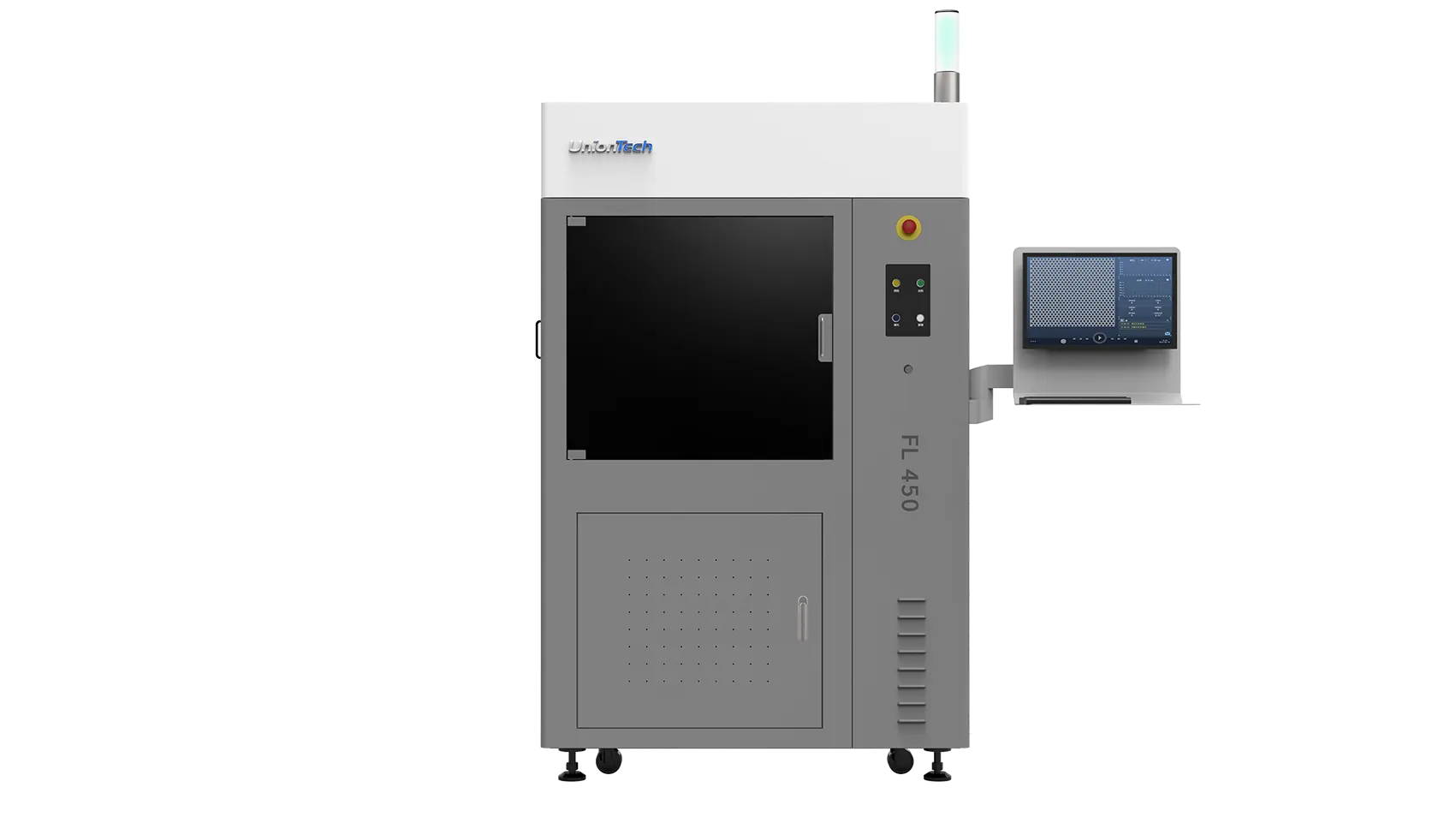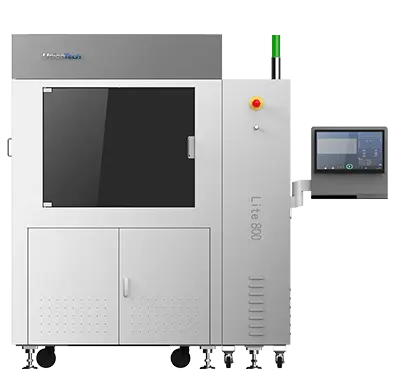
When discussing investment planning for additive manufacturing, cost is rarely defined by a single machine price. At UnionTech, we typically explain that cost in industrial resin printing is shaped by how the system is configured, how it is used, and what level of output stability is required. In practice, users evaluating 3D printer for prototyping need to consider not only equipment investment but also how consistently the system can produce repeatable parts across different production cycles.
In engineering environments, cost decisions are often tied to whether the machine is used for concept validation, functional testing, or continuous small-batch production. Each usage scenario changes the expected workload on the system, which directly influences total operational cost over time.
System size is one of the first technical variables that affects cost structure. Larger build volumes require stronger motion systems, more stable platform control, and more uniform light distribution across the exposure area. These requirements increase system complexity because dimensional accuracy must be maintained consistently from the center of the platform to the outer edges.
When we design industrial large-format systems, we evaluate how platform rigidity, scanning stability, and optical consistency interact during long print cycles. In real applications, uneven motion or light distribution can lead to dimensional drift, especially in large parts where cumulative error becomes more visible. For users working with industrial production demands, these factors become more important than nominal printing speed.
Resin selection is another major cost driver in industrial usage. Different materials behave differently during curing, and this affects both part performance and material consumption efficiency. For example, engineering-grade resins used for functional testing typically require tighter process control compared to standard prototyping materials.
In real production environments, material cost is not only based on price per kilogram but also on how much compensation or rework is required after printing. If curing behavior is not stable, additional post-processing time may increase overall cost per part. This is why material compatibility with process parameters is considered part of system-level cost planning rather than a separate variable.
Beyond hardware and materials, workflow structure has a direct influence on operational cost. When data preparation, slicing, and print execution are not well coordinated, manual adjustments often increase production time and reduce machine utilization efficiency.
In industrial environments, SLA 3D printers are often evaluated based on how smoothly they integrate into existing production pipelines. When workflow steps are standardized, engineers can reduce iteration delays between design updates and physical testing. This is particularly important in projects that require repeated design validation, where consistency between iterations affects decision accuracy and reduces unnecessary rebuilds.
At UnionTech, system architecture is designed to reduce fragmentation between design input and physical output, allowing users to maintain stable production rhythm without frequent parameter reconfiguration.
Cost in SLA-based manufacturing should be understood as a combined outcome of equipment configuration, material behavior, and workflow structure rather than a fixed equipment price. At UnionTech, we observe that users achieve better cost control when they evaluate SLA 3D printers based on system stability and application fit instead of isolated purchasing factors.
For industrial users considering resin-based additive manufacturing, aligning machine capability with actual production scenarios is the most reliable way to manage long-term cost efficiency and output consistency.