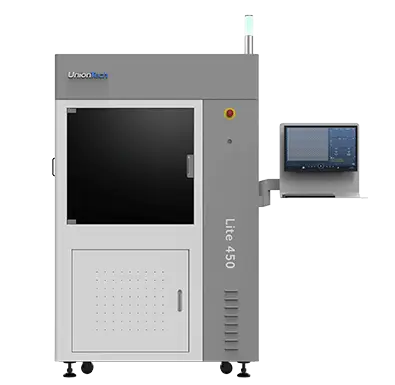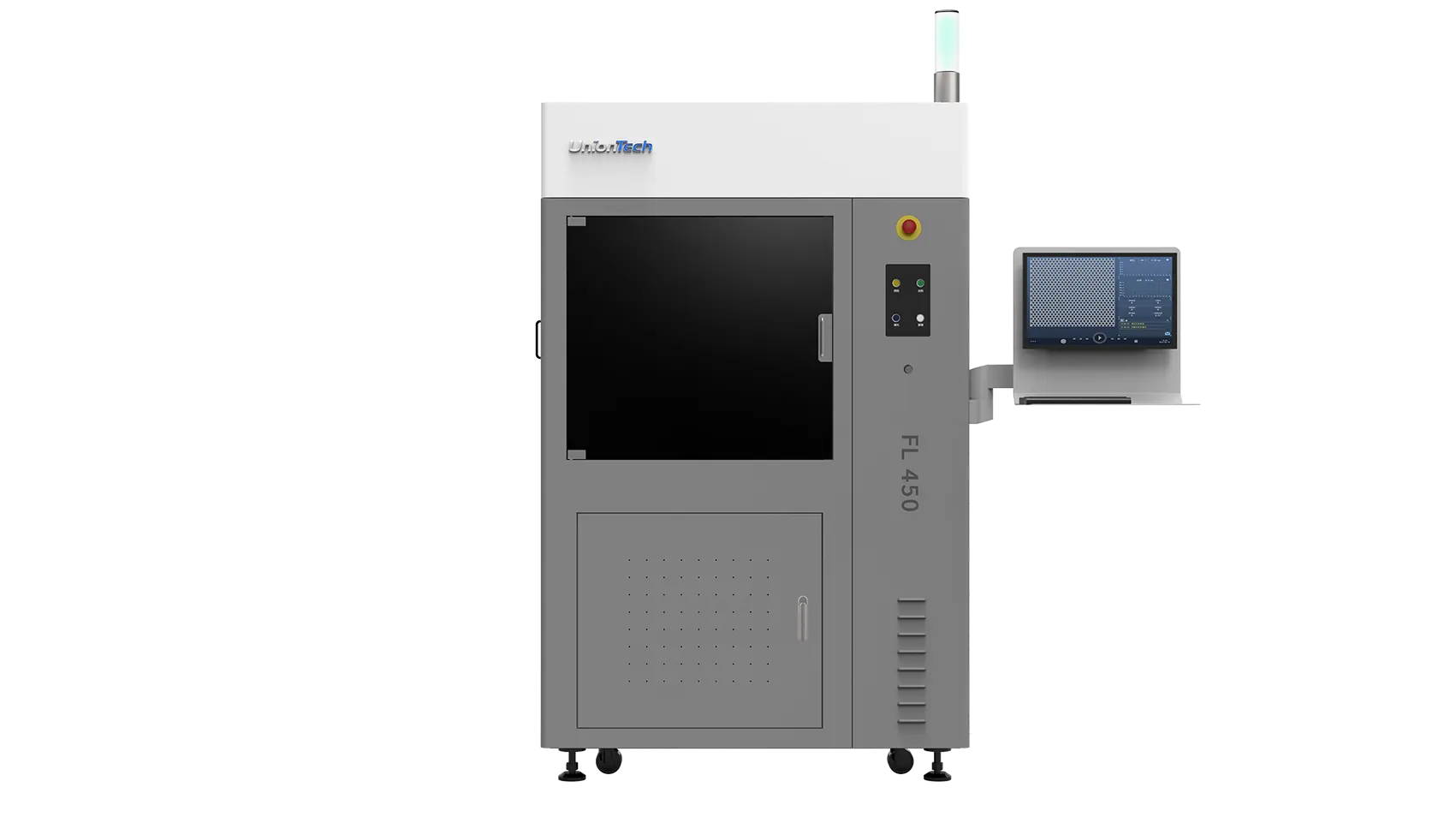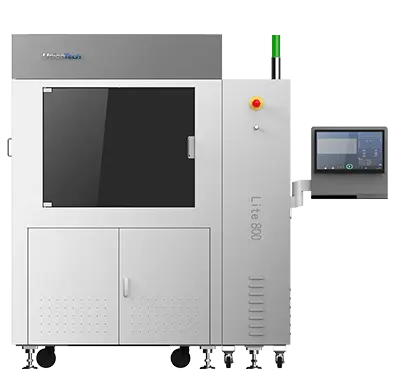
We often receive questions about which process is more suitable when comparing SLA and SLS in industrial production environments. From our experience, the answer depends on application requirements rather than a fixed preference. When we evaluate an SLA 3D printing machine, we focus on surface quality, resin behavior, and process stability. At the same time, as an industrial 3D printer manufacturer, we also study how different users balance accuracy, throughput, and post-processing effort. This allows us to approach the comparison in a practical, application-driven way rather than a simplified technical ranking. UnionTech works with multiple industries where both technologies may be considered depending on part function and production stage.
As we continue our development and application support work, we notice that material behavior plays a central role in technology selection. An SLA 3D printing machine is based on photopolymer curing, which depends on controlled light exposure and consistent resin performance throughout the build process. In comparison, powder-based systems rely on thermal fusion mechanisms that behave differently under heat distribution conditions. From our perspective as an industrial 3D printer manufacturer, we help users evaluate how these differences influence dimensional accuracy, surface finish, and downstream processing requirements. We do not treat either technology as universally superior; instead, we consider how each fits specific production scenarios such as prototyping validation, assembly testing, or functional evaluation.
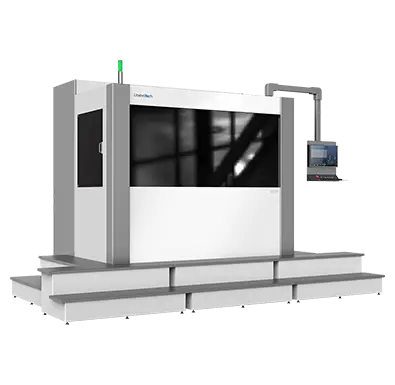
We also take system architecture into account when supporting industrial users. For example, when developing large-format platforms such as RSPro-2100, we integrate process stability with material adaptability to support varied workflow requirements. In this context, the system is often selected for applications where fine surface detail and consistent resin curing are important factors in production outcomes. At the same time, as an industrial 3D printer manufacturer, we design equipment to maintain repeatable results across different part geometries and build conditions. This becomes particularly relevant when users shift between early-stage design verification and later-stage functional evaluation, where consistency across batches is essential for engineering decision-making.
In conclusion, the decision between SLA and SLS is closely tied to specific production requirements rather than general comparisons. An SLA 3D printing machine provides advantages in resin-based accuracy and surface quality, while its suitability depends on the intended application. As an industrial 3D printer manufacturer, we at UnionTech focus on helping users understand how each technology behaves in real industrial environments rather than in isolation. By combining process knowledge with system design, we support users in selecting solutions that align with their production goals. Ultimately, both technologies can coexist within different stages of manufacturing workflows, depending on how performance requirements are defined and applied.