Stereolithography (SLA) is the earliest additive manufacturing technology. For decades, engineers have relied on SLA for high dimensional precision and exceptional surface finish. However, traditional systems were restricted by small build volumes. Large parts required sectioning, printing in pieces, and manual assembly.
In recent years, the emergence of industrial large-format SLA 3D printers has overcome these size constraints, allowing manufacturers to produce full-scale parts in a single build. These advanced systems are being adopted across a wide range of industries.
Read on to learn about large-format 3D printing applications.
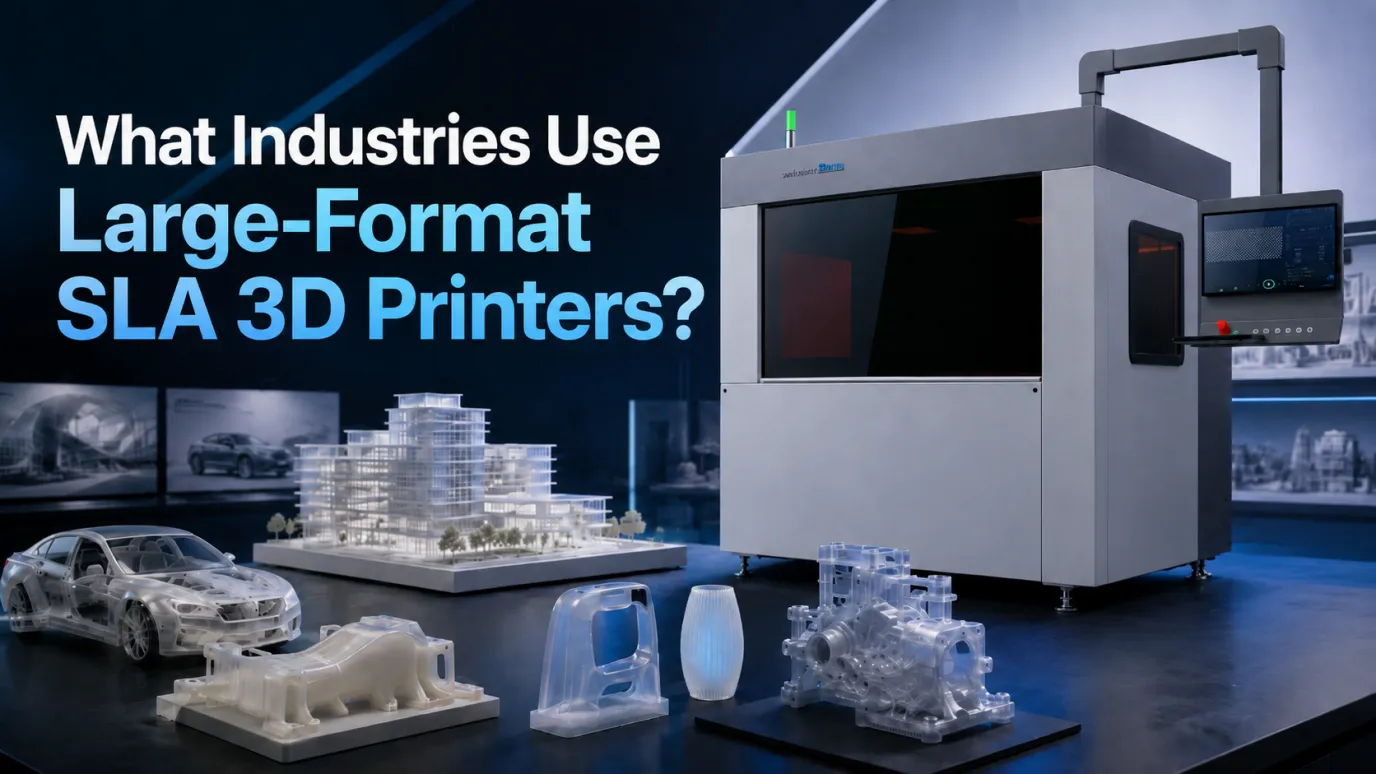
SLA works by using an ultraviolet laser to cure selected areas of liquid photopolymer resin. Each cured layer bonds to the previous one until the complete part is formed.
The value of a 3D printer for large prints extends beyond printing bigger parts.
Printing full-size components in a single job eliminates the need to divide CAD models into smaller sections. Joining multiple printed parts creates structural weak points at seam lines and increases manual labor costs.
A large SLA printer generally features build platforms exceeding 600×600×400mm. Manufacturers can print full-scale automotive dashboards, architectural mockups, or large enclosures without sectioning.
Printing larger components is only useful if dimensional accuracy remains consistent.
Large SLA systems achieve this through stable mechanical structures, multiple laser scanning, and intelligent process control. Features such as auto-calibration, variable-spot technology, granite recoater frames, and carbon-fiber coating scraper help minimize deformation during long print jobs while maintaining smooth surface quality across the entire build platform.
Large-format SLA does not simply reduce printing time. More importantly, it reduces the total manufacturing timeline.
Instead of printing multiple sections separately and assembling them later, manufacturers complete the project in a single production workflow. The benefits include:
With precision, speed, and full-scale build capabilities established, large SLA equipment delivers tangible value across a broad spectrum of industrial applications.
The global automotive 3D printing market reached $5.93 billion in 2025 and is projected to expand significantly over the next decade. [1] Speed to market drives competitiveness in vehicle design, making direct rapid prototyping essential.
Automotive engineers use large-format SLA 3D printers to manufacture full-scale components with consistent quality without joint stress points. Key practical uses for 3D printers include:

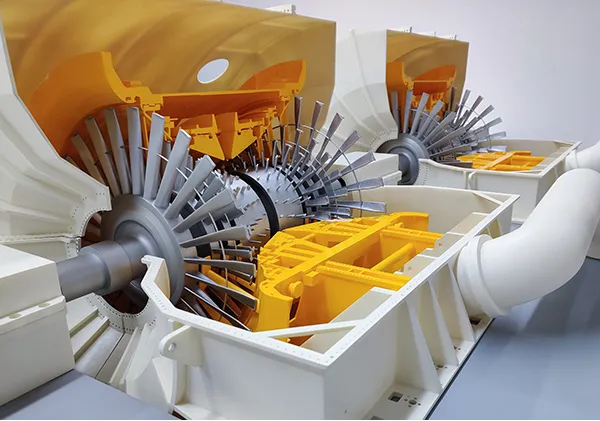
Aerospace development involves large, complex components, low production volumes, and extensive physical validation before final manufacturing. Large-format SLA printing helps engineering teams produce full-scale resin models without dividing every geometry into multiple bonded sections. Its accuracy and smooth surface finish suit aerodynamic evaluation, assembly checks, cabin design reviews, and tooling development.
In aerospace, the process is mainly used for prototypes, models, and manufacturing aids.
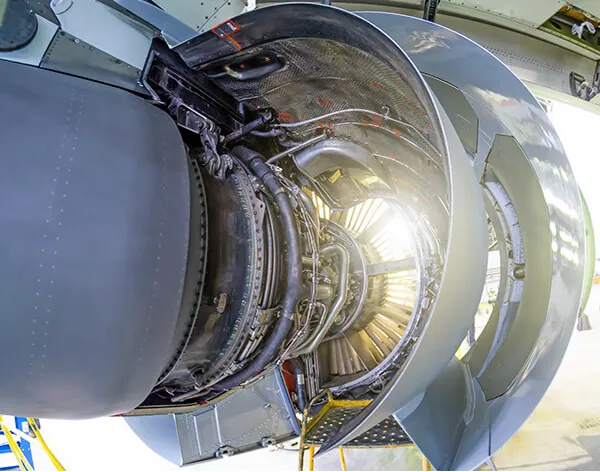
Investment casting is widely used for metal parts that require complex geometry, fine detail, and consistent surfaces. A large-format SLA 3D printer can produce accurate sacrificial resin patterns directly from digital models, reducing dependence on conventional pattern tooling. Its large build area also allows foundries to create bigger patterns with fewer bonded sections, making the process practical for prototypes, one-off castings, and small production batches.

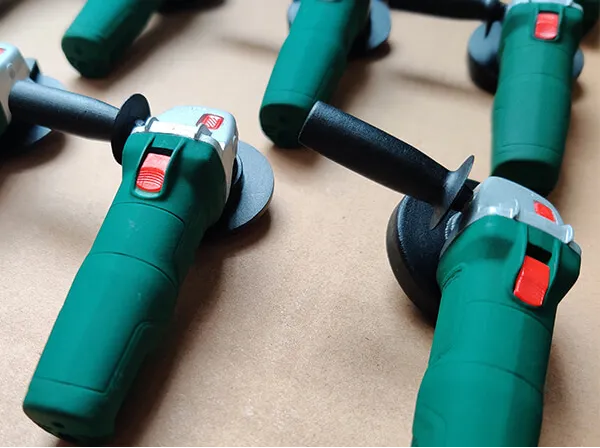
Consumer electronics and home-appliance companies must validate appearance, ergonomics, internal layouts, and assembly before investing in production molds. A large-format SLA 3D printer can produce detailed, full-scale housings and appliance prototypes directly from digital files. The process supports faster design iteration, one-piece construction, and low-volume customization.
Architecture and cultural design projects often combine large dimensions with fine visual detail. A large-format SLA 3D printer can turn digital models into accurate physical pieces for design review, presentation, exhibitions, and artistic production. Compared with manual model making, it supports faster revisions and reproduces complex interiors, curves, and sculptural details more consistently.

Creative prototyping turns digital concepts into physical models for evaluation, presentation, and further development. A large-format SLA 3D printer is particularly useful for oversized or highly detailed prototypes because it combines a large build area with smooth surfaces and precise feature reproduction.
Design teams can use these models to assess appearance and structure before committing to tooling, while the digital model also makes design changes easier to implement.
Large-format SLA 3D printers are designed to address the challenges of print size and precision across various industries. If you’re looking to improve production efficiency and find a reliable 3D printer manufacturer, UnionTech is a trusted partner.
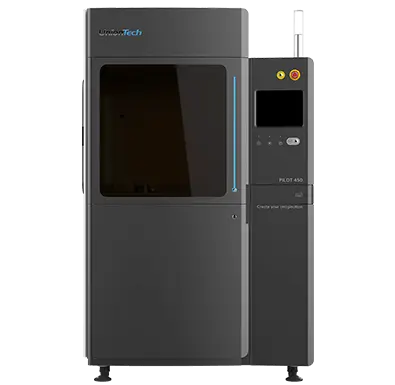
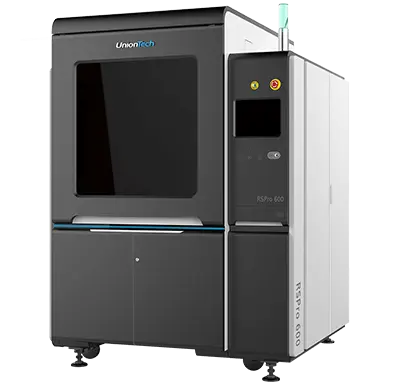
UnionTech’s RSPro series combines multi-laser scanning, variable-spot, automated calibration, liquid-level control, granite recoater frame, and carbon-fiber coating scraper to support large prototypes and small-batch manufacturing.
With a 1400 × 700 × 500 mm build volume and dual-laser scanning, this large-format SLA 3D printer suits appliance housings, automotive prototypes, casting patterns, and batches of medium-sized parts.
Its 1800 × 900 × 600 mm workspace provides greater width and height for vehicle panels, industrial housings, full-scale design models, and larger casting patterns. Dual lasers and scanning speeds of 8-15 m/s support efficient prototype and small-batch production.
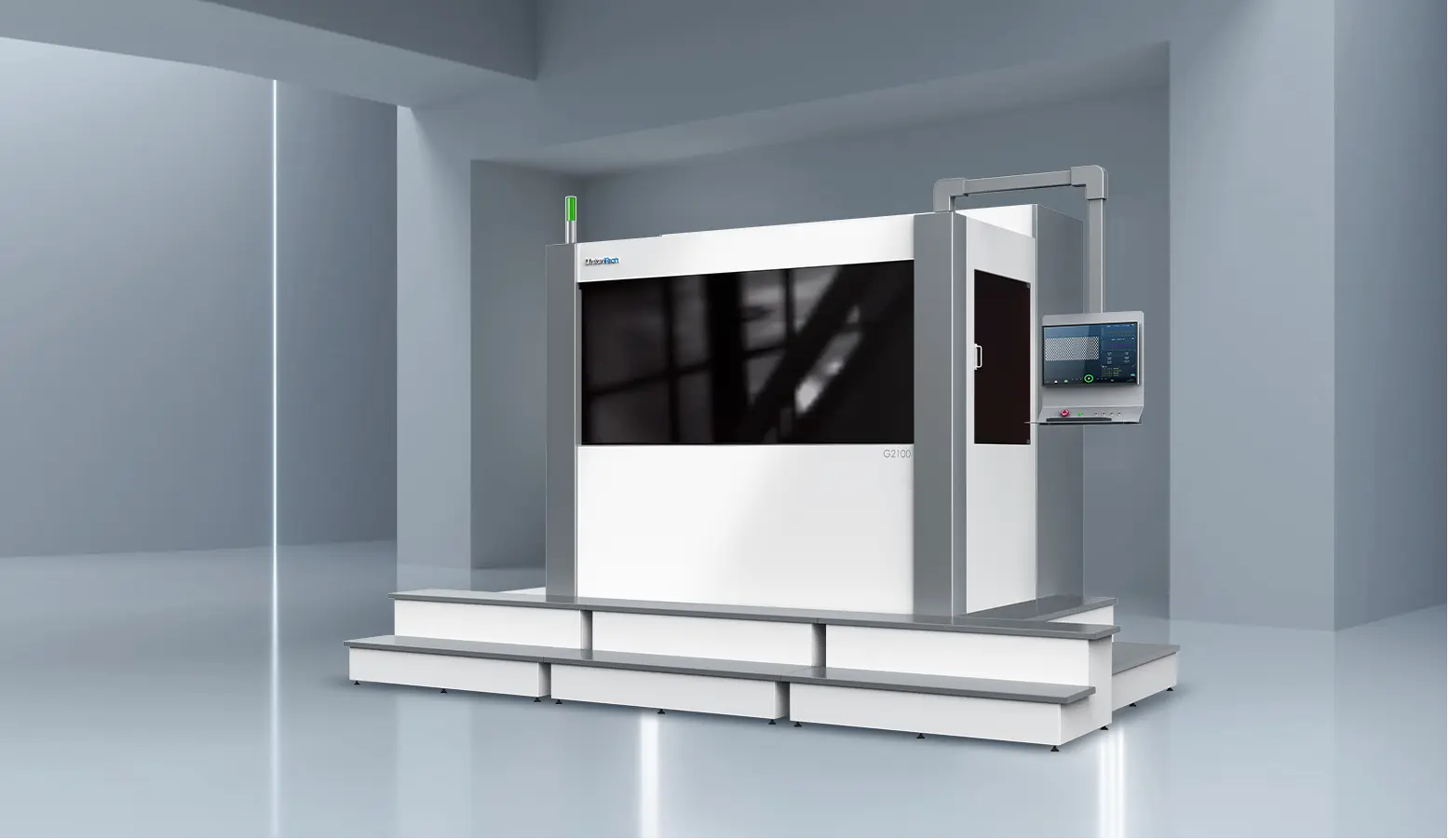
UnionTech’s largest RSPro2100 offers a 2100 × 700 × 800 mm build volume and triple-laser scanning. Its granite recoater frame, automated liquid-level management, and variable beam size support long, oversized components with fewer bonded sections.
UnionTech’s large-format SLA 3D printing technology has been widely applied across various industries, including aerospace, electronic devices, home appliances, cultural and creative industries, footwear, and architectural.
If you have any industrial 3D printing needs, please feel free to contact us.
[1] Automotive 3D Printing Market Size & Share 2026-2035. Available at: https://www.gminsights.com/industry-analysis/automotive-3d-printing-market (Accessed: 27 July 2026)