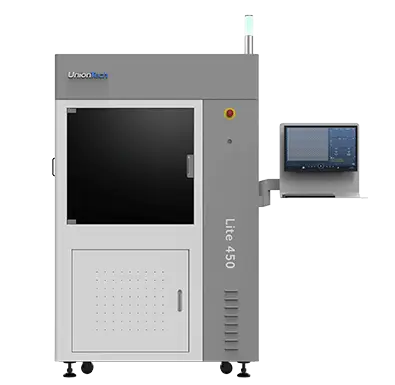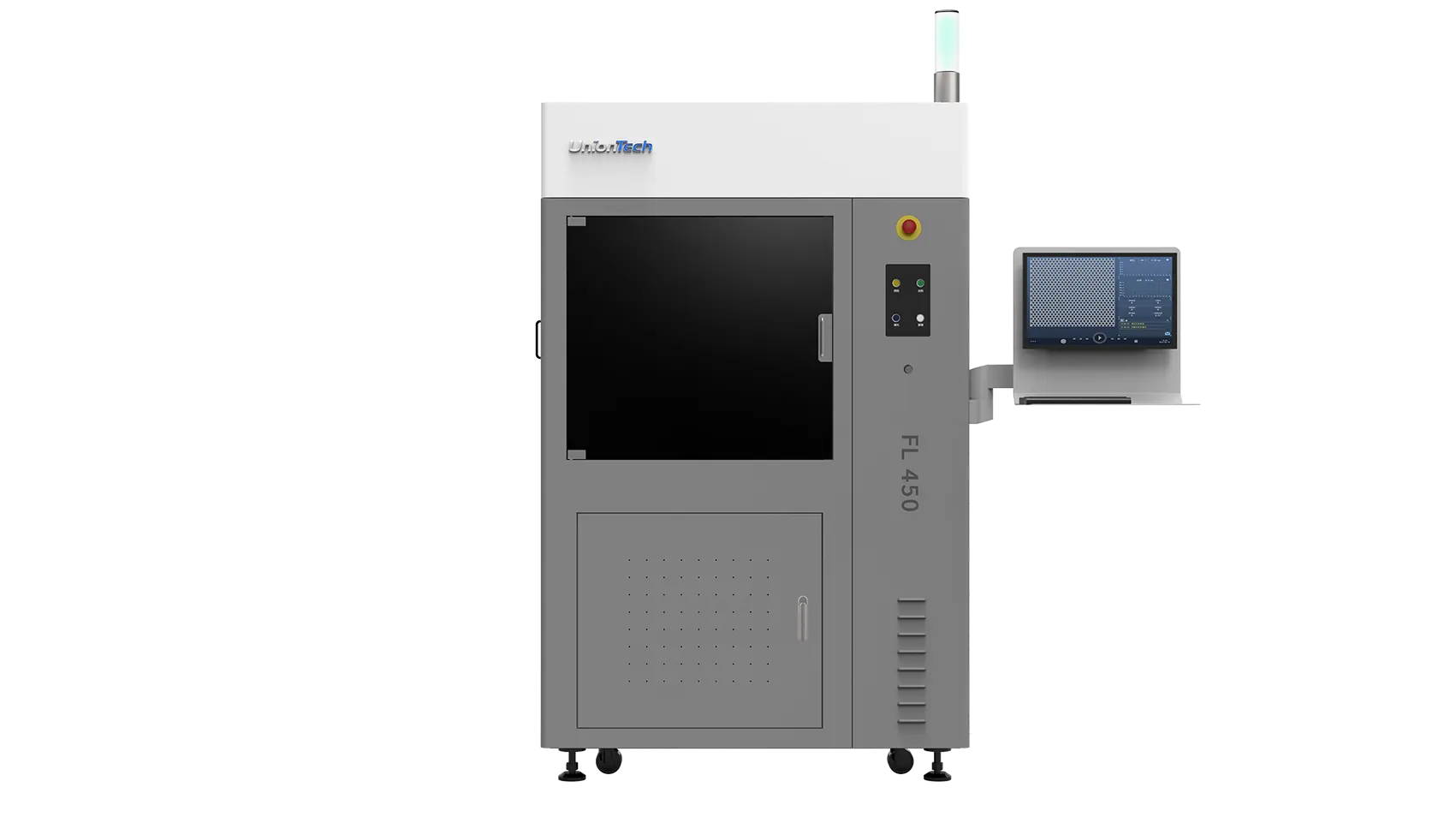
At UnionTech, stereolithography is usually explained through real manufacturing behavior rather than abstract principles. When users evaluate a stereolithography 3D printer, their focus is typically on whether liquid resin can be consistently converted into dimensionally accurate solid parts under stable process conditions. This involves not only curing the material layer by layer but also ensuring that each layer aligns precisely with the previous one based on digital slicing data. In industrial usage, this process is evaluated by dimensional stability, surface consistency, and repeatability across multiple builds rather than conceptual printing principles.
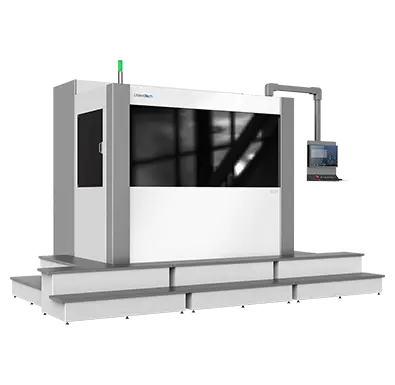
In practical operation, a stereolithography 3D printer relies on three tightly linked systems: optical exposure, resin behavior, and mechanical motion. The resin is stored in a vat where it is selectively cured by a controlled light source according to sliced model data. Each layer is formed through precise exposure timing and scanning paths, followed by platform movement to begin the next layer.
Accuracy in this process depends on how consistently exposure energy is delivered and how accurately the build platform maintains position after each layer. Even small deviations in scanning trajectory or curing intensity can lead to cumulative dimensional errors, especially in tall or complex geometries. For this reason, system stability is treated as a core requirement in industrial applications rather than an optional improvement.
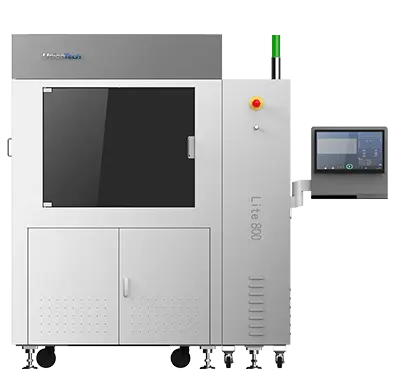
In production environments, part size and batch quantity determine how stereolithography systems are deployed. An industrial system is expected to handle both large components and multiple-part builds without compromising dimensional consistency. This is where large-format additive systems become necessary, as they allow wider build platforms and higher production efficiency within a single cycle.
At UnionTech, systems such as the RSPro-2100 are designed to maintain uniform curing behavior across extended build areas. This includes controlling light distribution consistency and ensuring that large parts do not experience uneven shrinkage or edge deformation. In practical use, engineers evaluate whether multiple parts printed in the same batch show measurable variation, since batch consistency is often more important than single-part accuracy in industrial workflows.
The performance of stereolithography is strongly influenced by resin characteristics such as viscosity, curing response, and shrinkage during solidification. These factors directly affect layer bonding and final dimensional accuracy. If resin behavior is not properly matched with exposure settings, defects such as incomplete curing or edge distortion can occur, particularly in fine structural features.
To manage this, industrial systems are configured with adjustable process parameters that allow engineers to tune exposure time, layer thickness, and scanning strategy based on material requirements. Environmental stability during printing, including temperature control and resin circulation behavior, also plays a role in maintaining consistent output during long build cycles.
Stereolithography in industrial environments is defined by process control rather than printing principle alone. A stereolithography 3D printer is used to produce accurate layered structures, while system-level stability determines whether results can be repeated across different builds. At UnionTech, we focus on aligning optical systems, motion control, and material behavior to ensure consistent production outcomes. In this way, stereolithography becomes a controlled manufacturing process that supports real industrial requirements rather than a standalone prototyping tool.