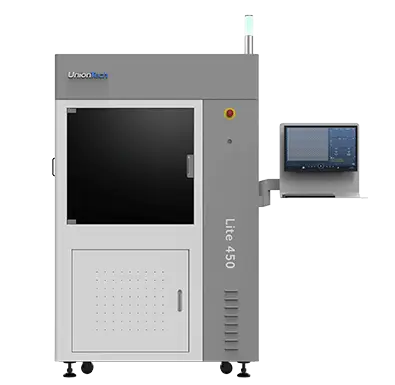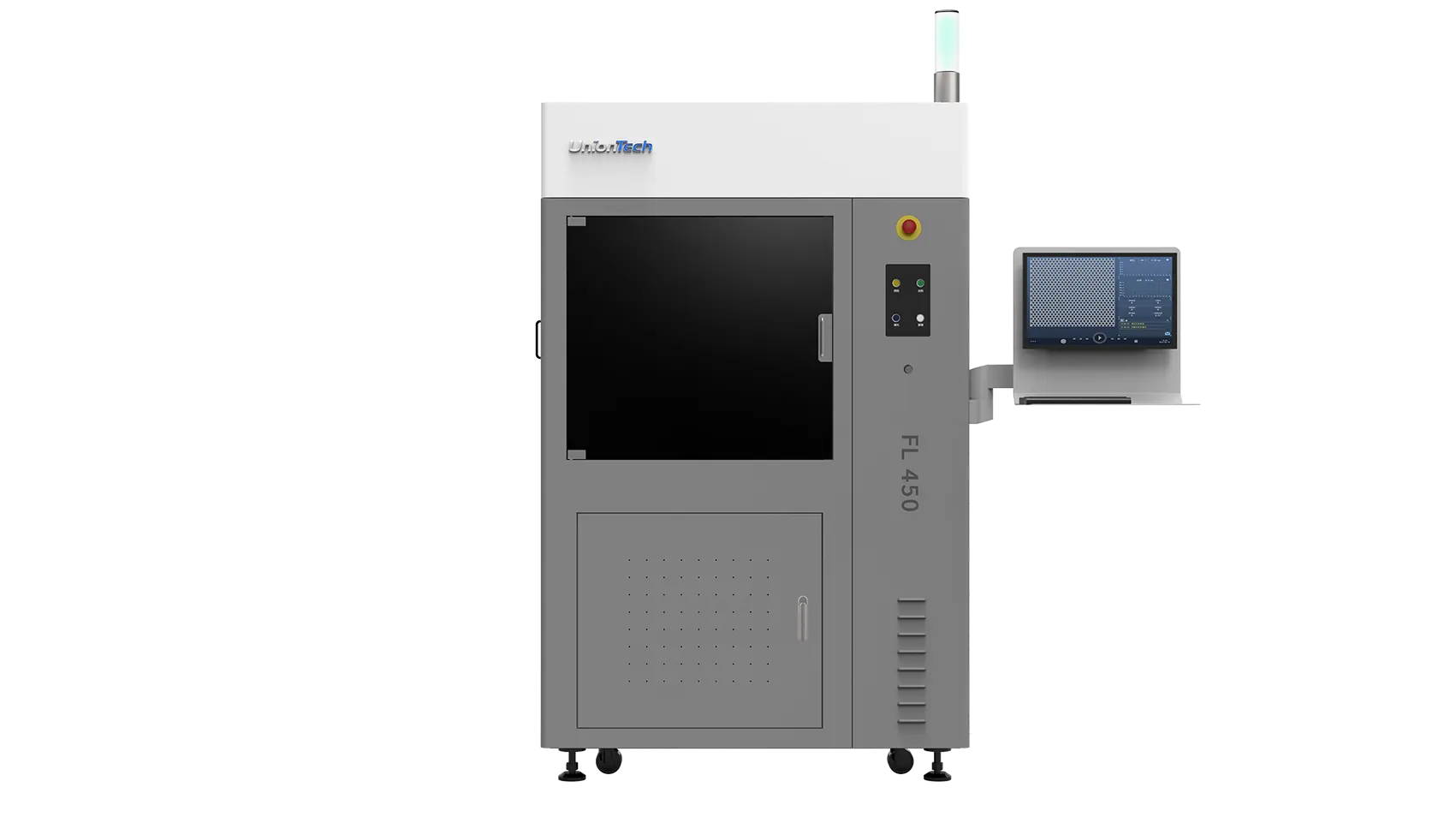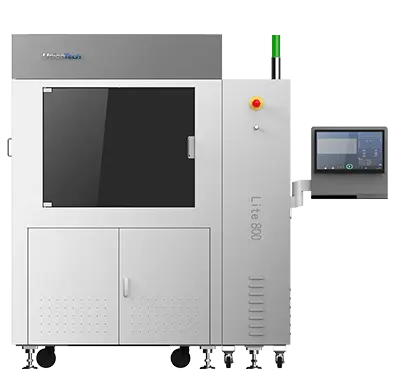
Small and medium-sized manufacturers often operate under tight development schedules and limited outsourcing flexibility, which makes production responsiveness a critical factor. At UnionTech, we work with SMEs that introduce SLA systems not as experimental tools, but as part of their daily engineering workflow. In this context, a large scale 3D printer is mainly used to reduce dependency on external prototyping suppliers and to bring part of the validation process in-house, especially when product iterations are frequent and design changes must be verified quickly.

In real manufacturing environments, SMEs typically shorten development cycles by moving design validation closer to engineering teams. When using a large scale 3D printer, teams are able to produce functional prototypes directly from CAD data and evaluate assembly fit, structural alignment, and surface interaction without waiting for outsourced tooling or machining slots.
This internal loop changes how design decisions are made. Instead of waiting for external feedback, engineers can adjust geometry and reprint updated versions within the same workflow. In practical use, this reduces delays between concept revision and physical testing, especially in projects that involve multiple design alternatives. The result is a more continuous development rhythm where validation happens alongside design rather than after it.
SMEs rarely operate within a single product category. Many handle multiple project types such as mechanical housings, automotive sub-components, electronic enclosures, and functional prototypes. Because of this variation, equipment must support different part sizes and geometry requirements without requiring major workflow changes.
A large scale 3D printer in this environment is used to consolidate different production tasks onto one platform. Instead of switching between multiple outsourcing channels, companies can use the same system for both small detailed parts and larger structural components. At UnionTech, systems such as RSPro-2100 are designed for this type of mixed application usage, where build volume and process stability must remain consistent across different project types.
When SMEs introduce SLA systems into existing operations, integration with current workflows becomes a key factor. This includes how design data is processed, how build files are prepared, and how printed parts are moved into inspection or assembly stages. In most cases, the equipment is not treated as an isolated production unit but as part of a continuous digital workflow connected to CAD design and post-processing steps.
An industrial sized 3D printer supports this structure by maintaining consistent output quality while allowing teams to adjust parameters based on different material and geometry requirements. At UnionTech, software and hardware coordination is designed so that users can move between design updates and production without rebuilding their entire process structure each time.
The adoption of SLA technology in SMEs is driven by the need for faster iteration and more direct control over manufacturing processes. A large scale 3D printer enables companies to internalize key stages of prototyping and validation, reducing reliance on external suppliers. At UnionTech, we focus on supporting this transition by ensuring that SLA systems can operate consistently across varied applications and production conditions. As SMEs expand their manufacturing capabilities, integrated additive systems help them maintain flexibility while improving development efficiency and workflow continuity.