In modern production environments, frequent product iterations and varied material demands increase the complexity of moving from prototyping to small-batch manufacturing. At UnionTech, we see that interruptions often occur when operators must switch between different machines or adjust workflow setups for each new part type. These disruptions can slow iteration cycles and make it harder to maintain consistent quality. Addressing this requires an integrated system where hardware stability, software coordination, and material handling are aligned to support continuous operations without reconfiguring the process for each task.
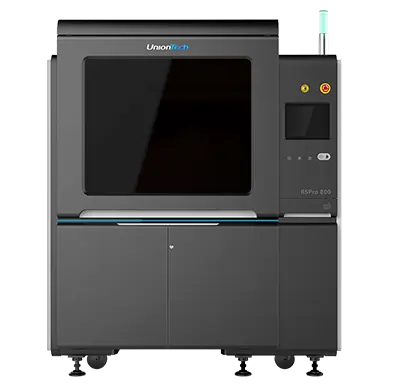
High-mix production requires rapid transitions between geometry validation, functional testing, and limited series output. Without consistent control, each stage can introduce variations that affect overall performance. The RSPro800 industrial SLA printer is designed to maintain stable exposure conditions and precise motion control, ensuring that parts produced at different stages remain comparable. By coordinating slicing strategies, print parameters, and resin behavior, the one stop printing solution allows operators to move seamlessly between prototypes and functional components without introducing unintended variation, effectively bridging development and production in a structured manner.
When multiple part geometries and resin types are processed in parallel, variability in output often arises from inconsistent process handling or uncontrolled environmental factors. UnionTech addresses this by designing systems where process logic remains constant across different applications, enabling predictable dimensional accuracy and surface quality. Users can apply the same system settings to different build jobs, reducing the need for repeated calibration or workflow adjustments. In practical industrial settings, this approach minimizes operational bottlenecks while preserving the quality and repeatability required for high-mix production environments.
Efficiency in additive manufacturing depends on more than print speed; it relies on how well the system supports continuous operation with minimal operator intervention. The RSPro800 platform integrates material handling, software control, and hardware reliability so that engineers can focus on design updates rather than process troubleshooting. Predictable resin response, consistent slicing outputs, and repeatable motion control all contribute to smoother production cycles. In real-world applications, these elements allow teams to maintain structured workflows even as design requirements change or new materials are introduced.
In high-mix manufacturing, connecting different stages of production into a unified workflow reduces downtime and operational complexity. At UnionTech, we apply this principle by integrating system design, process stability, and material handling into the RSPro800 high precision 3D printer, ensuring predictable output across multiple build jobs. A one stop printing solution supports this by reducing interruptions between tasks, while consistent system coordination allows rapid iteration without sacrificing quality. Overall, these design choices enable manufacturers to organize production more efficiently, handling complex part geometries and multiple materials without unnecessary operational overhead.