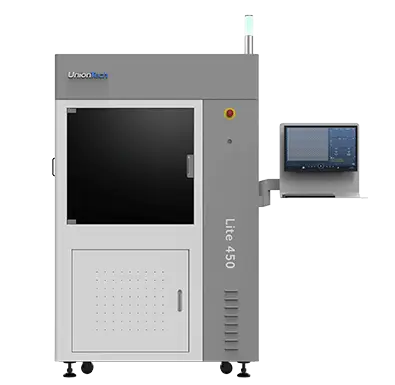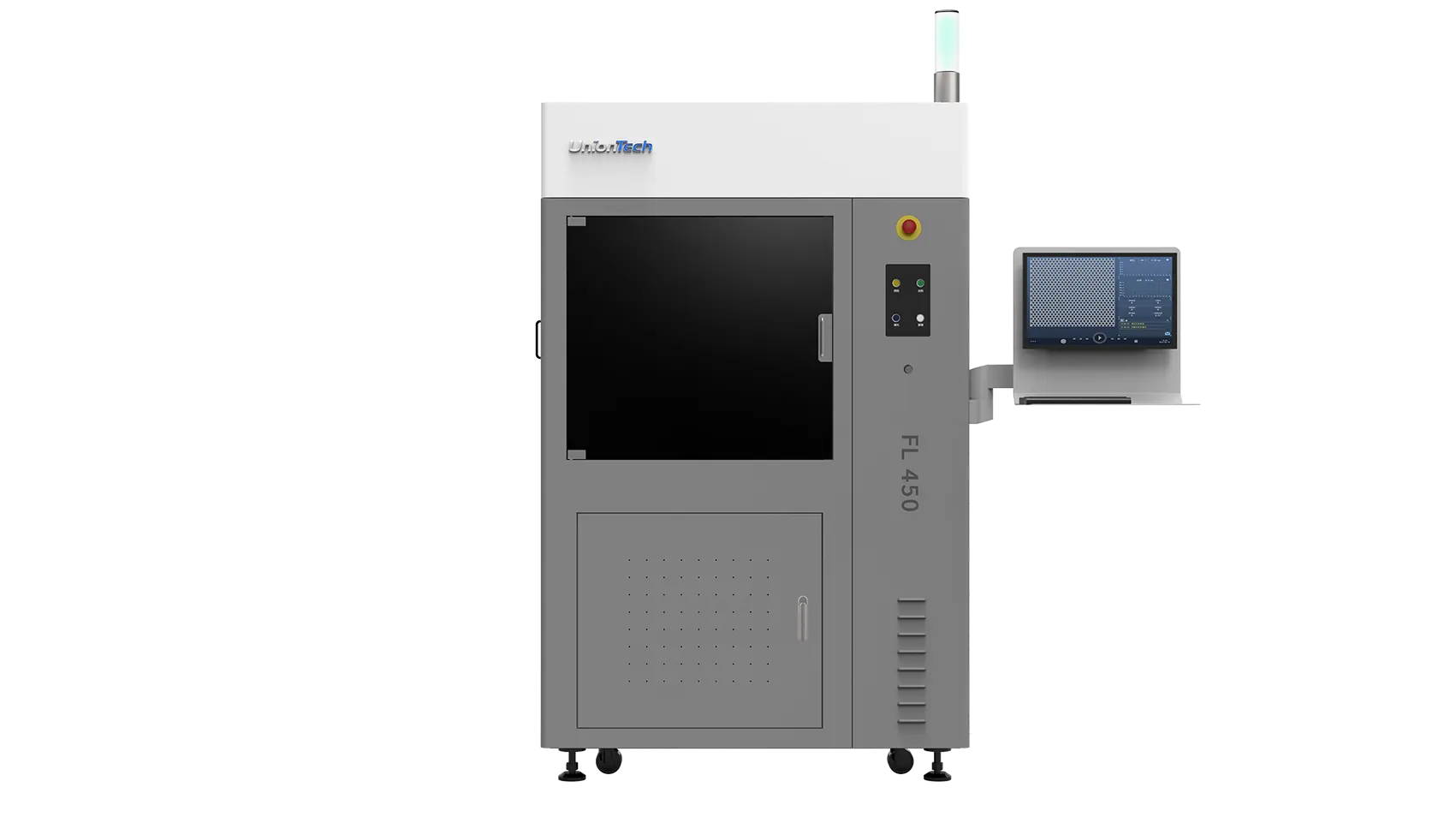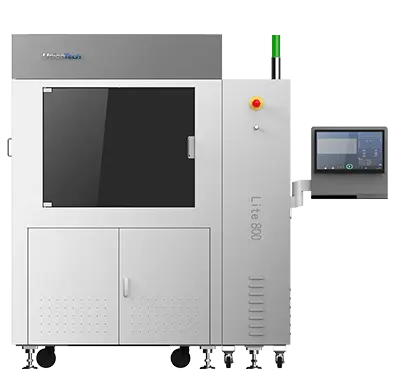
In industrial manufacturing workflows, the main difficulty in moving from prototype validation to production is maintaining consistent geometry without changing process conditions. At UnionTech, we see that manufacturers often need to reuse the same parameters across design iterations to avoid variation caused by equipment switching. In this context, a one stop printing solution is used as a unified workflow where design preparation, printing, and early production are executed within the same system environment, reducing discrepancies between prototype and production output.
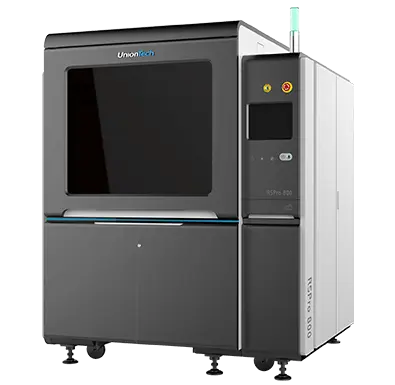
In real production environments, repeated switching between machines and software tools often leads to parameter drift and inconsistent results between builds. To address this, workflows are structured so that geometry validation, functional testing, and small-batch output can be executed without altering core system settings. The RSPro800 industrial SLA 3D printer is used in these scenarios because it maintains stable exposure behavior and layer formation across repeated jobs, allowing engineers to compare different design versions under identical process conditions. By keeping process parameters and system configurations consistent across iterations, manufacturers can reliably assess design changes without introducing variability from equipment transitions.
Material consistency plays a direct role in whether prototype results can be reliably transferred into production. Resin shrinkage, curing response, and viscosity changes can all affect dimensional accuracy, especially when multiple iterations are produced over time. To manage this, process parameters such as exposure time and scan strategy are kept within a controlled range across different builds. The RSPro800 platform is configured to maintain stable curing performance during long production cycles, which allows engineers to evaluate design changes without recalibrating the system for each iteration, keeping output behavior predictable across repeated prints.
In integrated workflows, design data moves directly into production systems without requiring manual reconfiguration between stages. This reduces delays caused by file conversion, parameter resetting, or machine switching and allows engineers to focus on design optimization rather than process setup. At UnionTech, we observe that when system integration is consistent, iteration cycles become shorter because feedback from printed parts can be applied directly to updated designs. In this structure, a one stop printing solution supports continuous workflow execution where prototype validation and production preparation are handled within the same operational framework.
Manufacturing efficiency depends on how consistently design intent is preserved from early prototyping to production output. At UnionTech, we focus on maintaining stable process behavior so that engineers can evaluate multiple design iterations under the same conditions. The RSPro800 industrial SLA 3D printer supports this requirement by providing consistent output across different resin applications and build cycles. Overall, a one stop printing solution helps reduce workflow fragmentation and ensures that prototype results can be reliably translated into production-ready designs without introducing additional process variability.