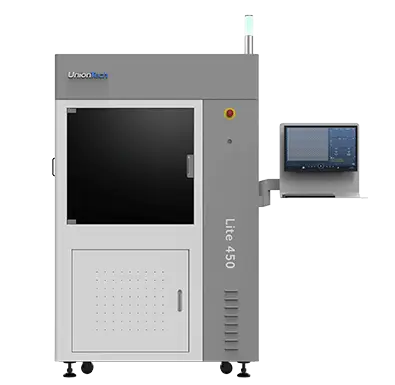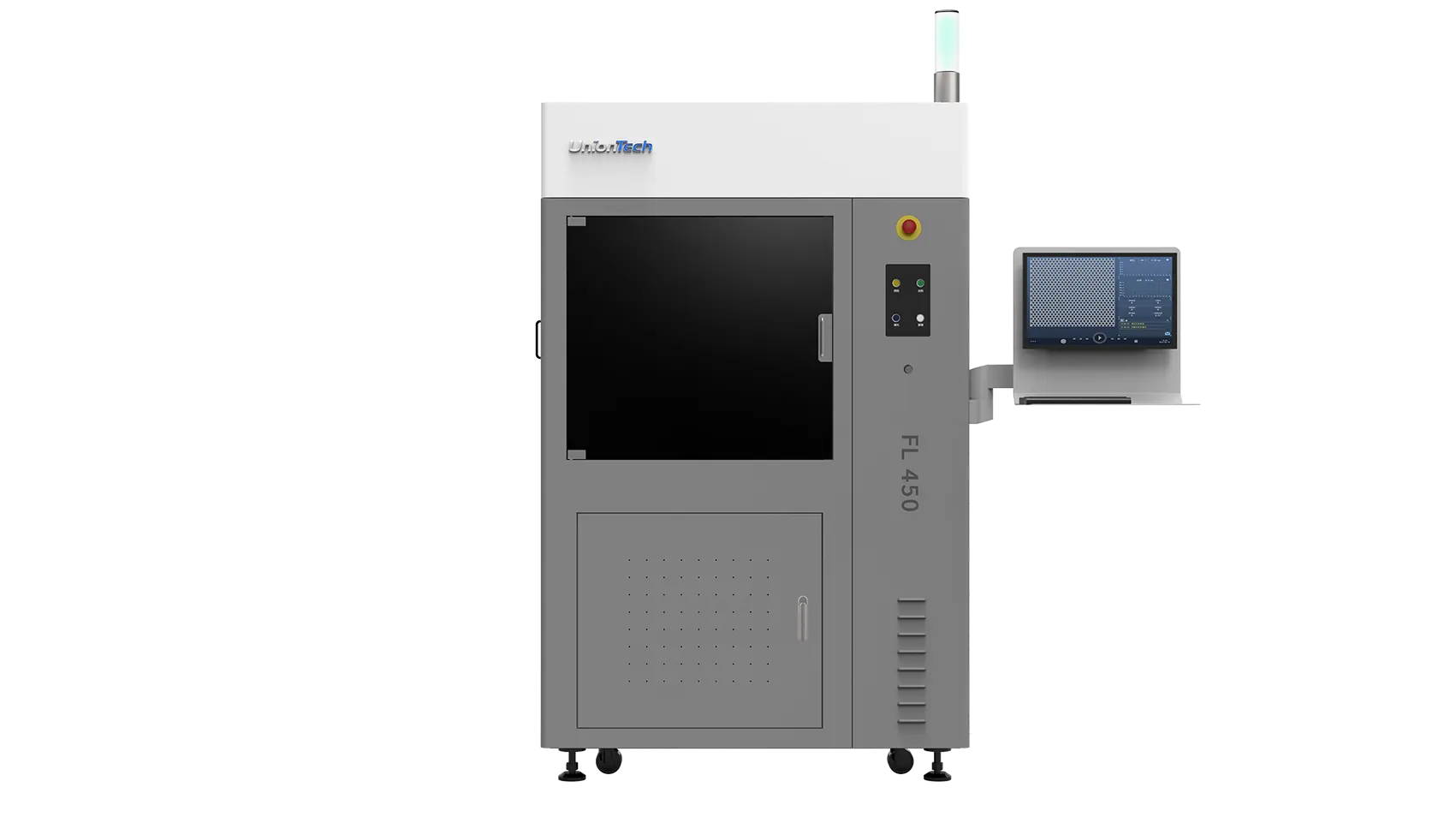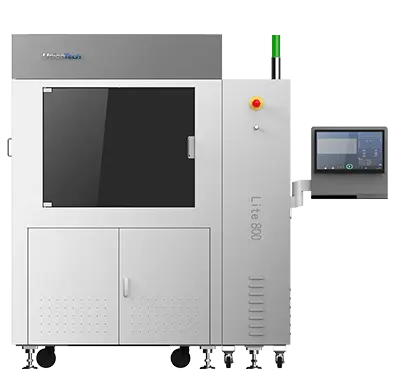
At UnionTech, we have been observing how industrial users are shifting their expectations from basic additive manufacturing performance toward more integrated production efficiency. A high precision 3D printer is no longer only evaluated by dimensional accuracy, but also by how well it supports continuous production cycles, material consistency, and workflow stability. In many discussions, we notice that speed has become a key factor, but it must always remain aligned with controlled process quality.
From our perspective at UnionTech, the challenge in SLA development is not simply increasing scanning speed, but ensuring that acceleration does not introduce inconsistency in resin curing. A high precision 3D printer must manage laser exposure, motion control, and material response in a synchronized way. When these elements are not balanced, surface quality and dimensional reliability may be affected. In real industrial environments, users often work with repeated production tasks, so maintaining consistent output is more important than achieving isolated high-speed results.
To address this, we focus on system-level coordination rather than single-component optimization. This includes the interaction between slicing algorithms, scanning paths, and mechanical stability. Through this approach, we aim to ensure that higher processing efficiency does not compromise part repeatability, especially in functional testing and prototype verification stages.
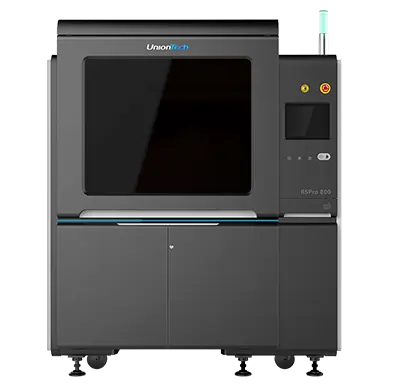
When we developed the RSPro800 industrial 3D printer, the goal was to support production scenarios that require both efficiency and repeatability. In practical use cases such as automotive components, electronic housings, and structural prototypes, the system must maintain stable geometry across multiple build cycles. This is where controlled high-speed processing becomes relevant.
At UnionTech, we have seen that users benefit most when the equipment reduces waiting time between iterations while maintaining predictable surface quality. The RSPro800 is designed to support this requirement by optimizing scan efficiency and ensuring resin response stability across different geometries. In production environments where design updates are frequent, this balance helps reduce unnecessary downtime and supports more structured development workflows.
We also consider how operators interact with the system. Ease of workflow preparation, consistent slicing output, and reliable parameter reuse all contribute to reducing operational variation. These elements are often as important as printing speed itself in industrial contexts.
We believe that the evolution of SLA technology is not defined by speed alone, but by how effectively speed is integrated into controlled production systems. A high precision 3D printer must deliver consistent results while supporting flexible manufacturing requirements across different applications. At UnionTech, our work with systems like RSPro800 reflects this direction, where efficiency and stability are developed together rather than treated separately. For industrial users, this combination is what allows high-speed SLA systems to become practical tools in real production environments rather than experimental equipment.