When prototype quality determines how quickly a client approves a design, professionals need the highest resolution 3D printer available for the job — not a desktop system that leaves visible layer lines and rough surfaces. For product designers, consumer electronics teams, and industrial component developers, 3D industrial printers deliver the surface finish, dimensional accuracy, and repeatability that desktop machines simply cannot match. Resolution isn’t just a technical preference — it directly affects how confidently a prototype can be presented in a review or used to support a decision.
What Does a High-Resolution 3D Printer Change in a Prototype Review?
In a prototype review, decision-makers respond to what they can see and touch. Small details and surface transitions either read clearly or they don’t — and that difference shapes the entire conversation. In consumer electronics, a client might be evaluating button gaps, speaker openings, curved edges, or connector recesses. In industrial parts, an engineer needs to check ribs, housings, internal channels, and assembly features. When the surface is rough, the review shifts from product value to print quality problems — and that kills the design conversation before it starts.
| Prototype Issue | Business Impact |
| Visible layer lines | More sanding and slower presentation preparation |
| Soft edges | Harder to judge industrial design details |
| Poor fit details | More uncertainty in assembly discussion |
| Rough surface | Lower confidence during client proposal meetings |
How Does SLA Printing Support Smooth Surfaces and Fine Details?
Stereolithography (SLA) works by curing liquid resin layer by layer with controlled light exposure — a process that consistently delivers clean surfaces and accurate visual detail. It’s widely used in professional prototyping precisely because the output requires less correction before a part is review-ready. For presentation prototypes, smoother surfaces mean less sanding, filling, and repainting before a client meeting. Most parts still benefit from some finishing, but the baseline quality reduces how much manual correction the team has to do. For example, a product manager preparing a consumer electronics concept may need several enclosure versions for review. If each version requires heavy surface repair, the team loses time before the proposal starts. SLA can also help when teams need thin details and curved forms. These are common in handheld devices, appliance panels, display parts, medical models, and high-end industrial prototypes.
Before committing to a system, it’s worth testing a representative part against these questions:
Resolution only earns its value when it shortens the gap between printing and presenting — less rework, clearer reviews, faster approvals.
When Should Designers Choose UnionTech Lite Series for Professional Prototyping?
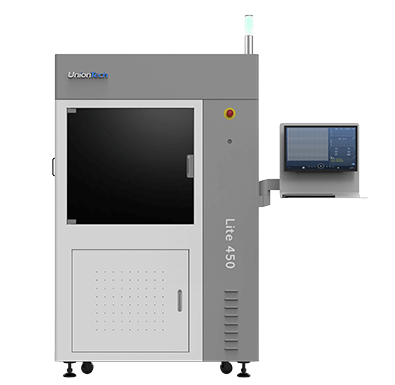
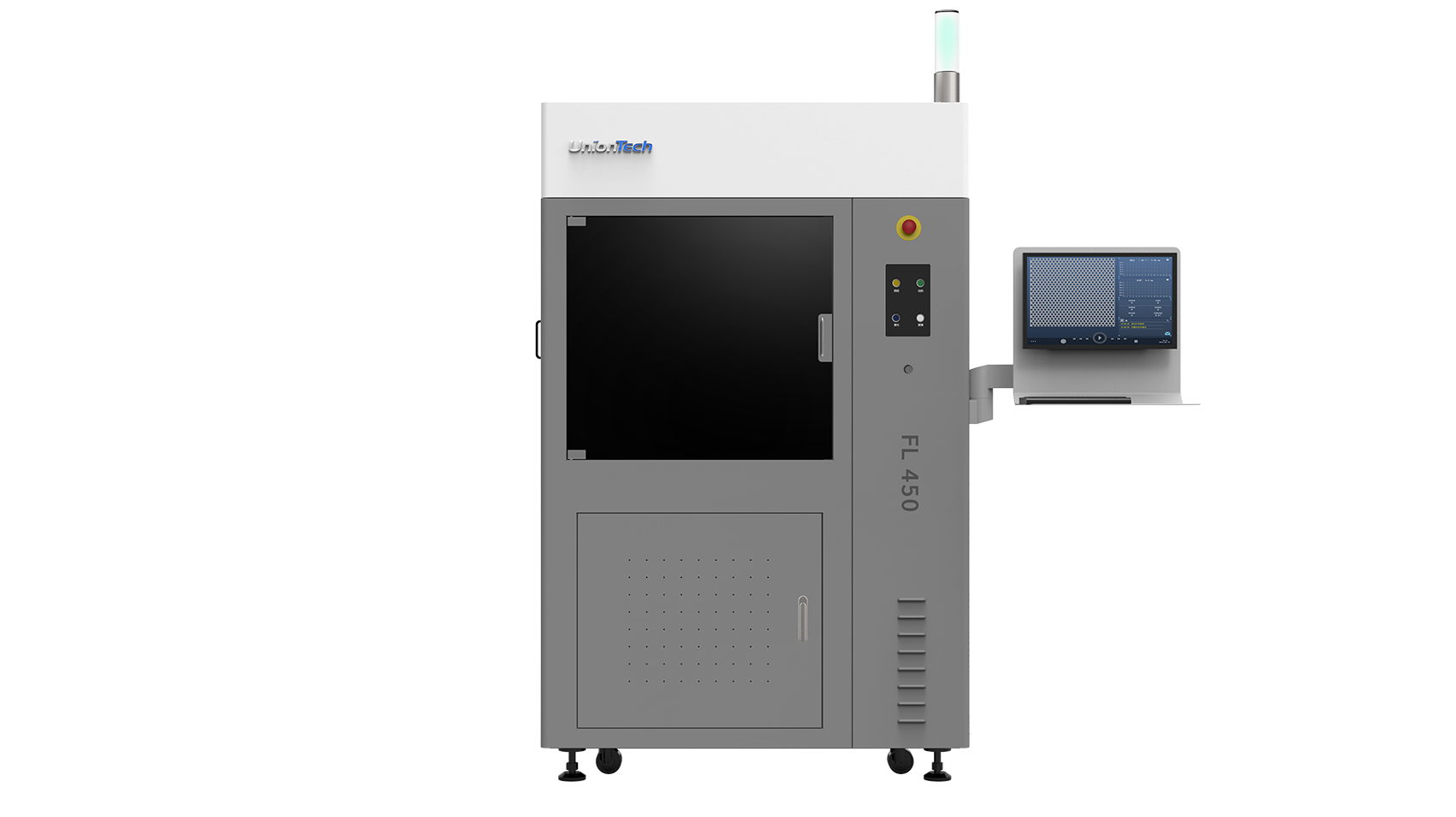
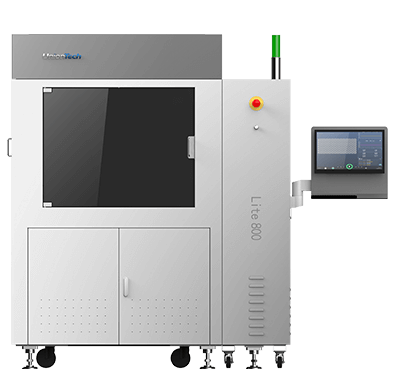
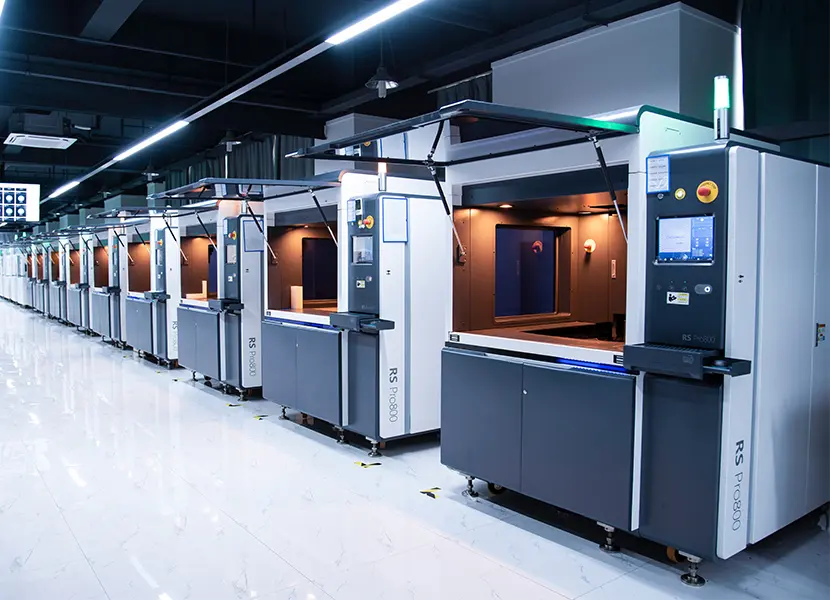
For professional teams that have outgrown desktop SLA systems, UnionTech’s Lite Series is designed to bridge the gap between entry-level printing and full industrial production. The series supports larger parts, repeatable output, and a more complete production workflow — without requiring the footprint or investment of a flagship industrial system.
The Lite Series includes the Lite 600, Lite 600 2.0, and Lite 800. The Lite 600 2.0 offers a 600 × 600 × 400 mm build volume with dimensional accuracy of ±0.1 mm for parts under 100 mm and ±0.1% of dimension for larger parts — a level of precision that holds up well in assembly checks and design reviews. Layer thickness ranges from 0.05 to 0.25 mm, giving operators control over the balance between surface quality and print speed. Together, these specifications suit professional teams producing detailed prototypes, larger resin parts, and small- to medium-batch runs.
| Professional Need | Why Lite Series Fits |
| Appearance prototypes | SLA supports smooth surfaces and visual detail |
| Small-batch models | Build volume supports multiple parts in one job |
| Design validation | Accuracy data supports dimensional discussion |
| Material testing | Compatible resin options support varied applications |
How Can a High-Resolution Prototype Improve Client Presentations?
A prototype from a high-resolution 3D printer reduces uncertainty at exactly the moment it matters most — when a client, manager, or approver is deciding whether to move forward. When the surface, scale, and detail read clearly, the conversation becomes concrete rather than speculative. This is especially important in proposal-driven businesses. A design studio may compete against other suppliers. A product team may need internal budget approval. A manufacturer may need a customer to confirm the next tooling step. In these situations, a refined prototype can help the audience move from “I understand the idea” to “I can imagine the final product.” That shift can support faster feedback, clearer approvals, and stronger confidence in the design direction.
Before buying, teams should compare the printer against the real presentation workflow:
A high-resolution 3D printer earns its place in a professional workflow when it consistently helps teams present ideas with less rework and more confidence. If that’s the gap your team is trying to close — whether in consumer electronics, industrial design, or proposal-driven product work — UnionTech’s Lite Series is worth a closer look. Share your part size, surface requirements, and application context with the team to find the right configuration.