At a certain point in a 3D printing business’s growth, the machine becomes the bottleneck. Customers start requesting parts that exceed what a desktop or small-format printer can handle — and every time that happens, the team faces a choice: split the job into sections, send it out, or turn it down. For growth-stage service bureaus, model studios, design firms, and industrial workshops, that bottleneck has a direct cost. A large build volume 3D printer removes it.
How Can a Large Build Volume 3D Printer Help a Growing Service Business Win Bigger Orders?
Build capacity determines what a service business can confidently quote. When the printer can handle the job in-house, the team controls the timeline, the margin, and the result. When it can’t, those three things go elsewhere. A service bureau may receive requests for large display prototypes, appliance housings, architectural models, character figures, or mold patterns. If the printer is too small, the team must split the project into several parts or outsource the job. That creates two compounding problems: the business loses margin on the current job, and the customer relationship gradually shifts toward whoever owns the larger production capacity.
| Business Type | Larger Projects They Can Quote |
| 3D printing service bureau | Large prototypes, molds, low-volume customer parts |
| Figure or model studio | Tall characters, props, display pieces |
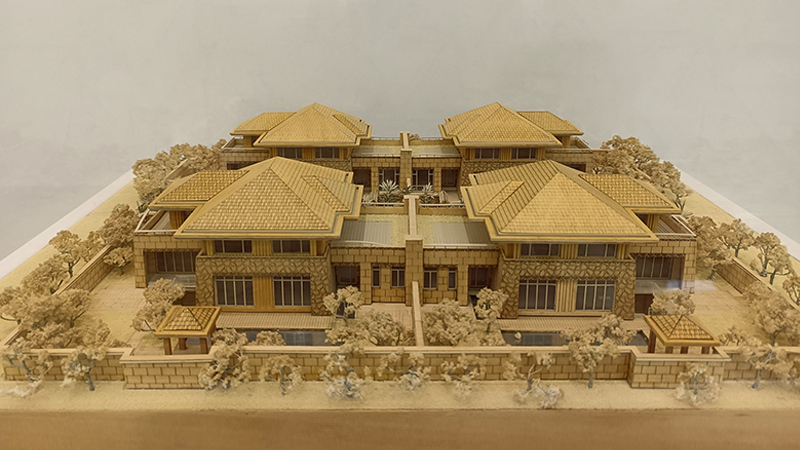
| Architectural design firm | Building models, landscape models, urban planning models |
| Industrial workshop | Housings, fixtures, tooling aids, validation parts |
For a growing company, the right printer isn’t the smallest one that fits the budget — it’s the one that matches the next level of customer demand.
Why Does One-Piece Printing Reduce Labor, Rework, and Delivery Risk?
Fewer sections mean fewer seams, fewer bonding steps, and fewer surface corrections — and that matters most when customers are evaluating a part on both function and appearance. When a large model is printed in small segments, every seam becomes a possible quality issue. Operators must align parts, glue sections, fill gaps, sand transitions, and often repaint the surface. For an internal prototype, that level of finishing work is manageable. For a paid customer project delivered on a tight schedule, it quietly erodes both profit and trust. A larger platform gives the team more choices. The model can be printed in one piece when suitable, or split in fewer sections when handling, shipping, or finishing requires segmentation.
A large build volume 3D printer — the RSPro2100 being a strong example at the top end — protects both project margin and customer trust.
Which Businesses Should Consider a Large Volume 3D Printer Instead of a Desktop Printer?
The clearest signal that a business needs a larger printer is when paid orders are already being constrained — by build size, finishing labor, or outsourcing cost. As 3D printing moves deeper into production workflows, desktop systems simply can’t keep pace with the volume or complexity customers expect. The machine should solve a real bottleneck — not just add an impressive spec to the workshop. A figure studio may need smoother large character prints with fewer visible seams. An architectural firm may need clean presentation models that show building massing, facade details, and landscape features. A large printer is also useful for batch production. One week may require a single large model, while the next week may require many smaller components arranged on the same platform. That kind of flexibility is why large-format printing tends to serve service businesses, creative studios, and industrial workshops far better than entry-level systems ever could.
Which UnionTech RSPro Model Fits Different Large-Format Printing Needs?
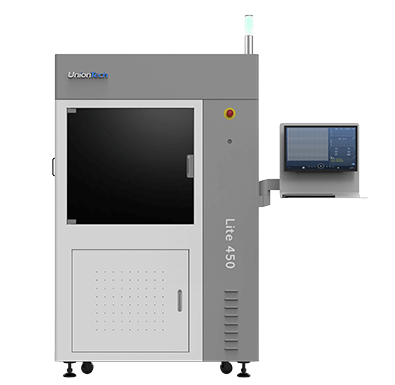
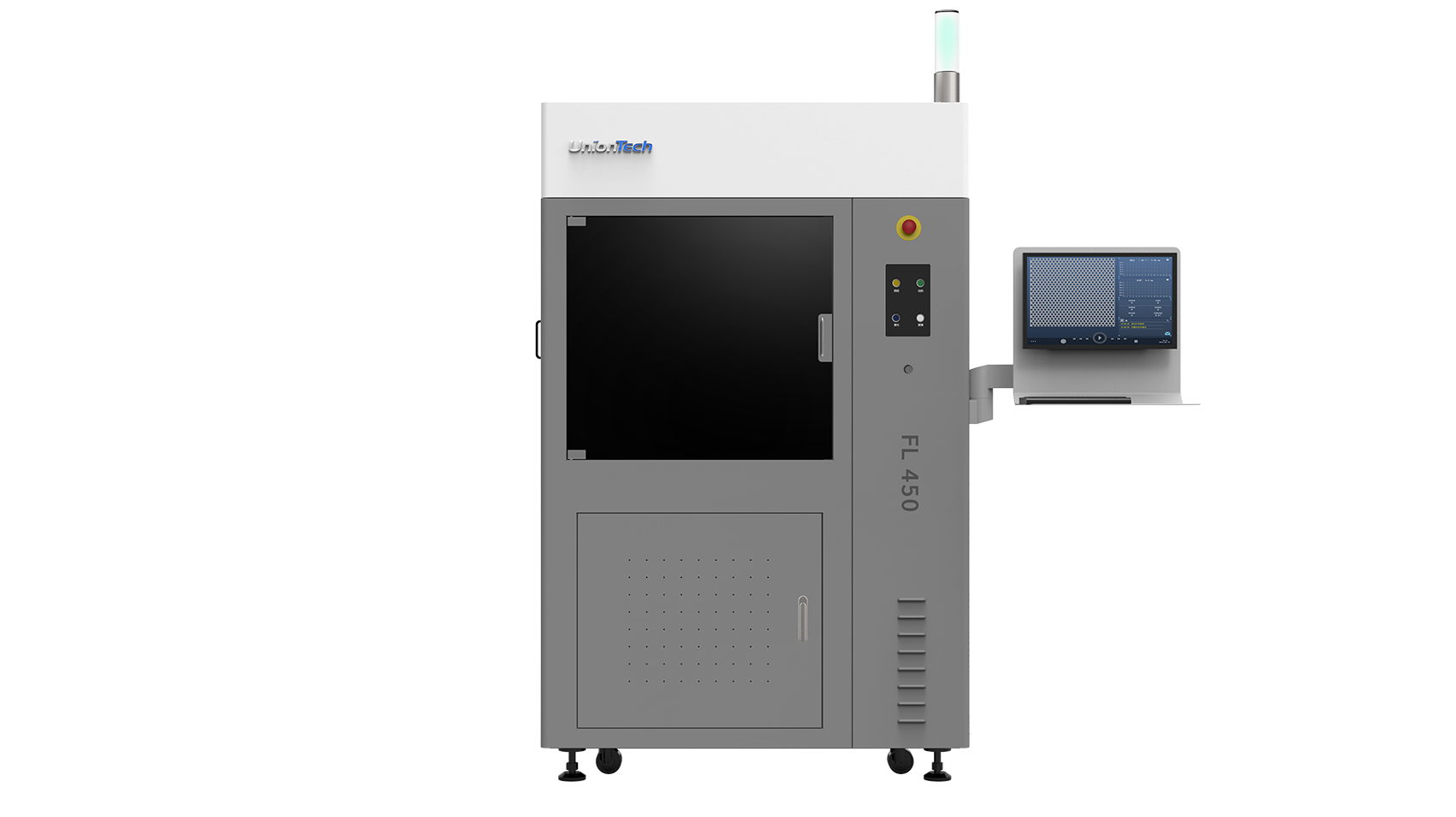
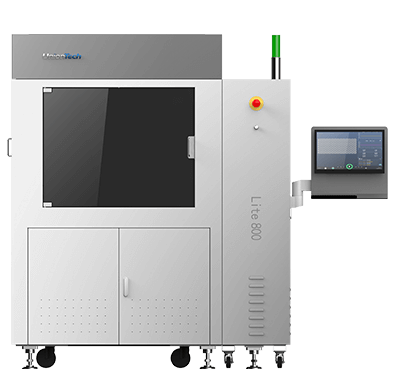
UnionTech’s RSPro series covers a deliberate range of build volumes — from the RSPro600 2.0 up to the RSPro2100 — so businesses can step into large-format production at the right level. The right entry point depends on order size, application type, workshop space, and expected utilization. The RSPro series uses stereolithography (SLA), a resin-based process well suited to applications that demand smooth surface finishes, fine feature detail, and dimensional consistency — which is why it’s a strong choice for prototypes, molds, and high-quality presentation parts.
| RSPro Model | Build Volume | Practical Fit |
| RSPro600 2.0 | 600 × 600 × 500 mm | Entry-level industrial SLA production, professional prototyping, and smaller batch jobs |
| RSPro800 2.0 | 800 × 800 × 550 mm | Growing service bureaus and batch production |
| RSPro1400 | 1400 × 700 × 500 mm | Larger models, molds, and one-piece parts |
| RSPro1800 | 1800 × 900 × 600 mm | Mid-to-large service bureaus and industrial workshops |
| RSPro2100 | 2100 × 700 × 800 mm | Oversized parts and flagship large-format applications |
This range is designed to correct a common buying mistake: assuming bigger is always better. A growing service bureau doesn’t always need the largest machine first. For many businesses, RSPro1400 or RSPro1800 may provide a more balanced step into large-format work. RSPro2100 should be positioned carefully. It is suitable for oversized components and large industrial applications where the business has the order volume, space, staff, and finishing workflow to use that capacity. When comparing large scale 3D printers, do not choose by size alone. Choose by the mix of orders you want to win, the staff available to operate the system, and the finishing workflow your customers expect.
If your business is at the point where build size is limiting what you can quote or deliver, it’s worth a conversation about where the real bottleneck is. UnionTech’s team can help assess your part requirements, application needs, and the right RSPro configuration for your production workflow. Reach out to start that discussion.