The best metal 3D printer for commercial production is the one that fits your real part mix, material plan, quality process, and shop-floor capacity — not the one with the most impressive brochure. For machining shops, mold manufacturers, and industrial workshops evaluating a 3D printer for industrial use, metal additive manufacturing earns its place when it solves problems CNC machining cannot handle efficiently: complex internal geometry, low-volume production runs, and faster design iteration.
When Should a Machining Shop Consider Metal 3D Printing?
The trigger for metal 3D printing in a machining shop is usually a customer request the existing equipment can’t handle well — complex geometry, internal channels, or a small batch that would require too many setups to machine efficiently. When geometry and batch size both favor additive manufacturing, the case for the investment becomes clear. CNC machining remains the right choice for many standard parts — familiar, precise, and efficient for simple geometry and high-volume repeat work. Metal 3D printing adds value when the design includes internal channels, conformal cooling, lightweight lattice forms, or small batches that would require excessive setups to machine from solid stock.
| Production Scenario | CNC Machining | Metal 3D Printing |
| Simple block-like part | Usually efficient | Often unnecessary |
| Internal channels | Difficult or impossible | Strong application fit |
| Low-volume complex part | Many setups may be needed | Can reduce tooling steps |
| Mold insert with cooling path | Limited by drilling geometry | Supports curved channels |
The best metal 3D printer for a machining shop is one evaluated as a business tool for selected jobs — not positioned as a replacement for every machine on the floor.
How Do You Evaluate a 3D Printer for Industrial Use in Metal Production?
Evaluating a 3D printer for industrial use in metal production is more involved than checking a spec sheet. Material compatibility, build volume, laser configuration, powder safety, post-processing requirements, and inspection all determine whether the machine can actually integrate into a production workflow — or just run test parts. Selective Laser Melting (SLM) fuses metal powder layer by layer using a focused laser — enabling geometries that subtractive machining simply can’t produce. But the process demands serious planning beyond the print itself. Powder handling and storage, support structure removal, heat treatment, machining allowances on critical surfaces, final finishing, and part inspection all need to be built into the workflow before the first production job runs.
Use this checklist before requesting a quotation:
What Should Mold Shops Look for in an Industrial Metal 3D Printer?
For mold shops, the question isn’t just whether a metal printer can produce an insert — it’s whether the printed part can move efficiently through the rest of the production chain. Repeatable output, practical build size, and a clear path from printed insert to finished mold component are the criteria that matter most. In mold manufacturing, metal 3D printing is particularly valuable for inserts, tooling components, and conformal cooling geometries that drilling or milling alone can’t produce. The printed part will typically still need machining on critical surfaces, heat treatment, and dimensional inspection before it enters service.
That means the best workflow often combines additive and subtractive methods. The metal printer creates the complex form, and the shop finishes critical surfaces.
| Workflow Step | Key Question |
| Part selection | Which jobs benefit from additive geometry? |
| Printing | Can the printer support the required material and build size? |
| Post-processing | What heat treatment, support removal, or machining is needed? |
| Inspection | How will density, dimensions, and surface quality be verified? |
| Delivery | Does the workflow meet customer lead-time expectations? |
For commercial production, this additive-subtractive combination is the realistic standard — metal 3D printing adds geometric capability, while traditional finishing steps protect dimensional quality.
Why Consider UnionTech MUEES Series for Metal Additive Manufacturing?
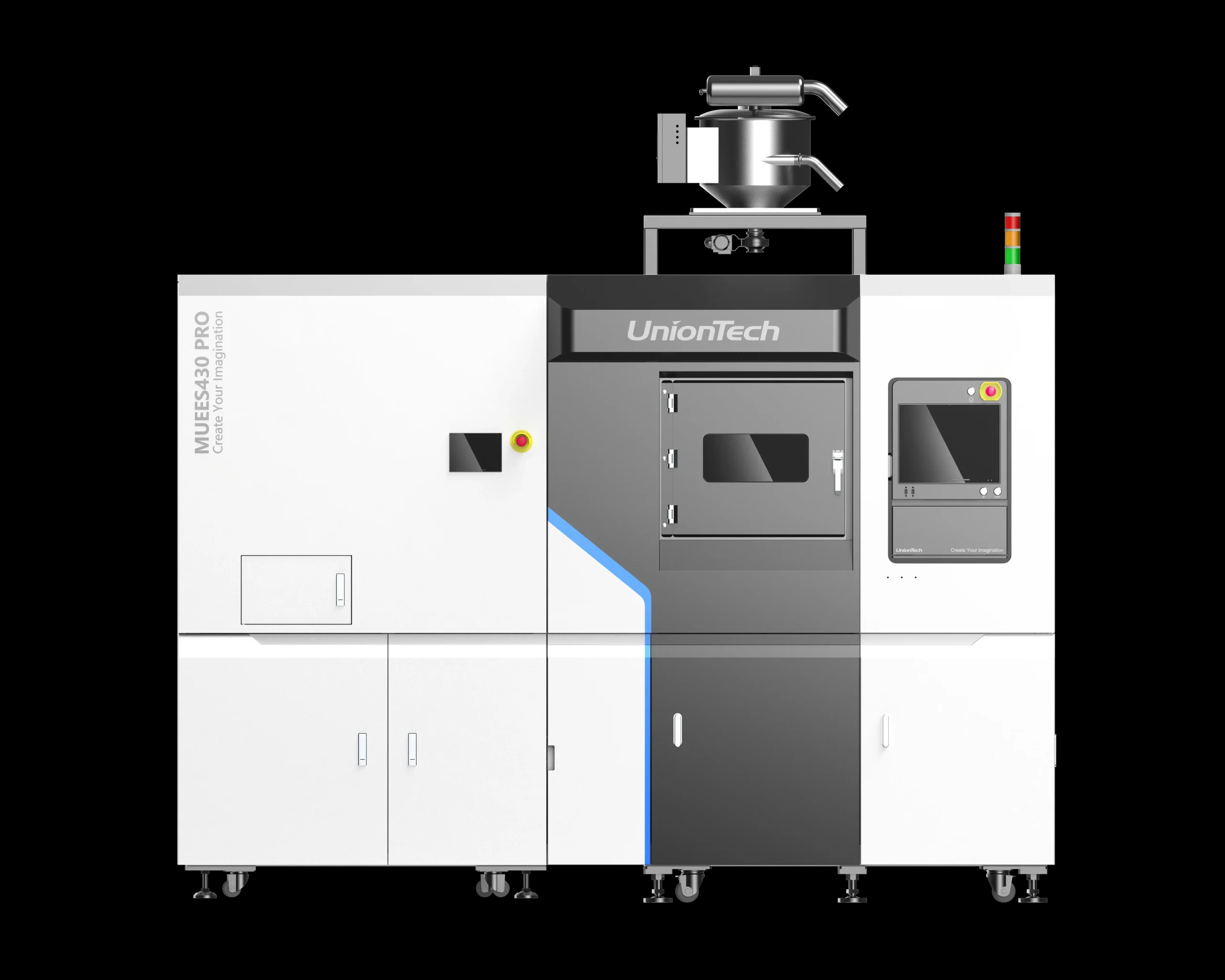
When the question shifts from “should we invest in metal 3D printing?” to “which system can support a controlled production workflow?”, the MUEES Series is where UnionTech’s answer sits. For machine shops and mold manufacturers moving from evaluation to practical small-batch production, the best metal 3D printer isn’t the one that prints the widest material range on paper — it’s the one designed around process control and production efficiency.
The MUEES430 PRO is built around four 500W Yb-fiber lasers working across a 430 × 340 × 330 mm build volume. The four-laser configuration matters for production: it allows simultaneous scanning across different zones of the build platform, which reduces print time per batch compared to single-laser systems — a practical advantage when the machine needs to run production jobs consistently, not just demonstration parts. For a 3D printer for industrial use in a metal production context, that throughput difference has a direct impact on cost per part.
UnionTech’s team works with machining shops and mold manufacturers to evaluate part requirements, workflow fit, and the right configuration before a purchase decision is made. If your shop is ready to move beyond evaluating metal additive manufacturing and wants a practical production conversation, reach out to UnionTech with your part types, material requirements, and current production constraints.