At UnionTech, we have learned that even a high-performance SLA platform may deliver inconsistent results when paired with the wrong resin. Over years of advancing 3D printing from laboratory research to large-scale commercial applications in China, we have helped customers match material properties to real-world application demands. As a global industrial 3D printer manufacturer, we know that success depends on two choices: selecting the right machine and the right resin. That is why we offer one-stop additive manufacturing solutions that integrate both. In this guide, we walk you through how to match resin types to industrial applications, so you can move from prototyping to production with confidence.
Before choosing any resin, ask what the printed part must do. Is it a visual model for stakeholder presentations? A functional prototype that must survive impact or heat? Or a low-volume end-use component? Each answer points to a different material family. General-purpose resins prioritize surface finish and detail. Engineering resins add mechanical strength, thermal resistance, or toughness. When you partner with UnionTech, we help you evaluate these requirements early. Our experience across automotive parts, investment casting, medical devices, and transparent instruments means we understand the specific demands of your industry. And because we manufacture the best SLA 3D printer for precision applications, we ensure your chosen resin performs exactly as expected.
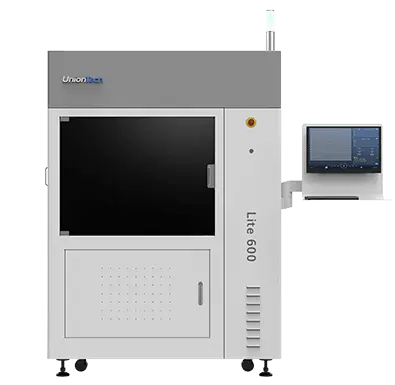
As an industrial 3D printer manufacturer, we organize our resin portfolio around typical use cases. For high-detail visual prototypes and master patterns, standard clear or white resins deliver smooth surfaces and fine feature resolution. For functional testing that requires impact resistance and moderate heat deflection, ABS-like resins such as our Ultra-RC70 provide excellent balance. For applications demanding high thermal stability or chemical resistance, specialty engineering resins are available. The key is understanding that no single resin does everything. That is why our industrial 3D printer manufacturer approach emphasizes compatibility: our machines, including the Lite 600, are engineered to handle a wide range of SLA materials, giving you the flexibility to work with different resins using suitable parameters and workflow setup.
Selecting the best SLA 3D printer for your shop means finding a system that adapts to multiple resins and applications. The Lite 600 does exactly that. This mid-format industrial-grade SLA 3D printer is compatible with a broad spectrum of SLA printing materials, making it ideal for small-batch production across industries. Its variable spot size technology adjusts the beam for fine details and rapid infill, providing superior surface quality and faster overall printing. Whether you are printing automotive components, investment casting patterns, medical devices, or transparent instruments, the Lite 600 delivers reliable, high-accuracy results. We designed it to be the best SLA 3D printer for shops that cannot afford to compromise between speed, precision, or material choice.
Choosing the right resin is not a one-time decision—it is an ongoing process as applications evolve. UnionTech supports you at every stage, from initial material recommendations to print parameter optimization. We combine deep material science knowledge with precision hardware engineering. When you work with us, you gain access not only to the best SLA 3D printer for your needs but also to decades of application expertise. Let us help you match every resin type to its ideal industrial use, so your prototypes and selected production parts can better meet defined performance requirements.