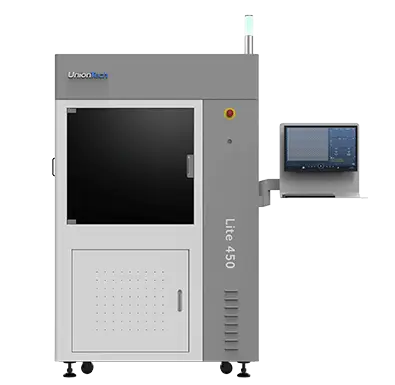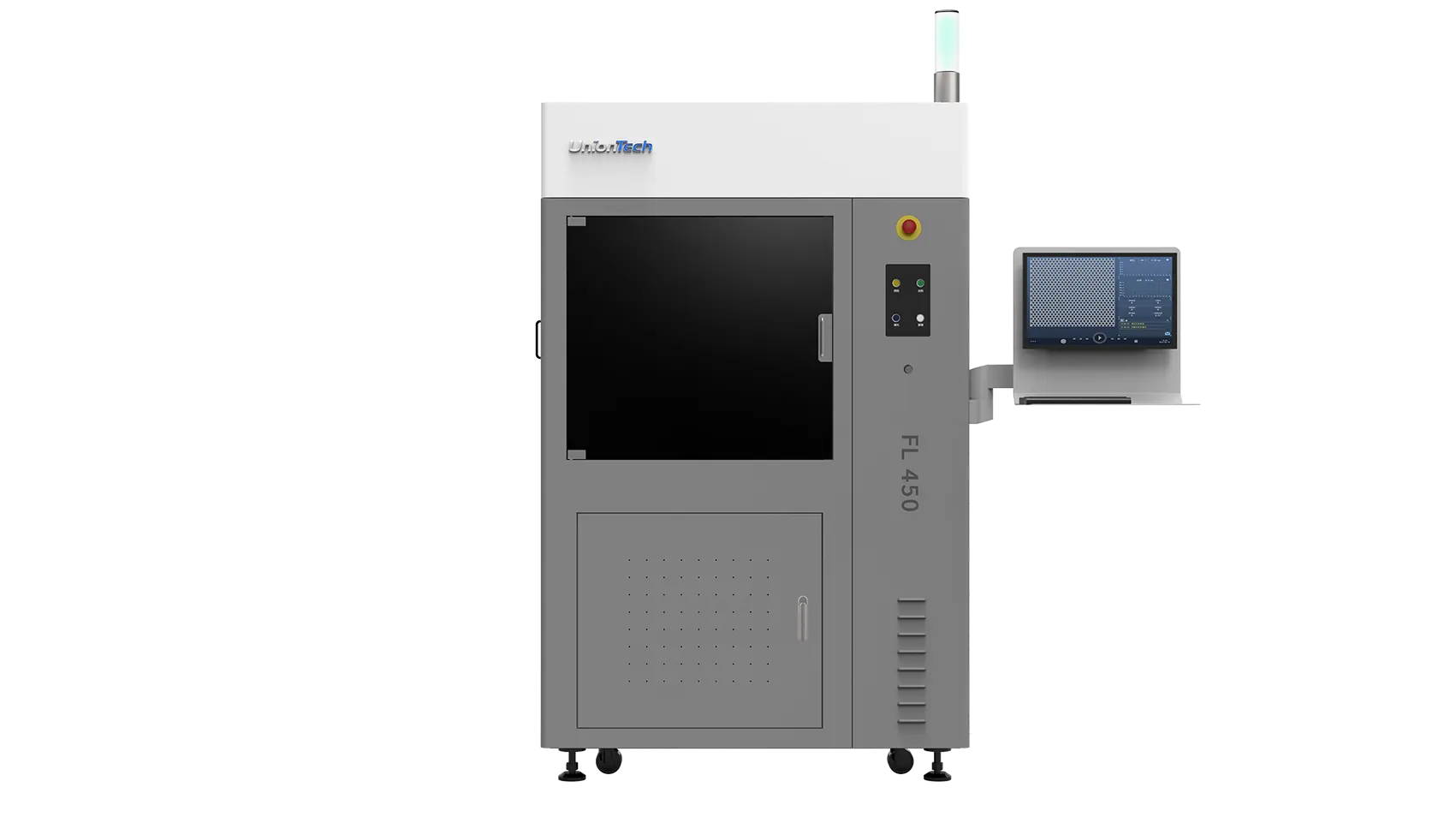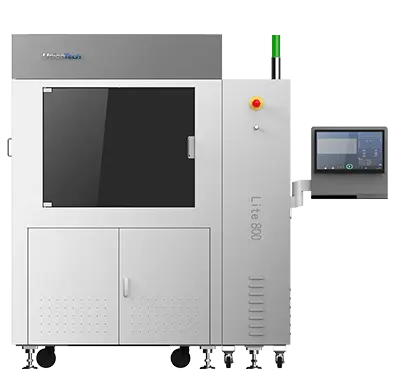
As a trusted industrial 3D printer manufacturer, UnionTech has consistently helped production teams turn ambitious designs into reliable, repeatable outputs. Our RSPro2100—the largest industrial 3D printer in our portfolio—exemplifies that commitment. With a 2100 × 700 × 800 mm build volume, triple-laser scanning, and an advanced granite recoater frame, this machine delivers precision and stability at an unprecedented scale. However, even the most capable hardware requires a smart workflow to reach its full potential. Drawing from our work with hundreds of clients, we share three practical tips for optimizing your RSPro2100 operations.
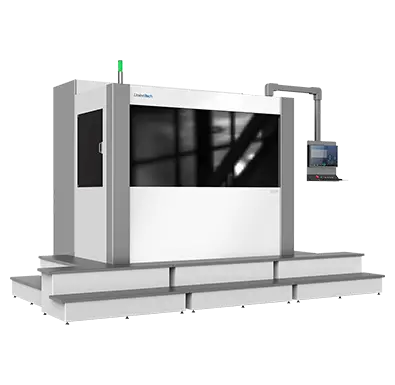
The RSPro2100’s triple-laser system dramatically reduces print times, but only if your slicing and nesting strategies keep pace. We recommend using slicing software that intelligently partitions the 2100 mm build length across all three lasers simultaneously, avoiding idle time. Additionally, orient parts to minimize z-axis height—this preserves the large industrial 3D printer’s stability advantage by reducing peel forces. Finally, run batch simulations before printing; our experience shows that proper laser path planning can help reduce total job time on densely packed platforms.
One common challenge with large-format SLA is maintaining dimensional accuracy across the entire build plate. The RSPro2100’s granite recoater frame solves this by eliminating thermal expansion variables. To capitalize on this, always calibrate your recoater blade gap before high-volume jobs. What’s more, by pairing the frame’s rigidity with disciplined environmental control, users routinely achieve deformation below 0.2 mm on parts up to 2,100 mm in length—turning what was once a risk into routine precision.
The UnionTech RSPro2100 is not merely a large industrial 3D printer; it is a production tool for consolidating multiple components into fewer print runs. We encourage clients to redesign assemblies so that previously separate parts are printed as single, interconnected layouts. For example, automotive interior panels or industrial housings that once required three separate prints can nest side-by-side along the 2100 mm axis. This approach reduces post-processing labor and eliminates assembly errors. Monitor your EPM platform’s real-time data to identify which part geometries fill the build volume most efficiently—then create reusable templates for recurring jobs.
Optimizing a large industrial 3D printer like the RSPro2100 is about more than speed; it is about transforming large capacity into reliable, repeatable business results. As an industrial 3D printer manufacturer, we design every machine—from the FM700 to the RSPro2100—to integrate seamlessly into production environments. By following these workflow tips, our users consistently reduce cycle times, minimize material waste, and produce oversized components with industrial-grade surface quality. Let your next large-format project be the one where workflow meets performance.