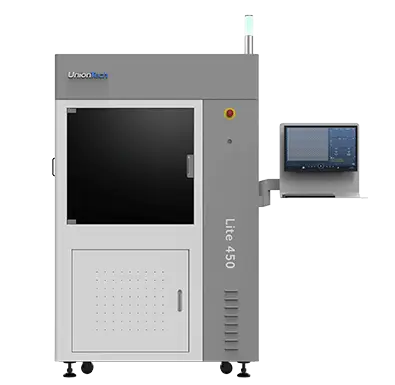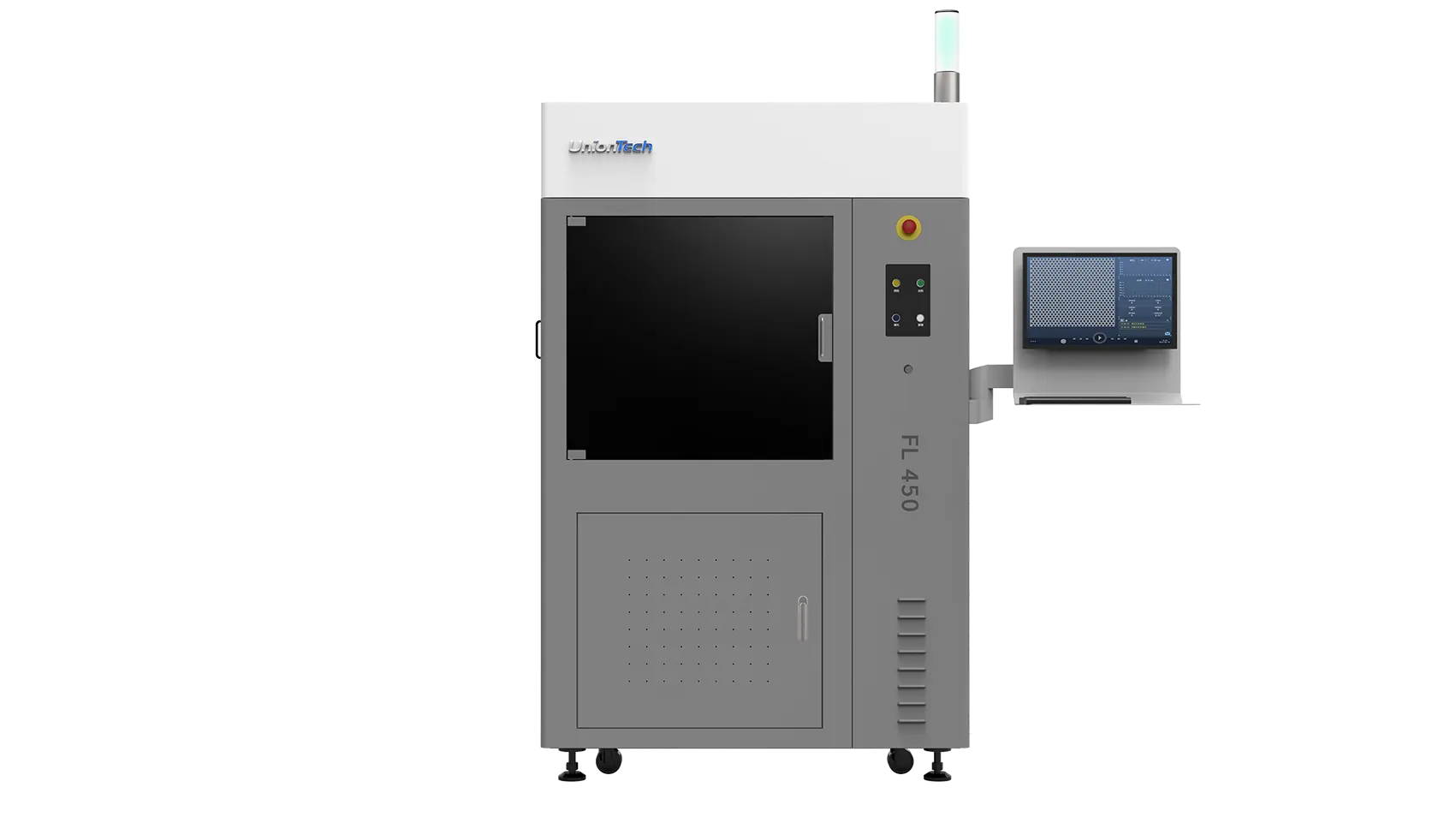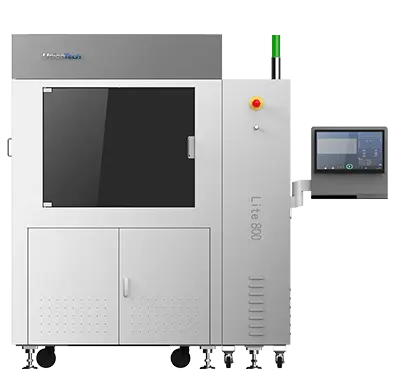
Precision has become a defining factor in modern additive manufacturing, especially for industries that require complex geometries, tight tolerances, and consistent repeatability. From aerospace components to footwear molds and automotive prototypes, manufacturers are demanding more from every industrial 3D printer they invest in. One of the technologies driving this advancement is dynamic beam control, which significantly improves print quality and production efficiency compared to entry-level SLA systems.
As a global industrial 3D printer manufacturer, UnionTech recognizes that businesses are no longer looking only for faster printing. They also require stable laser performance, superior surface finish, and scalable production capabilities that support industrial applications over the long term.

Dynamic beam control refers to the ability of an industrial 3D printer to intelligently adjust laser parameters during the printing process. Unlike entry-level SLA systems that often rely on fixed laser settings, advanced industrial platforms can optimize beam size, energy distribution, and scanning speed according to the geometry of each layer.
This capability delivers several important advantages. First, it improves dimensional accuracy across large build volumes. Complex structures and delicate features maintain their integrity because the laser adapts to varying printing conditions in real time. Second, dynamic beam control reduces inconsistencies such as overcuring, distortion, and uneven surfaces, which are common limitations in lower-cost systems.
For manufacturers handling high-value production tasks, these improvements translate into fewer rejected parts, lower material waste, and more predictable manufacturing outcomes. As an experienced industrial 3d printer manufacturer, we understand that precision directly affects productivity and profitability.
Entry-level SLA machines are often suitable for educational purposes or small-scale prototyping, but industrial production environments require much more robust performance. A professional industrial 3D printer must maintain accuracy throughout continuous operation while supporting larger components and demanding materials.
Dynamic beam control plays a major role in this distinction. Industrial systems can automatically compensate for thermal variations and scanning path complexities, helping maintain consistent print quality across extended production cycles. Entry-level machines typically lack this adaptability, which can lead to reduced precision during long prints or when handling intricate industrial parts.
At UnionTech, we combine advanced SLA, DLP, LCD, and SLM technologies to provide manufacturers with comprehensive additive manufacturing solutions. Beyond hardware, our ecosystem includes high-performance materials developed alongside partners such as BASF and Evonik, as well as proprietary software like UT ONE and Polydevs that optimize workflow efficiency.
Manufacturers today need more than standalone equipment. They require integrated solutions from a trusted industrial 3D printer supplier capable of supporting evolving production demands. At UnionTech, we provide a full portfolio of industrial 3D printer systems, advanced materials, intelligent software, and professional services tailored for industries including automotive, aerospace, drones, robotics, cultural and creative projects, footwear molds, and tyre moulds.
By integrating dynamic beam control into advanced industrial 3D printer platforms, we help businesses achieve greater precision, improved scalability, and more reliable additive manufacturing performance. As industrial production standards continue to rise, intelligent beam management will remain a critical factor separating true industrial systems from basic entry-level alternatives.