At UnionTech, we are observing a shift in user requirements from purely structural validation toward functional applications that include electrical behavior. This shift has driven interest in conductive composite materials used in SLA-based manufacturing. In practical workflows, introducing electrical functionality is not achieved by material formulation alone; it also depends on how curing energy, layer formation, and geometry stability are controlled during printing. A stereolithography resin system must therefore maintain both structural accuracy and predictable curing behavior when modified with conductive additives.
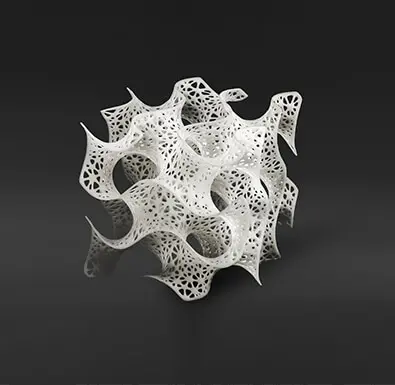
When conductive fillers are introduced into resin systems, the primary technical challenge is maintaining dispersion stability while preserving printability. Poor dispersion can lead to localized aggregation, which affects both electrical continuity and curing uniformity. At the same time, increasing filler concentration raises viscosity, which can reduce flow behavior during recoating and affect layer consistency.
In practical processing, light penetration becomes another limiting factor because fillers can scatter or absorb energy during exposure. This directly influences curing depth and may create uneven polymerization across layers if not properly compensated. In production environments, engineers typically evaluate these effects by adjusting exposure time and scan energy based on material behavior rather than relying on fixed parameter sets.
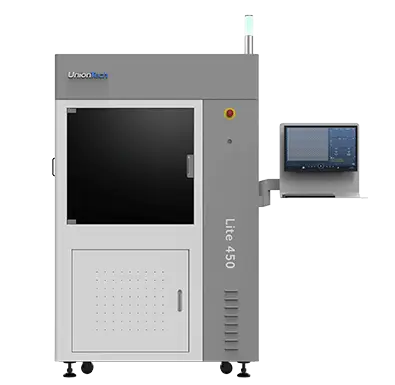
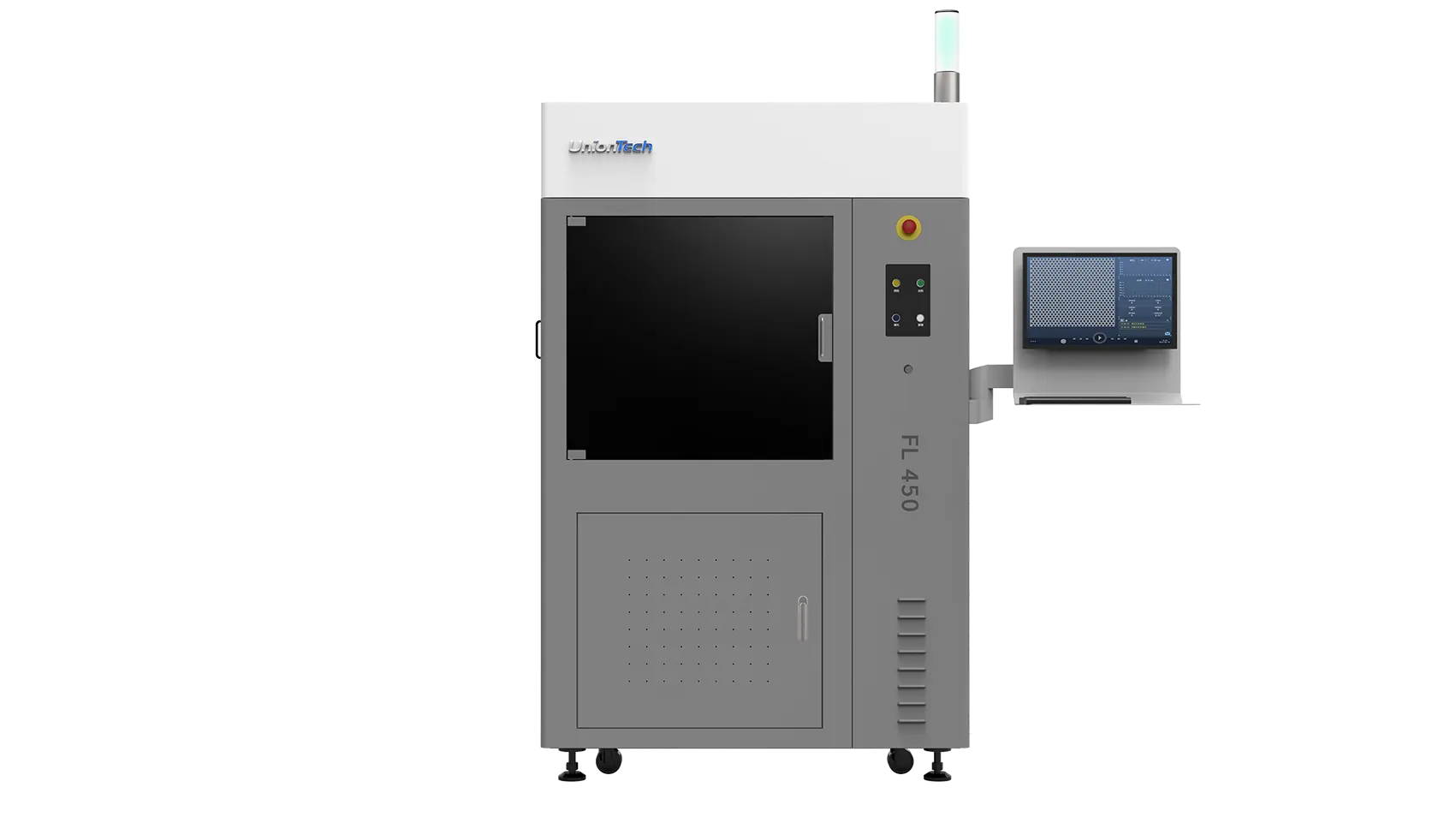
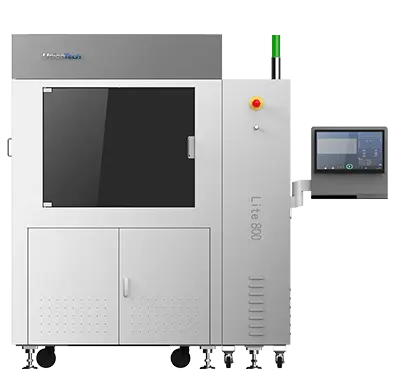
From an equipment perspective, stable energy delivery and motion precision are critical when processing modified resin systems. Variations in laser intensity or scanning path accuracy can introduce inconsistencies in fine structural regions, especially when conductive additives are present. At UnionTech, system design focuses on maintaining uniform exposure distribution across the entire build area to reduce variation between different sections of the same part.
Software coordination also plays a measurable role in repeatability. Build preparation tools are used to adjust slicing parameters according to material response, ensuring that each layer receives consistent energy input. This is particularly important when working with functional materials where electrical and mechanical properties must remain stable across the entire geometry.
In industrial testing environments, conductive resin formulations are often evaluated alongside standard engineering materials to understand differences in mechanical stability, surface quality, and processing behavior. In many cases, baseline materials such as Somos Evolve 128 are used to establish reference performance for dimensional accuracy and surface consistency. While not conductive, these materials provide a controlled benchmark for evaluating how modified systems behave during printing.
Within a stereolithography resin workflow, comparative testing is usually performed on identical geometries to isolate the effect of material formulation. Engineers assess whether changes in filler content introduce deformation, surface roughness variation, or curing inconsistency. This approach allows material development to be evaluated under consistent geometric and process conditions rather than isolated laboratory tests.
The development of conductive composites for SLA-based manufacturing is driven by the need to combine structural accuracy with functional performance. At UnionTech, we focus on aligning material behavior with system-level process control to ensure stable production outcomes. A stereolithography resin system, when modified for conductivity, must still meet the same requirements for dimensional stability and curing consistency as standard materials. By integrating controlled exposure systems, material testing workflows, and repeatable processing conditions, conductive material development can be reliably supported within industrial additive manufacturing environments.