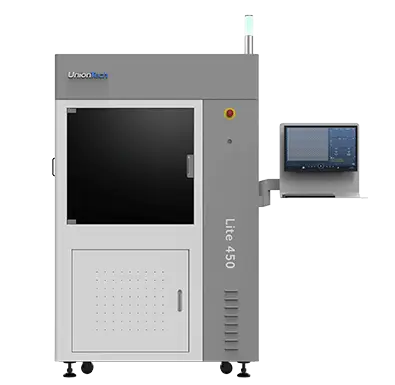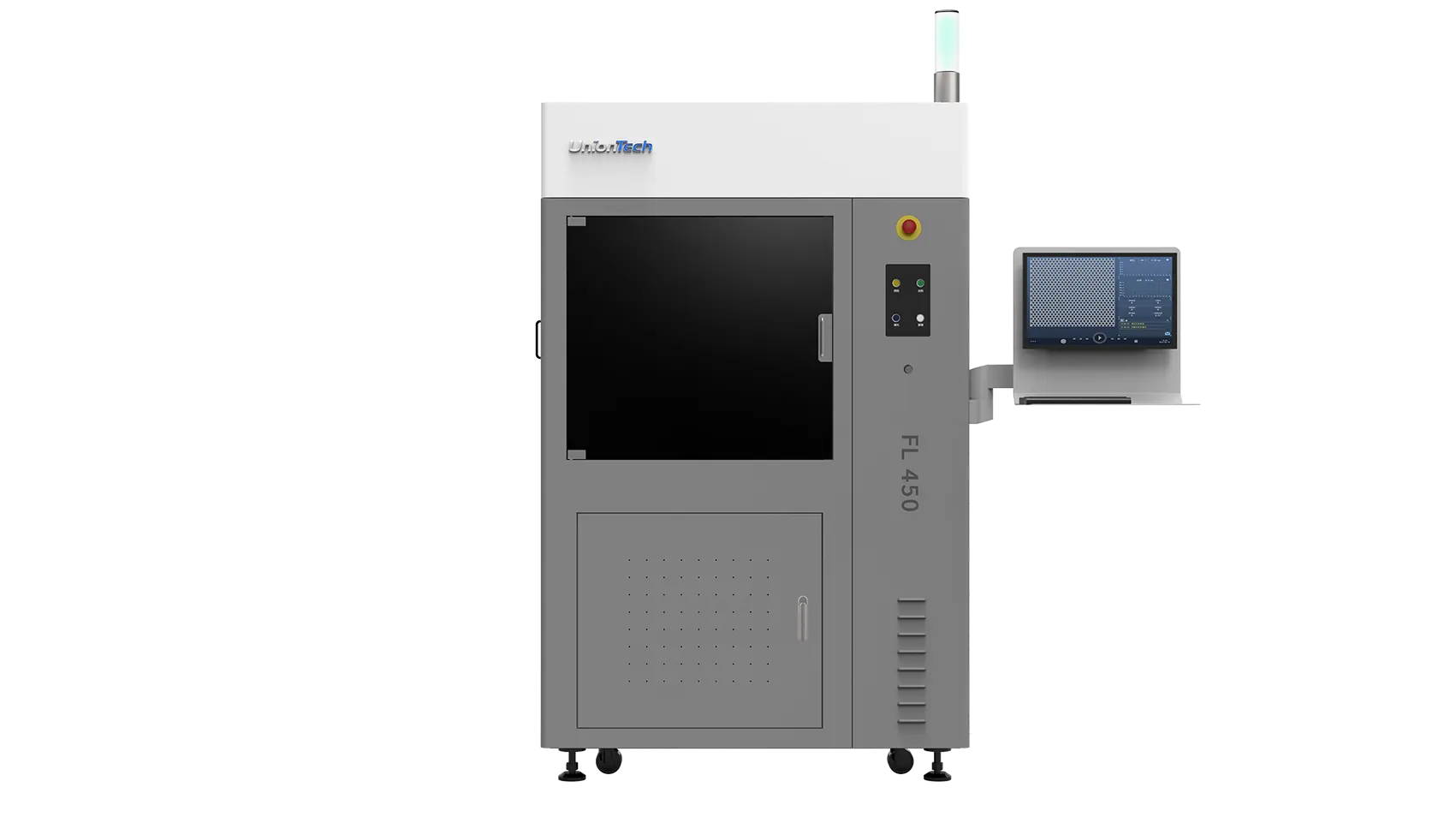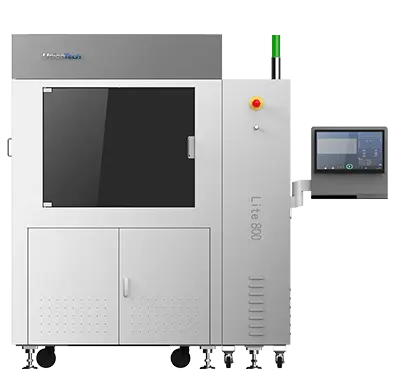
Every week, we speak with engineering teams who know they need 3D printing but feel uncertain about which resin family fits their application. Should a structural bracket use high-strength material? Does a fluid dynamics prototype require transparency? Will a snap-fit component survive repeated bending? At UnionTech, as a China industrial 3D printer manufacturer, we have guided hundreds of customers through these exact decisions. The truth is that no single resin serves all purposes. Understanding the trade-offs between strength, clarity, and flexibility is the difference between a part that performs for years and one that fails in weeks. Let us break down what each material class delivers—and how our Lite 600 platform helps you realize their full potential.
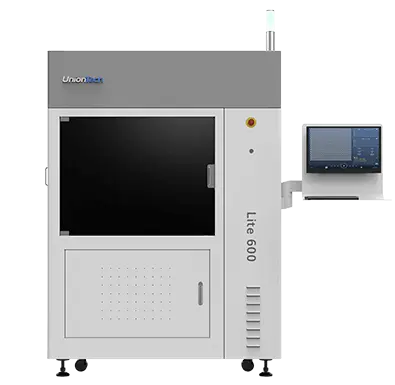
For heavy-duty functional prototypes, specialized jigs, and rugged testing fixtures that bear mechanical loads, high-strength resins are the obvious choice. These materials typically feature tensile strengths above 60 MPa, high modulus, and excellent impact resistance. They mimic engineering thermoplastics like ABS or polycarbonate but with the fine feature resolution that only SLA provides. UnionTech’s high-strength formulations maintain dimensional stability under sustained stress, making them ideal for automotive bracketry, drone frames, and production tooling. When paired with what many users call the best SLA 3D printer for small-batch production—our Lite 600—these resins achieve a dimensional accuracy of ±0.1 mm, with an adjustable layer thickness down to 0.05 mm for ultra-smooth vertical finishes. The result: load-bearing parts that survive drop tests and vibration cycles without cracking.
Transparent resins serve a distinct purpose: seeing inside your part. For fluid flow analysis, light pipe prototypes, or medical device housings that require visual inspection, clarity matters. However, not all transparent resins are equal. Standard clear resins often yellow under UV or become brittle. Our advanced formulations maintain greater than 85% light transmission after post-processing, with surface finishes that rival injection-molded acrylic. The Lite 600’s high-accuracy galvo system ensures that internal channels and thin walls remain distortion-free—critical for applications like microfluidic devices or automotive light guides. One customer reduced their optical prototyping cycle from six weeks to four days by switching to UnionTech’s transparent resin on the Lite 600.
Flexible resins occupy a unique space between rubber and plastic. They withstand repeated bending, compression, and snap-fit assembly without cracking or taking a set. Typical applications include overmolding prototypes, gaskets, ergonomic grips, and living hinges. The key specification is elongation at break—quality flexible resins achieve 80–120% elongation while returning to original shape. As an industrial 3D printer manufacturer, we have optimised our flexible formulations for the Lite 600’s recoating system, ensuring that soft, elastic layers adhere properly without tearing during peel-off. This matters for production runs of 50–200 parts where every unit must perform identically.
Choosing the right resin is only half the equation. The printer must deliver the consistency that each material demands. The Lite 600 combines AI-powered optimisation with proprietary galvanometer self-calibration, achieving more than double the accuracy of traditional methods. Whether you need high-strength, transparent, or flexible parts, this platform ensures that your material’s theoretical properties become physical realities. At UnionTech, we do not just sell resins—we provide validated material profiles for every application. The best SLA 3D printer is the one that makes your chosen material perform reliably, part after part. Let us help you match resin to requirement.